• Fri frakt över 249 kr
  • •
  • Snabba leveranser
  • •
  • Billiga böcker
Kundservice

Du är på sajten för privatpersoner.

Företag, bibliotek eller offentlig verksamhet?

Du handlar på classic.bokus.com, där alla dina funktioner finns intakta.
Till classic.bokus.com
Bokus logotyp. Gå till startsidan.
  • Erbjudanden
  • Nyheter
  • Student
  • Topplistor
  • Barn & ungdom
  • Bokus Play
  • E-böcker
  • Pocketböcker
  • Spel & pussel

10% rabatt på allt med kod NYSTART10 →

Sidfot

Mina sidor

    Hjälp

    • Kundservice
    • Vanliga frågor och svar
    • Frakt och leverans
    • Retur vid ångerrätt
    • Reklamera vara
    • Betalning
    • Köpvillkor
    • Allmänna villkor
    • Information om webbplatsens tillgänglighet

    Om Bokus

    • Om oss
    • Pressrum
    • För studenter
    • För företag
    • För bibliotek och offentlig verksamhet
    • För leverantörer
    • Hållbarhet

    Populärt

    • Aktuella erbjudanden
    • Presentkort
    • Studentlitteratur
    • Nya böcker
    • Topplistor
    • Signerade böcker
    • Engelska böcker

    Inspiration

    • Boktips
    • BookTok
    • Populära bokserier
    • Barnbokskaraktärer
    • Populära författare
    Logotyp för Bokus
    Följ oss på Facebook (extern länk)Följ oss på Instagram (extern länk)Följ oss på YouTube (extern länk)Följ oss på TikTok (extern länk)
    bokus @ CookiesAnpassa cookiesIntegritetspolicyKöpvillkor
    Till Citymail hemsida (extern länk)Till Budbee hemsida (extern länk)Till Postnord hemsida (extern länk)Till Schenker hemsida (extern länk)Till Early Bird hemsida (extern länk)Till Walleys hemsida (extern länk)
    1. Medicin
    2. Medicin: allmänt
    3. Samhällsmedicin och preventiv medicin
    4. Folkhälsa och hälsopedagogik

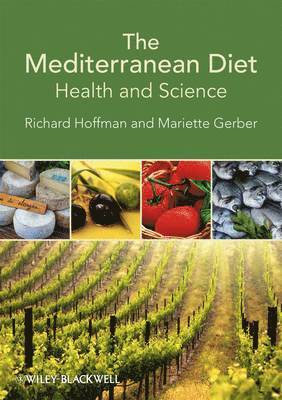
    Mediterranean Diet

    Health and Science

    AvRichard Hoffman,Mariette Gerber

    Häftad, Engelska, 2011

    933 kr

    Beställningsvara. Skickas inom 11-20 vardagar. Fri frakt över 249 kr.

    Beskrivning

    Recent large-scale epidemiological studies have confirmed the pre-eminence of the Mediterranean diet for reducing the risk of primary and secondary heart disease and cancer. There is also increasingly convincing evidence for its protective value against diabetes, dementias and other age-related disorders, and for increasing overall longevity. The Mediterranean Diet: Health and Science is a timely, authoritative and accessible account of the Mediterranean diet for nutritionists and dieticians. It discusses the Mediterranean diet in the light of recent developments in nutritional biochemistry, disease mechanisms and epidemiological studies, and also provides advice on nutrition policies and interventions.The Mediterranean Diet: Health and Science opens with an overview of the Mediterranean diet, and this is followed by a survey of the latest epidemiological evidence for its health benefits. There is detailed nutritional information on olive oil, wine, fish, fruit and vegetables and other components of the Mediterranean diet, and this information is used to explain how the diet protects against a range of age-related diseases. The book emphasises the importance of understanding the Mediterranean diet in its totality by discussing the evidence for beneficial interactions between various components of the diet. There are also discussions of how agricultural practices, as well as food preparation and cooking techniques, influence the nutritional quality of the diet. The book concludes by discussing the social context in which the Mediterranean diet is eaten, and public health issues associated with adopting a Mediterranean diet, especially in the context of more northerly countries.Written by nutritional biochemist Richard Hoffman and a past President of the French Nutrition Society, Mariette Gerber, who between them have many years experience in this area, this exciting and highly topical boook is an essential purchase for all nutritionists and dietitians worldwide. Libraries in all universities where nutrition, dietetics and food science and technology are studied and taught should have copies of this excellent book on their shelves.

    Produktinformation

    • Utgivningsdatum:2011-11-04
    • Mått:170 x 241 x 18 mm
    • Vikt:794 g
    • Format:Häftad
    • Språk:Engelska
    • Antal sidor:416
    • Förlag:John Wiley and Sons Ltd
    • ISBN:9781444330021

    Utforska kategorier

    • Folkhälsa och hälsopedagogik inom Medicin

    Mer om författaren

    Dr. Richard Hoffman, PhD, FRSA, is a Senior Lecturer in Biochemistry at the University of Hertfordshire, UK with over 15 years of experience of Teaching biomedical sciences, nutritional biochemistry and plant biochemistry to undergraduates and postgraduates. Dr. Mariette Gerber, MD, PhD, DSc, is a past President of the French Nutrition Society, and is currently an Expert at the National Food Council in France.

    Recensioner i media

    Named CHOICE Outstanding Title for 2012 “Overall, this a highly useful work of international significance, based on food science, cell biology, nutritional biochemistry, and first-rate investigative reporting.  Summing Up: Essential.  Lower-division undergraduates through professionals/practitioners.”  (Choice, 1 October 2012)

    Innehållsförteckning

    • Preface xi 1 Overview 11.1 Development of the MedDiet 11.1.1 A brief history of the MedDiet 21.1.2 The traditional MedDiet and present day MedDiets 21.1.3 International differences 61.1.4 National representations of the MedDiet 71.1.5 Sources of information for the general public 131.2 Lifestyle factors 131.2.1 Meal patterns 141.2.2 Siestas 161.2.3 Physical activity 161.2.4 Sunshine 161.3 Health benefits 161.3.1 Mediterranean dietary patterns 171.3.2 Endorsements 191.4 The MedDiet, past, present and future 191.4.1 Current trends 191.4.2 The Greek experience 231.4.3 Not all bad news 241.4.4 Future prospects 25References 25SECTION 1: CONSTITUENTS.2 Constituents and Physiological Effects of Mediterranean Plant Foods 312.1 Introduction 312.2 Carbohydrates 322.2.1 Glycaemic index 322.2.2 Honey 342.2.3 Physiological effects of carbohydrates 352.2.4 Fibre 362.3 Fats 382.4 Organic acids 392.5 Minerals 402.6 Vitamins 402.6.1 Water soluble vitamins 402.6.2 Fat soluble vitamins 412.7 Phytochemicals 442.7.1 Classes of phytochemicals 462.7.2 Sensory properties of phytochemicals 462.7.3 Phenolics 502.7.4 Terpenes 562.7.5 Sulphur-containing compounds 622.7.6 Polyacetylenes 622.7.7 Nitrogen-containing compounds 632.8 Mediterranean plants as medicines 63References 643 Influences of the Supply Chain on the Composition of Mediterranean Plant Foods 673.1 Significance of the supply chain 673.2 Growth conditions 683.2.1 A brief overview of plant metabolism 683.2.2 Soil 703.2.3 Sun 713.2.4 Water 713.2.5 Other environmental factors 713.3 Plant cultivar 723.4 Food retailers and food processing 743.4.1 Anatomical distribution of nutrients 743.4.2 Freshness 75References 764 Influences of Food Preparation and Bioavailability on Nutritional Value 774.1 Introduction 774.2 Food preparation 784.2.1 Chopping 784.2.2 Cooking 794.3 Nutrient bioavailability 824.3.1 Pharmacokinetics of phytochemicals 824.3.2 Liberation 834.3.3 Absorption 834.3.4 Distribution 864.3.5 Metabolism 874.3.6 Excretion 904.3.7 Inter-individual variations in phytochemical pharmacokinetics 90References 925 Guide to the Composition of Mediterranean Plant Foods 945.1 Types of plant foods consumed as part of a MedDiet 955.1.1 Consumption 955.1.2 Diversity of consumption 955.2 Vegetables 965.2.1 Green leafy vegetables 965.2.2 Other green vegetables 1025.2.3 Root vegetables 1035.2.4 Alliums 1045.2.5 Solanaceous vegetables 1075.2.6 Legumes 1095.3 Wheat products 1125.4 Fruits 1145.4.1 Citrus fruits 1145.4.2 Apples and related fruits 1185.4.3 Stone fruits 1205.4.4 Grapes 1215.4.5 Other berries 1225.4.6 Pomegranates 1225.4.7 Figs 1235.4.8 Dates 1235.4.9 Olives 1235.5 Herbs and spices 1275.6 Nuts and seeds 1295.6.1 Nuts 1295.6.2 Seeds 132References 1326 Olive Oil and Other Fats 1376.1 Overview 1376.2 Olive oil 1386.2.1 Consumption and production 1386.2.2 Origin and varieties of olive trees 1396.2.3 Olive oil production 1396.2.4 Traceability and European regulations 1436.2.5 Biochemical composition 1446.3 Other fat sources 1476.3.1 Nuts and seeds 1476.3.2 Herbs and spices 1486.3.3 Meat and dairy 1486.3.4 Eggs 1506.3.5 Fish and shellfish 151References 1517 Wine and Other Drinks 1547.1 Wine 1547.1.1 Introduction 1547.1.2 Production 1557.1.3 Composition 1567.1.4 Metabolism of wine 1587.1.5 Consumption patterns and health 1597.1.6 The resveratrol controversy 1627.2 Aniseed-flavoured spirits 1647.2.1 Consumption 1647.2.2 Composition 1657.2.3 Physiological effects 1657.3 Tea 1657.3.1 Consumption 1657.3.2 Composition 1667.3.3 Physiological effects 1677.4 Coffee 1687.4.1 Consumption 1687.4.2 Composition and physiological effects 168References 169SECTION 2: HEALTH EFFECTS.8 Epidemiological Methods 1758.1 Introduction 1758.2 Study designs 1768.2.1 Descriptive epidemiology 1768.2.2 Ecological studies 1788.3 Analytical epidemiology 1788.3.1 Case-control and prospective studies 1798.4 Intervention studies 1808.5 Expression and interpretation of data from epidemiological studies 1808.6 Dietary patterns 1818.6.1 A priori dietary patterns 1818.6.2 A posteriori dietary patterns 1838.7 Criteria for judging epidemiological data 184References 1859 General Mechanisms for Disease Prevention 1879.1 Introduction 1889.2 Methods for studying the effects of nutrients on disease mechanisms 1899.2.1 General considerations 1899.2.2 In vitro models 1909.2.3 Animal models 1919.2.4 Human intervention studies 1919.3 Oxidative stress 1929.3.1 What are free radicals? 1929.3.2 Production of reactive species 1929.3.3 Effects of reactive species 1939.3.4 Antioxidant defences 1959.3.5 Measuring antioxidant activity 1989.3.6 Antioxidant activity in the Mediterranean diet 1999.3.7 Limitations of the dietary antioxidant theory 2049.4 Inflammation 2059.4.1 The inflammatory response 2059.4.2 The MedDiet and inflammation 2069.4.3 n-3 Fatty acids 2079.4.4 Phenolics 2109.4.5 Pro-inflammatory foods 2129.5 Modulation of cell signalling pathways by phenolics 2129.5.1 Cell signalling pathways in disease 2129.6 Gene interactions 2139.6.1 Genetic predisposition to diet – nutrigenetics 2139.6.2 Effects of diet on gene expression 2169.7 Increased stress resistance 2229.7.1 The general concept 2229.7.2 Mechanistic basis of hormesis 2259.8 Nutrient interactions and the Mediterranean dietary pattern 2269.8.1 Minimising spikes in plasma concentrations 2279.8.2 Synergistic interactions 228References 22910 Metabolic Disorders 23410.1 Introduction 23410.2 Obesity 23510.2.1 Introduction 23510.2.2 Epidemiology 23710.2.3 Mechanisms 23910.3 Metabolic syndrome 24110.3.1 Introduction 24110.3.2 Epidemiology 24210.3.3 Mechanisms 24510.4 Type 2 diabetes 24910.4.1 Introduction 24910.4.2 Epidemiology 25010.4.3 Mechanisms 252References 25411 Cardiovascular Diseases 25811.1 Introduction 25911.2 Nutrition and the biology of CVD 26011.2.1 Atherogenesis 26011.2.2 Cardiac arrhythmias 26511.3 Epidemiological evidence and mechanisms 26511.3.1 Fat and fatty acids 26511.3.2 Plant food constituents 26911.3.3 Whole foods 27311.3.4 Dietary patterns 283References 28612 Cancers 29312.1 Introduction 29312.2 Nutritional factors and the biology of cancer 29412.2.1 Introduction 29412.2.2 Carcinogenesis 29412.2.3 The issue of selectivity 30912.2.4 Mediterranean dietary pattern and cancer prevention 31112.3 Epidemiological evidence and mechanisms 31612.3.1 Fats 31612.3.2 Plant food constituents 31812.3.3 Tea 32212.3.4 Coffee 32312.3.5 Wine and alcohol 32312.3.6 Plant foods 32712.3.7 Dietary patterns 330References 33413 Neurological and Other Disorders 34313.1 Introduction 34313.2 Dementias 34413.2.1 Introduction 34413.2.2 Epidemiology 34413.2.3 Mechanisms 34613.3 Parkinson's disease 34913.3.1 Introduction 34913.3.2 Epidemiology 34913.3.3 Mechanisms 34913.4 Depression 35013.4.1 Introduction 35013.4.2 Epidemiology 35013.4.3 Mechanisms 35013.5 Rheumatoid arthritis 35113.5.1 Introduction 35113.5.2 Epidemiology 35113.5.3 Mechanisms 35213.6 Age-related macular degeneration 35213.6.1 Introduction 35213.6.2 Epidemiology 35313.6.3 Mechanisms 35413.7 All cause mortality 35413.7.1 Fruit and vegetables 35513.7.2 Alcohol 35513.7.3 Wine 35513.7.4 Dietary pattern 35613.8 General conclusions 357References 35714 Public Health Issues 36114.1 Introduction 36114.1.1 Public health and its objectives 36214.1.2 The challenges of public health in Europe 36214.2 Which MedDiet? 36614.3 Which constituents are important in the MedDiet? 36714.3.1 Olive oil 36714.3.2 Cereals and legumes 36814.3.3 Fruit and vegetables 36814.3.4 Herbs and spices 36914.3.5 Meat and dairy products 37014.3.6 Wine and tea 37014.3.7 How can the Mediterranean dietary pattern be implemented? 37114.4 Transferring the Mediterranean dietary pattern 37214.4.1 Public health recommendations and education 37414.4.2 Governments' and communities' food policies 37514.4.3 Individual choices and attitudes 377References 378SECTION 3: APPENDICES.Appendix 1 Abbreviations 383Appendix 2 Epidemiological Studies 385Index 389