• Fri frakt över 249 kr
  • •
  • Snabba leveranser
  • •
  • Billiga böcker
Kundservice

Du är på sajten för privatpersoner.

Företag, bibliotek eller offentlig verksamhet?

Du handlar på classic.bokus.com, där alla dina funktioner finns intakta.
Till classic.bokus.com
Bokus logotyp. Gå till startsidan.
  • Erbjudanden
  • Nyheter
  • Student
  • Topplistor
  • Barn & ungdom
  • Bokus Play
  • E-böcker
  • Pocketböcker
  • Spel & pussel

10% studentrabatt med kod TERM26

Sidfot

Mina sidor

    Hjälp

    • Kundservice
    • Vanliga frågor och svar
    • Frakt och leverans
    • Retur vid ångerrätt
    • Reklamera vara
    • Betalning
    • Köpvillkor
    • Allmänna villkor
    • Information om webbplatsens tillgänglighet

    Om Bokus

    • Om oss
    • Pressrum
    • För studenter
    • För företag
    • För bibliotek och offentlig verksamhet
    • För leverantörer
    • Hållbarhet

    Populärt

    • Aktuella erbjudanden
    • Presentkort
    • Studentlitteratur
    • Nya böcker
    • Topplistor
    • Signerade böcker
    • Engelska böcker

    Inspiration

    • Boktips
    • BookTok
    • Populära bokserier
    • Barnbokskaraktärer
    • Populära författare

    Mina sidor

      Hjälp

      • Kundservice
      • Vanliga frågor och svar
      • Frakt och leverans
      • Retur vid ångerrätt
      • Reklamera vara
      • Betalning
      • Köpvillkor
      • Allmänna villkor
      • Information om webbplatsens tillgänglighet

      Om Bokus

      • Om oss
      • Pressrum
      • För studenter
      • För företag
      • För bibliotek och offentlig verksamhet
      • För leverantörer
      • Hållbarhet

      Populärt

      • Aktuella erbjudanden
      • Presentkort
      • Studentlitteratur
      • Nya böcker
      • Topplistor
      • Signerade böcker
      • Engelska böcker

      Inspiration

      • Boktips
      • BookTok
      • Populära bokserier
      • Barnbokskaraktärer
      • Populära författare
      Logotyp för Bokus
      Följ oss på Facebook (extern länk)Följ oss på Instagram (extern länk)Följ oss på YouTube (extern länk)Följ oss på TikTok (extern länk)
      bokus @ CookiesAnpassa cookiesIntegritetspolicyKöpvillkor
      Till Citymail hemsida (extern länk)Till Budbee hemsida (extern länk)Till Postnord hemsida (extern länk)Till Schenker hemsida (extern länk)Till Early Bird hemsida (extern länk)Till Walleys hemsida (extern länk)
      1. Naturvetenskap och teknik
      2. Matematik och naturvetenskap
      3. Biologi
      4. Biovetenskap

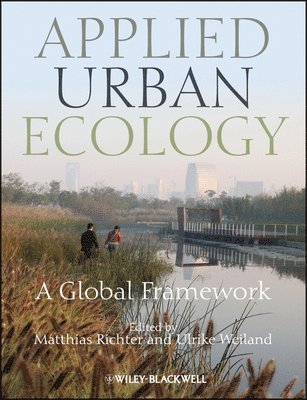
      Applied Urban Ecology

      A Global Framework

      AvMatthias Richter,Ulrike Weiland

      Häftad, Engelska, 2011

      578 kr

      Tillfälligt slut

      Beskrivning

      Applied Urban Ecology: A Global Framework explores ways in which the environmental quality of urban areas can be improved starting with existing environmental conditions and their dynamics. Written by an internationally renowned selection of scientists and practitioners, the book covers a broad range of established and novel approaches to applied urban ecology.   Approaches chosen for the book are placed in the context of issues such as climate change, green- and open-space development, flood-risk assessment, threats to urban biodiversity, and increasing environmental pollution (especially in the “megacities” of newly industrialized countries). All topics covered were chosen because they are socially and socio-politically relevant today.Further topics covered include sustainable energy and budget management, urban water resource management, urban land management, and urban landscape planning and design.Throughout the book, concepts and methods are illustrated using case studies from around the world. A closing synopsis draws conclusions on how the findings of urban ecological research can be used in strategic urban management in the future.Applied Urban Ecology: A Global Framework is an advanced textbook for students, researchers and experienced practitioners in urban ecology and urban environmental research, planning, and practice.

      Produktinformation

      • Utgivningsdatum:2011-11-04
      • Mått:191 x 246 x 16 mm
      • Vikt:585 g
      • Format:Häftad
      • Språk:Engelska
      • Antal sidor:240
      • Förlag:John Wiley and Sons Ltd
      • ISBN:9781444333404

      Utforska kategorier

      • Biovetenskap inom Naturvetenskap och teknik

      Mer om författaren

      Matthias Richter, Environmental Scientist, Publicist and University Lecturer, Germany.Ulrike Weiland is Professor of Urban Ecology at the Institute for Geography, University of Leipzig, Germany.

      Recensioner i media

      “In return it broadens our perspective on the pathways we might follow in aiming to understand the complexities of urban environments, and ultimately learn how to shape their future and that of the majority of humanity.”  (Austral Ecology, 1 October 2013)“This book provides a wealth of information . . . It is a book for the specialist rather than the generalist and is thus most relevant for advanced undergraduates and postgraduates of ecology, geography, environmental science and urban planning.”  (Bulletin of the British Ecological Society, 1 June 2012)"I am sure that anyone teaching in this area at undergraduate or postgraduate levels will want it on their bookshelf." (Elsevier's Biological Conservation, 1 January 2012) "I highly recommend the very hands on and engaging book Applied Urban Ecology: A Global Framework edited by Matthias Richter and Ulrike Weiland, to any field researchers, scientists, practitioners, urban planners, policy makers in government, business leaders, educators, and students at all levels who are seeking a clear and understandable guide to urban ecology, its challenges, and its potential solutions. This book will transform the way decision makers approach urban ecological issues, and provide students with a firm foundation in applied urban ecology." (Blog Business World, 4 January 2012)"Nevertheless, each chapter is worth reading and I am sure this book will become a primer for studies in urban ecology. I am sure that anyone teaching in this area at undergraduate or postgraduate levels will want it on their bookshelf." (Biological Conservation, 12 December 2011)

      Innehållsförteckning

      • List of contributors, xi Foreword, xiiiPART I: INTRODUCTION, 11. Urban ecology – brief history and present challenges, 3Ulrike Weiland andMatthias Richter1.1 Introduction, 31.2 Brief history, 31.2.1 Initials in urban natural history, 31.2.2 Socioecological tradition, 41.2.3 Complex bioecological tradition, 41.2.4 Ecosystem-related tradition, 41.3 Recent and present challenges, 51.4 Purpose and structure of the book, 71.4.1 Purpose of the book, 71.4.2 Structure of the book, 8References, 9PART II: URBAN ECOLOGY: RELATED DISCIPLINES AND METHODS, 132. Thematic–methodical approaches to applied urban ecology, 15Matthias Richter and UlrikeWeiland3. Monitoring urban land use changes with remote sensing techniques, 18Ellen Banzhaf andMaik Netzband3.1 Land use changes and their consequences for urban ecology, 183.2 Urban remote sensing (URS) and geographical information systems (GIS) for research in urban ecology, 193.3 Measuring physical characteristics of urban areas with remote sensing technology, 213.3.1 Effects of urban form on natural and man-made hazards, 213.3.2 Urban dynamics and ecosystem function, 233.4 Global initiatives to measure urban expansion and land use change, 243.4.1 Global Urban Observatory of UN-HABITAT, 243.4.2 "The Dynamics of Global Urban Expansion" – a contribution by theWorld Bank, 243.4.3 Socioeconomic data and applications Center (SEDAC) at the Center for International Earth Science Information Network (CIESIN), Columbia University, New York, USA, 253.4.4 The "100 Cities Project", Arizona State University, USA, 263.5 Regional urban monitoring activities, 263.5.1 Europe: ESPON, MOLAND and the Urban Atlas, 263.5.2 Governmental research projects on urban growth in the United States, 293.6 Synthesis and outlook, 29References, 30PART III: SELECTED FIELDS OF URBAN ECOLOGY, 33A. PATHWAYS OF THE ECOSYSTEM APPROACH.4. Quantifying spatiotemporal patterns and ecological effects of urbanization: a multiscale landscape approach, 35Jianguo Wu, Alexander Buyantuyev, G. Darrel Jenerette, Jennifer Litteral, Kaesha Neil and Weijun Shen4.1 Introduction, 354.2 Characterizing the spatiotemporal pattern of urbanization, 364.2.1 Quantifying urbanization patterns with landscape metrics, 364.2.2 Other methods for quantifying urban landscape pattern, 394.2.3 Effects of scale on the analysis of urban landscape patterns, 394.2.4 Examples from CAP-LTER, 404.3 Simulating spatiotemporal dynamics of urbanization, 414.3.1 Importance of simulation models in urban studies, 414.3.2 Approaches to simulating urban dynamics, 414.3.3 Examples from CAP-LTER, 424.4 Effects of urbanization on biodiversity and ecosystem processes: examples from CAP-LTER, 434.4.1 Effects of urbanization on biodiversity, 434.4.2 Effects of urbanization on soil biogeochemical patterns, 444.4.3 Effects of urbanization on net primary production, 454.4.4 Effects of urbanization on vegetation phenology, 454.4.5 Urban heat islands and ecological effects, 464.4.6 Ecosystem responses to urbanization-induced environmental changes, 464.5 Concluding remarks, 47Acknowledgments, 49References, 495. Designing urban systems: ecological strategies with stocks and flows of energy and material, 54Peter Baccini5.1 The challenge of a new urbanity, 545.2 Urban systems and their resource management, 565.2.1 Methodology applied investigating resource management of complex systems, 565.2.2 Relevant differences between agrarian and urban systems on a regional scale, 565.2.3 The resource management perspectives on a global scale, 585.2.4 The essential mass resources in the development of urban regions, 595.3 Strategies of reconstruction, 605.3.1 The 2000 watt society, 605.3.2 Transformation of urban regions in a "time of safe practice", 615.3.3 The exploration of urban stocks, 615.4 Developing strategies for the design of urban systems, 63References, 65B. SOCIOENVIRONMENTAL THREATS.6. Environmental and ecological threats in Indian mega-cities, 66Surinder Aggarwal and Carsten Butsch6.1 Urbanization dynamics and emergence of mega-cities, 666.2 Environmental threats, 686.2.1 Environmental threats from waste water and sewerage disposal, 686.2.2 Deteriorating air quality, 696.2.3 Urban wastemismanagement and environmental degradation, 716.2.4 Ecosystem damages and ecological footprints, 726.2.5 Threats from natural hazards, disasters, and climate change, 736.3 Mega-social challenges, 746.3.1 Poverty and fragmentation, 756.3.2 Rising vulnerabilities and insecurities, 766.3.3 Inequities and inequalities in urban services, 776.4 Concluding remarks, 78Acknowledgments, 80References, 807. From wasteland to wilderness – aspects of a new form of urban nature, 82Dieter Rink and Harriet Herbst7.1 Introduction, 827.2 Urban wilderness – some attempts at defining the term, 837.3 Wastelands as a source of urban wilderness, 837.4 Urban wilderness in planning, 857.5 On the ecology of urban wilderness, 867.6 Urban wilderness in a social context, 877.7 Educational value of urban wilderness, 897.8 Conclusions, 90References, 91C. FLOODING AND CLIMATE ADAPTATION.8. Multiscale flood risk assessment in urban areas – a geoinformatics approach, 93Norman Kerle and Dinand Alkema8.1 Introduction, 938.2 Flood risk in the context of urban ecology, 948.3 Comprehensive flood risk assessment – Naga City, the Philippines, 968.3.1 Floods in Naga, 968.3.2 Naga's flood management practices, 978.3.3 Model-based flood scenario studies, 978.3.4 Linking flood modeling with disaster management, 988.3.5 Naga as example for other flood-prone cities, 998.4 The role of remote sensing in flood risk assessment and management, 998.4.1 Quasistatic hazard data, 1008.4.2 Dynamic hazard data, 1018.4.3 Mapping elements at risk, 1028.5 Disaster risk in the context of urban ecology – an outlook, 104References, 1049. Urban open spaces and adaptation to climate change, 106Marialena Nikolopoulou9.1 Cities, climate change and the role of open spaces, 1069.2 Outdoor comfort, 1079.3 Use of space, 1089.3.1 Seasonal profile, 1089.3.2 Diurnal profile, 1089.4 Thermal perception, 1119.5 Adaptation, 1139.5.1 Physical adaptation, 1139.5.2 Psychological adaptation, 1139.6 Design interventions, 1169.6.1 Materials, 1179.6.2 Vegetation, 1189.6.3 Shading, 1189.6.4 Water, 1199.6.5 Other measures, 1199.7 Conclusions, 120References, 121D. URBAN BIODIVERSITY.10. Social aspects of urban ecology in developing countries, with an emphasis on urban domestic gardens, 123Sarel Cilliers, Stefan Siebert, Elandrie Davoren and Rina Lubbe10.1 Introduction, 12310.2 Social benefits and human perceptions of urban green areas, 12410.3 Consequences of socioeconomic aspects on the urban green infrastructure, 12510.4 Urban domestic gardens, 12610.4.1 Literature review, 12610.4.2 Case studies from the North-West Province, South Africa, 12810.5 Conclusions, 133References, 13511. Plant material for urban landscapes in the era of globalization: roots, challenges and innovative solutions, 139Maria Ignatieva11.1 Introduction, 13911.2 The beginning of plant material globalization, 13911.3 Victorian Gardenesque (1820–1880), 14011.4 Influence of the Victorian garden on the global planting pattern, 14211.5 Victorian tropical and subtropical paradise, 14311.6 Modern nurseries’ direction: global pool of plants, 14511.7 Innovative solutions: searching for new ecological planting design, 14811.7.1 Europe: United Kingdom, 14811.7.2 Europe: The Netherlands, 14811.7.3 Europe: Germany, 14811.7.4 United States, 14911.7.5 New Zealand: modern approach to planting design, 14911.8 Discussion and conclusion, 150Acknowledgments, 150References, 150E. ENVIRONMENTAL URBAN DESIGN.12. Ecological infrastructure leads the way: the negative approach and landscape urbanism for smart preservation and smart growth, 152Kongjian Yu12.1 Introduction, 15212.1.1 Urbanization in China challenges survival, 15212.1.2 The failure of the conventional approach in urban development planning, 15312.1.3 Green infrastructure leads the way: the negative approach and landscape urbanism, 15412.2 The negative approach: methodology, 15812.2.1 Process analysis, 15812.2.2 Defining landscape security patterns, 15912.2.3 Defining ecological infrastructure, 15912.2.4 Defining urban form at the large scale: urban growth alternatives based on regional EI, 15912.2.5 Defining urban form at the intermediate scale: urban open spaces system based on EI, 15912.2.6 Defining urban form at the small scale: site-specific urban development alternatives based on EI, 15912.3 Urban growth based on EI: a case of negative planning for Taizhou City, 15912.3.1 Critical landscape processes, 16112.3.2 Defining landscape security patterns for the targeted processes, 16212.3.3 Defining ecological infrastructure, 16412.3.4 Scenarios of urban growth pattern based on the regional ecological infrastructure, 16412.3.5 Shaping urban form at the intermediate scale, 16512.3.6 Shaping urban land development at the small scale, 16512.4 Conclusion, 165References, 16613. Integrating science and creativity for landscape planning and design of urban areas, 170Antje Stokman and Christina von Haaren13.1 Introduction, 17013.2 Landscape planning as a legally based contribution to sustainable development in Germany, 17113.2.1 Tasks of landscape planning, 17113.2.2 Methodologies of landscape planning, 17213.3 Landscape design as a creative cultural action, 17313.3.1 Tasks of landscape design, 17313.3.2 Methodologies of landscape design, 17413.4 Linking landscape planning and design: differences, interfaces and potential synergies, 17513.4.1 A matter of timeline and scale: linking multidimensional perspectives on strategic landscape development, 17513.4.2 A matter of perception and meaning: linking environmental goals and cultural concepts, 17613.4.3 A matter of process and learning: linking management and experimentation to achieve adaptive landscape development, 17813.4.4 A matter of involvement and experience: linking information and participation, 18113.5 Conclusion, 182Acknowledgment, 183References, 18314. Landscape as a living system: Shanghai 2010 Expo Houtan Park, 186Kongjian Yu14.1 Introduction, 18614.2 Objective, 18614.3 Challenges, 18614.3.1 Pollution, 18614.3.2 Flooding, 18614.3.3 Circulation, 18714.3.4 Transformation, 18714.3.5 Identity, 18714.3.6 Form, 18814.4 Design concept and strategy: a living system, 18814.4.1 Ecological landscape, 18914.4.2 Three dimensions of meanings, 19014.4.3 Experience network, 19114.5 Conclusions, 192F. ENVIRONMENTAL URBAN POLITICS.15. Geographical perspectives on a radical political ecology of water, 193Alex Loftus15.1 Introduction, 19315.2 The urbanization of nature, 19415.3 Urban political ecologies of water, 19515.4 Privatization questions, 19615.5 Taking the debates forward, 19915.6 Infrastructures of power: democratizing water technologies, 19915.7 The everyday, 20115.8 Conclusions, 202References, 202PART IV: SYNTHESIS, 20516. Synthesizing urban ecology research and topics for urban environmental management, 207Matthias Richter and UlrikeWeilandIndex, 213
      Hoppa över listan

      Du kanske också är intresserad av

      Ulrike Weiland, Matthias Richter - Applied Urban Ecology, E-bok

      Applied Urban Ecology

      Ulrike Weiland, Matthias Richter

      E-bok
      2011

      1 909 kr

      Ulrike Weiland, Matthias Richter - Applied Urban Ecology, E-bok

      Applied Urban Ecology

      Ulrike Weiland, Matthias Richter

      E-bok
      2011

      883 kr

      Matthias Richter, Ulrike Weiland - Applied Urban Ecology, Inbunden

      Applied Urban Ecology

      Matthias Richter, Ulrike Weiland

      Inbunden, 2011

      1 636 kr

      Klaus Hurrelmann, Matthias Richter - Gesundheitliche Ungleichheit, E-bok

      Gesundheitliche Ungleichheit

      Klaus Hurrelmann, Matthias Richter

      E-bok
      2009

      821 kr

      Matthias Richter - Im Dickicht, E-bok

      Im Dickicht

      Matthias Richter

      E-bok
      2024

      238 kr

      Klaus Hurrelmann, Matthias Richter, Stephanie Stock - Referenzwerk Prävention und Gesundheitsförderung, Häftad

      Referenzwerk Prävention und Gesundheitsförderung

      Klaus Hurrelmann, Matthias Richter, Stephanie Stock

      Häftad, 2024

      740 kr

      Stephanie Stock, Matthias Richter, Klaus Hurrelmann - Referenzwerk Prävention und Gesundheitsförderung, E-bok

      Referenzwerk Prävention und Gesundheitsförderung

      Stephanie Stock, Matthias Richter, Klaus Hurrelmann

      E-bok
      2024

      597 kr

      Matthias Richter, Anja Saupe, Martin Leubner - Literaturdidaktik, E-bok

      Literaturdidaktik

      Matthias Richter, Anja Saupe, Martin Leubner

      E-bok
      2016

      273 kr

      Matthias Richter - kleine Corpus doctrinae, Häftad

      kleine Corpus doctrinae

      Matthias Richter

      Häftad, 2017

      384 kr

      Matthias Richter, Anja Saupe, Martin Leubner - Literaturdidaktik, E-bok

      Literaturdidaktik

      Matthias Richter, Anja Saupe, Martin Leubner

      E-bok
      2011

      318 kr