• Fri frakt över 249 kr
  • •
  • Snabba leveranser
  • •
  • Billiga böcker
Kundservice

Du är på sajten för privatpersoner.

Företag, bibliotek eller offentlig verksamhet?

Du handlar på classic.bokus.com, där alla dina funktioner finns intakta.
Till classic.bokus.com
Bokus logotyp. Gå till startsidan.
  • Erbjudanden
  • Nyheter
  • Student
  • Topplistor
  • Barn & ungdom
  • Bokus Play
  • E-böcker
  • Pocketböcker
  • Spel & pussel

10% rabatt på allt med kod NYSTART10 →

Sidfot

Mina sidor

    Hjälp

    • Kundservice
    • Vanliga frågor och svar
    • Frakt och leverans
    • Retur vid ångerrätt
    • Reklamera vara
    • Betalning
    • Köpvillkor
    • Allmänna villkor
    • Information om webbplatsens tillgänglighet

    Om Bokus

    • Om oss
    • Pressrum
    • För studenter
    • För företag
    • För bibliotek och offentlig verksamhet
    • För leverantörer
    • Hållbarhet

    Populärt

    • Aktuella erbjudanden
    • Presentkort
    • Studentlitteratur
    • Nya böcker
    • Topplistor
    • Signerade böcker
    • Engelska böcker

    Inspiration

    • Boktips
    • BookTok
    • Populära bokserier
    • Barnbokskaraktärer
    • Populära författare
    Logotyp för Bokus
    Följ oss på Facebook (extern länk)Följ oss på Instagram (extern länk)Följ oss på YouTube (extern länk)Följ oss på TikTok (extern länk)
    bokus @ CookiesAnpassa cookiesIntegritetspolicyKöpvillkor
    Till Citymail hemsida (extern länk)Till Budbee hemsida (extern länk)Till Postnord hemsida (extern länk)Till Schenker hemsida (extern länk)Till Early Bird hemsida (extern länk)Till Walleys hemsida (extern länk)
    1. Samhälle och politik
    2. Samhälle och kultur
    3. Kultur och medier
    4. Kulturvetenskap

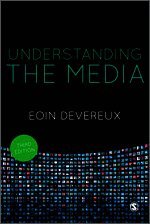
    Understanding the Media

    AvEoin Devereux

    Inbunden, Engelska, 2013

    2 269 kr

    Beställningsvara. Skickas inom 11-20 vardagar. Fri frakt över 249 kr.

    Fler format och utgåvor

    Häftad

    1 432 kr

    E-bok

    553 kr

    Beskrivning

    This is a lucid and lively introduction to key concepts and developments in media and media studies. The new edition, with updated case studies and a good range of online reading, is a valuable resource for both students and lecturers.
    - Chindu Sreedharan, Bournemouth University


    "Has expanded the possibilities of what a textbook can be. Incisive questions framed through accessible and detailed examples provide a platform for a wealth of different activities that engage readers in the critical study of media."
    - Dr Daniel Ashton
    , Bath Spa University

    "Accessibly written and very well-structured, the book will be one of those you go back to time and time again throughout your studies. In addition it also offers that much-needed, little-found extra in a textbook: critical engagement with media and society. A joy for those of us teaching the subject.
    - Joke Hermes
    , University of Amsterdam

    How much of our media experience is shaped by the profit motive of media conglomerates? How much freedom and power do we have as members of an increasingly fragmented media audience? How do the media influence what we understand about friendship, globalization and even our own selves?

    This book teaches students how to ask critical questions of the media, and gives them the analytical tools to answer those questions. By gaining a rich understanding of how the media play a role in society, both in giving pleasures and creating power relationships, students are encouraged to become critical thinkers. Understanding the Media:
    • Teaches the theoretical foundations and key concepts students need to get started on their own media studies
    • Brings concepts to life with examples and case studies on everything from Harry Potter and Big Brother to the Occupy movement
    • Shows the ‘how to’ with guided exercises and improves essay writing with a guide to the research literature
    • Helps students take learning further with guided free online readings
    This is an essential guide to the how and why of understanding the media, perfect for students in media studies, sociology, cultural studies and communication studies.

    Companion Website now available! Visit www.sagepub.co.uk/devereux3e for a range of student and lecturer resources.

    Produktinformation

    • Utgivningsdatum:2013-12-24
    • Mått:186 x 232 x 23 mm
    • Vikt:790 g
    • Format:Inbunden
    • Språk:Engelska
    • Antal sidor:352
    • Upplaga:3
    • Förlag:SAGE Publications
    • ISBN:9781446248799

    Utforska kategorier

    • Kulturvetenskap inom Samhälle och politik

    Mer om författaren

    Professor Eoin Devereux is Professor of Sociology at the University of Limerick, Ireland and an Adjunct Professor in Contemporary Culture at the University of Jyvaskyla, Finland.     Primarily interested in Cultural and Economic Sociology,  Professor Devereux has published extensively on media representations of poverty, inequality and the stigmatization of poorer neighbourhoods.  He has also published widely on the media and on popular music including co-edited books on David Bowie, Morrissey, Joy Division and Protest Music.  He is the author of the international best-selling book Understanding The Media, now in its 3rd edition and the editor of Media Studies: Key Issues and Debates, both published by Sage (London).   Professor Devereux is co-founder/director of two research clusters at the University of Limerick, Ireland, namely, The Popular Music and Popular Culture Research Cluster and The Power, Discourse and Society Research Cluster. In addition to his academic work, Devereux is also a creative writer and experimental musician. His essay ′Waltzing Back: The Cranberries 1989-1993′ is featured in the Box Set Version of The Cranberries debut album ′Everybody Else Is Doing It, So Why Can′t We?′ released by Universal Music (London) in October 2018. He has also curated sleeve notes for The Cranberries albums ′Something Else′,  ′In The End′ and the 2020 re-issue of ′No Need To Argue.′

    Recensioner i media

    Devereux’s third edition of Understanding the Media has expanded the possibilities of what a textbook can be. Incisive questions framed through accessible and detailed examples provide a platform for a wealth of different activities that engage readers in the critical study of media.

    Innehållsförteckning

    • Introduction: Asking Awkward QuestionsChapter 1: Understanding the MediaIntroductionDefining the MediaThe Media in a Social ContextAsking Questions about U2Asking Questions? Which Questions?The Importance of Theory and MethodConclusionChapter 2: Media Histories, Media PowerIntroductionMedia HistoriesChanging Media Histories: an Irish ExampleA Contested FieldMedia and PowerPower and Media ContentPower and the Media IndustriesPower and Media AudiencesTowards a (More) Critical Media StudiesModel of Media Analysis: Production, Content and ReceptionConclusionChapter 3: Media GlobalizationIntroductionWhat is Globalisation?The Latest Brand of Colonialism?Theories of GlobalisationMedia GlobalisationConclusionChapter 4: Media Ownership: Concentration, Conglomeration and RegulationIntroductionWhy Should We be Bothered about Media Ownership?Media OwnershipConglomeration, Concentration and ContentVertical and Horizontal IntegrationThe Political Economy Perspective′Follow the money...′Jurgen Habermas and the Public SphereMedia and RegulationModels of Media RegulationSo, Do We Need Media Regulation?ConclusionChapter 5: Media Professionals and Media ProductionIntroductionProduction ResearchTwo TraditionsTheoretical Underpinnings of Production ResearchMethodological BasisHall′s Encoding/ Decoding ModelEthnographic Research on Media Production and Media ProfessionalsInside Prime Time by Todd GitlinConclusionChapter 6: Media, Ideology and DiscourseIntroductionWhat Precisely is Meant by the Term Ideology?Defining IdeologyIdeology as Dominant IdeologyDiscourse and IdeologyIt′s All in the Discourse?ConclusionChapter 7: Media ′Re-presentations′ in an Unequal WorldIntroductionRepresentation/ Re-representation and ′Reality′What is Content Analysis?Media Re-representations in a Divided World: Four Approaches OutlinedMedia Re-presentations of Social ClassMedia Coverage of the Underclass: Stories about WelfareThe Happy Poor: Representations in Fictional Media ContentMedia Representations of Ethnicity: a Discourse Analysis ApproachMedia Representations of Gender and SexualityConclusionChapter 8: Media Audiences and ReceptionIntroductionThemes and Tensions: Competing Theoretical and Methodological Approaches in Audience ResearchPower to the People? Three Phases in Reception ResearchReception Analysis and the ′Ethnographic Turn′Qualitative Audience Research: Three ExamplesAudiences, Fans and Participatory CulturesConclusionChapter 9: New Media, Social MediaIntroduction: New Media and Social Media - Empowering Audiences, But Who is Holding the Tiger′s Tail?Will the Revolution be Digitalized?The Promise and the Reality of the InternetWe are All ′Produsers′ Now, are We? Audiences and New MediaConclusionChapter 10: Conclusion: The ′How′ and ′Why′ of Media AnalysisIntroduction: This is Not a Methods Chapter...A Step-by-Step Approach to Doing Media ResearchHow to Usefully Engage with Existing ResearchDoing Production, Content and Reception ResearchKeep on Asking Awkward Questions...Conclusion: The ′How′ and ′Why′ of Media Analysis