• Fri frakt över 249 kr
  • •
  • Snabba leveranser
  • •
  • Billiga böcker
Kundservice

Du är på sajten för privatpersoner.

Företag, bibliotek eller offentlig verksamhet?

Du handlar på classic.bokus.com, där alla dina funktioner finns intakta.
Till classic.bokus.com
Bokus logotyp. Gå till startsidan.
  • Erbjudanden
  • Nyheter
  • Student
  • Topplistor
  • Barn & ungdom
  • Bokus Play
  • E-böcker
  • Pocketböcker
  • Spel & pussel

10% rabatt på allt med kod: NYSTART10 →

Sidfot

Mina sidor

    Hjälp

    • Kundservice
    • Vanliga frågor och svar
    • Frakt och leverans
    • Retur vid ångerrätt
    • Reklamera vara
    • Betalning
    • Köpvillkor
    • Allmänna villkor
    • Information om webbplatsens tillgänglighet

    Om Bokus

    • Om oss
    • Pressrum
    • För studenter
    • För företag
    • För bibliotek och offentlig verksamhet
    • För leverantörer
    • Hållbarhet

    Populärt

    • Aktuella erbjudanden
    • Presentkort
    • Studentlitteratur
    • Nya böcker
    • Topplistor
    • Signerade böcker
    • Engelska böcker

    Inspiration

    • Boktips
    • BookTok
    • Populära bokserier
    • Barnbokskaraktärer
    • Populära författare
    Logotyp för Bokus
    Följ oss på Facebook (extern länk)Följ oss på Instagram (extern länk)Följ oss på YouTube (extern länk)Följ oss på TikTok (extern länk)
    bokus @ CookiesAnpassa cookiesIntegritetspolicyKöpvillkor
    Till Citymail hemsida (extern länk)Till Budbee hemsida (extern länk)Till Postnord hemsida (extern länk)Till Schenker hemsida (extern länk)Till Early Bird hemsida (extern länk)Till Walleys hemsida (extern länk)
    1. Samhälle och politik
    2. Politik och statsskick
    3. Centralt styre och förvaltning

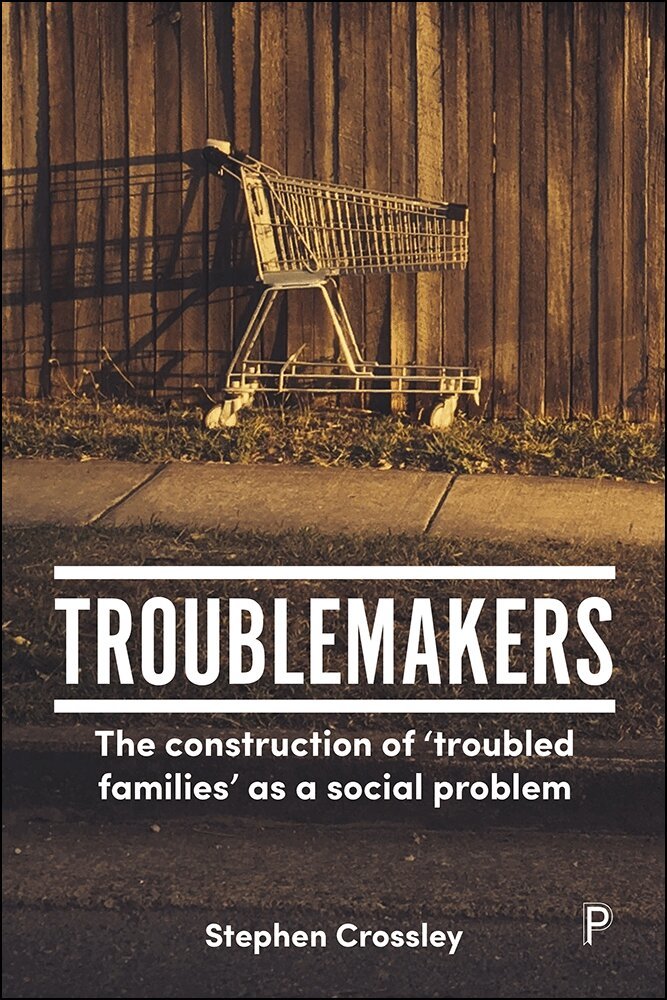
    Troublemakers

    The Construction of ‘Troubled Families’ as a Social Problem

    AvStephen Crossley

    Häftad, Engelska, 2018

    431 kr

    Beställningsvara. Skickas inom 5-8 vardagar. Fri frakt över 249 kr.

    Fler format och utgåvor

    Inbunden

    1 238 kr

    Beskrivning

    The launch of the Troubled Families Programme in the wake of the 2011 riots conflated poor and disadvantaged families with anti-social and criminal families. The programme aimed to ‘turn around’ the lives of the country’s most ‘troubled families’, at a time of austerity and wide-ranging welfare reforms which hit the poorest families hardest.This detailed, authoritative and critical account reveals the inconsistencies and contradictions within the programme, and issues of deceit and malpractice in its operation. It shows how this core government policy has stigmatised the families it claimed to support.Paving the way for a government to fulfil its responsibility to families, rather than condemning them, this book will empower local authority workers, policy-makers and researchers, and anyone interested in social justice, to challenge damaging, aggressive neoliberal statecraft.

    Produktinformation

    • Utgivningsdatum:2018-04-04
    • Mått:156 x 234 x 12 mm
    • Vikt:350 g
    • Format:Häftad
    • Språk:Engelska
    • Antal sidor:224
    • Förlag:Bristol University Press
    • ISBN:9781447334743

    Utforska kategorier

    • Centralt styre och förvaltning inom Samhälle och politik
    • Sociologi inom Samhälle och politik

    Mer om författaren

    Dr Stephen Crossley is a Senior Lecturer in Social Policy at Northumbria University. He completed his ESRC-funded PhD on ‘troubled families’ at the University of Durham. He is the author of 'In Their Place: The Imagined Geographies of Poverty' (Pluto Press, 2017). Prior to entering academia, he worked for local authorities and voluntary sector organisations in the North East of England in youth, community development and neighbourhood management roles. He can be followed on Twitter at @akindoftrouble

    Recensioner i media

    “Troublemakers’ undoubtedly deserves to be widely read and is to be highly recommended to anyone with an interest in community development, sociology, social policy or other cognate disciplines.” Community Development

    Innehållsförteckning

    • Introduction;The ‘ong and undistinguished pedigree;The opening of a policy window;The 'evolution’ of the programme;The responsibility deficit;This thing called family intervention;Street-level perspectives;Research: help or hindrance?;‘Nothing to hide’?