• Fri frakt över 249 kr
  • •
  • Snabba leveranser
  • •
  • Billiga böcker
Kundservice

Du är på sajten för privatpersoner.

Företag, bibliotek eller offentlig verksamhet?

Du handlar på classic.bokus.com, där alla dina funktioner finns intakta.
Till classic.bokus.com
Bokus logotyp. Gå till startsidan.
  • Erbjudanden
  • Nyheter
  • Student
  • Topplistor
  • Barn & ungdom
  • Bokus Play
  • E-böcker
  • Pocketböcker
  • Spel & pussel

10% rabatt på allt med kod: NYSTART10 →

Sidfot

Mina sidor

    Hjälp

    • Kundservice
    • Vanliga frågor och svar
    • Frakt och leverans
    • Retur vid ångerrätt
    • Reklamera vara
    • Betalning
    • Köpvillkor
    • Allmänna villkor
    • Information om webbplatsens tillgänglighet

    Om Bokus

    • Om oss
    • Pressrum
    • För studenter
    • För företag
    • För bibliotek och offentlig verksamhet
    • För leverantörer
    • Hållbarhet

    Populärt

    • Aktuella erbjudanden
    • Presentkort
    • Studentlitteratur
    • Nya böcker
    • Topplistor
    • Signerade böcker
    • Engelska böcker

    Inspiration

    • Boktips
    • BookTok
    • Populära bokserier
    • Barnbokskaraktärer
    • Populära författare
    Logotyp för Bokus
    Följ oss på Facebook (extern länk)Följ oss på Instagram (extern länk)Följ oss på YouTube (extern länk)Följ oss på TikTok (extern länk)
    bokus @ CookiesAnpassa cookiesIntegritetspolicyKöpvillkor
    Till Citymail hemsida (extern länk)Till Budbee hemsida (extern länk)Till Postnord hemsida (extern länk)Till Schenker hemsida (extern länk)Till Early Bird hemsida (extern länk)Till Walleys hemsida (extern länk)
    1. Psykologi och pedagogik
    2. Pedagogik
    3. Skolväsen och utbildningssystem
    4. Examination och betygsättning

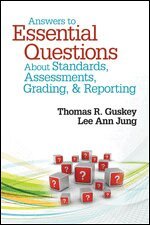
    Answers to Essential Questions About Standards, Assessments, Grading, and Reporting

    AvThomas R. Guskey,Lee Ann Jung

    Häftad, Engelska, 2013

    566 kr

    Beställningsvara. Skickas inom 3-6 vardagar. Fri frakt över 249 kr.

    Beskrivning

    The definitive guidebook to the complex terrain of 21st-century standards!

    Standards, assessments, grading, and reporting provide the foundation for nearly every initiative in modern education reform. But what do these terms actually mean—and what changes in each area will bring about the improvements teachers and school leaders want to see? Here, Thomas R. Guskey and Lee Ann Jung collect the essential questions that stymie educators, and give each one a short, simple, jargon-free response.

    Perfect for new teacher induction or professional learning on Common Core Standards initiatives, this book offers:

    • A vocabulary and frame of reference to share with other educators
    • An understanding of effective implementation in standards, assessments, grading, and reporting
    • Specific ideas for purposeful action

    Organized in a unique, accessible Q&A format, this easy-to-use guide gives educators the common ground they need for successful improvement efforts.

    "This text is a useful tool that educators can use to build common definitions about frequently used and misunderstood educational terms within their state, district, or school. Only when educators have the same understanding of 'formative assessment' or 'grade reporting' can they be implemented with fidelity."
    —Julie Quinn, Accountability Specialist
    Utah State Office of Education, Salt Lake City, UT

    "Written in small sections, this book explains well how we assess, why we use different assessments, and asks guiding questions for application of assessments. I highly recommend this book for anyone interested in educational assessments."
    —Jeanne Collins, Superintendent
    Burlington School District, VT

    Produktinformation

    • Utgivningsdatum:2013-01-16
    • Mått:152 x 228 x 10 mm
    • Vikt:270 g
    • Format:Häftad
    • Språk:Engelska
    • Antal sidor:176
    • Upplaga:1
    • Förlag:SAGE Publications
    • ISBN:9781452235240

    Utforska kategorier

    • Examination och betygsättning inom Psykologi och pedagogik

    Mer om författaren

    Thomas R. Guskey, PhD, is Professor Emeritus in the College of Education at the University of Kentucky. A graduate of the University of Chicago’s renowned Measurement, Evaluation, and Statistical Analysis (MESA) program, he began his career in education as a middle school teacher, served as an administrator in the Chicago Public Schools, and was the first Director of the Center for the Improvement of Teaching and Learning, a national educational research center. He is the author/editor of twenty-seven books and over three hundred articles published in prominent research journals as well as Educational Leadership, Kappan, and The School Administrator. Dr. Guskey served on the Policy Research Team of the National Commission on Teaching and America’s Future, and on the task force to develop the National Standards for Professional Development. He was named a Fellow in the American Educational Research Association and was awarded the Association’s prestigious Relating Research to Practice Award. He was also awarded Learning Forward′s Outstanding Contribution to the Field Award and Phi Delta Kappan′s Distinguished Educator Award. Perhaps most unique, in the 158-year history of his undergraduate institution, Thiel College, he is one of only three graduates to receive the Outstanding Alumnus Award and be inducted into the Thiel College Athletic Hall of Fame. His most recent books include Implementing Mastery Learning (2023), Instructional Feedback: The Power, the Promise, the Practice (with Smith & Lipnevich, 2023); Get Set, Go! Creating Successful Grading and Reporting Systems (2020), What We Know About Grading (with Brookhart, 2019), and On Your Mark: Challenging the Conventions of Grading and Reporting (2015). He may be contacted by email at guskey@uky.edu, Twitter at @tguskey, or at www.tguskey.com.Dr. Lee Ann Jung is the founder of Lead Inclusion and Professor of Practice at San Diego State University. She is a former special education teacher, administrator, and full professor at the University of Kentucky, where she was director of international partnerships. She has authored ten books and numerous articles focused on inclusive education, assessment and grading, Universal Design for Learning, and multi-tiered systems of support. Over the past 25 years, Lee Ann has partnered with public, independent, and international schools across the United States and across more than 45 countries, supporting leaders and educators to redesign service delivery models, strengthen MTSS implementation, and align practice with contemporary research.Lee Ann serves on the Advisory Committee for Exceptional Youth for the U.S. State Department′s Office of Overseas Schools. She has received competitive funding from the National Institutes of Health (NIH) for autism research and from the U.S. Office of Special Education Programs (OSEP) for teacher preparation. She has chaired the Classroom Assessment Special Interest Group of the American Educational Research Association (AERA) and is Section Editor for Special Education in the Routledge Encyclopedia of Education.Lee Ann leads MTSS & inclusion audits, leadership support, professional learning, and long-term systems redesign. Through Lead Inclusion, she directs and teaches in the Leadership for Neurodiversity Program, a six-course, online program in partnership with SDSU.Lee Ann particularly enjoys the messy, meaningful work in the space between research and practice—helping schools move beyond fragmented special education initiatives toward coherent, sustainable systems that serve all learners. In her community, she is a member of Circle of Blue, a philanthropic organization supporting Golisano Children′s at University of Kentucky.

    Recensioner i media

    “Guskey and Jung have waded into the murky waters of standards, assessments, grading and reporting to emerge with a very accessible, readable text, providing thoughtful, research-based answers to the questions most often asked. Whether read in its entirety or utilized as a chapter-by-chapter resource, individuals and groups from all facets of the educational community will find value in its pages.”

    Innehållsförteckning

    • AcknowledgmentsAbout the AuthorsPreface: The Nature of Essential QuestionsPart I: Standards1. What are Standards?2. Are Standards a New Idea in Education?3. Why Do Some People Oppose Standards?Part II: Assessments4. What Is Assessment?5. What Is the Difference Between Assessments and Tests?6. What Is Formative Assessment?7. Why Are Formative Assessments Important?8. What Are Common Formative Assessments?9. What Is Summative Assessment?10. What Is High-Stakes Assessment?11. What Are Instructionally Sensitive and Instructionally Insensitive Assessments?12. How Do Assessments for Learning Differ From Assessments of Learning?13. Do Formative Assessments Improve Student Learning?Part III: Grading14. What Are Grades?15. What Is the Purpose of Grading?16. Are Grades Essential to Teaching and Learning?17. Why Are the First Grades Assigned So Important?18. Do Low Grades Prompt Students to Try Harder?19. Why Is Setting Percentage Cut-Offs for Grades an Arbitrary Process?20. What Is Wrong With Grading on the Curve?Part IV: Reporting21. What Criteria Do Teachers Use in Assigning Grades?22. What Is Standards-Based Grading and Reporting?23. Why Do Some Parents Have Concerns About Standards-Based Grading and Reporting?24. If Schools Implement Standards-Based Grading, Will the Grades Assigned to Students Likely Go Up or Down?25. What Is the Most Important First Step in Implementing Standards-Based Grading?26. What Is the Best Way to Inform Parents About Moving to Standards-Based Grading?27. What Is the Best Way to Encourage Parents to Make Comments on the Report Card?28. Will Standards-Based Grading Improve Student Learning?Part V: Grading and Reporting for Exceptional and Struggling Learners29. Who are Exceptional and Struggling Learners?30. How Do We Assign Grades to Exceptional and Struggling Learners Who Require Modifications?31. What Is the Difference Between Accommodations and Modifications?32. How Do We Legally Report Grades for Exceptional and Struggling Learners on Report Cards and Transcripts?33. Do High School Students Requiring Modifications Receive Course Credit Toward a Diploma? Do Modifications Make a Student Ineligible for Extracurricular Activities, Such as Interscholastic Athletics?Summary and ConclusionsIndex