• Fri frakt över 249 kr
  • •
  • Snabba leveranser
  • •
  • Billiga böcker
Kundservice

Du är på sajten för privatpersoner.

Företag, bibliotek eller offentlig verksamhet?

Du handlar på classic.bokus.com, där alla dina funktioner finns intakta.
Till classic.bokus.com
Bokus logotyp. Gå till startsidan.
  • Erbjudanden
  • Nyheter
  • Student
  • Topplistor
  • Barn & ungdom
  • Bokus Play
  • E-böcker
  • Pocketböcker
  • Spel & pussel

Må bättre, för mindre! Upp till 50% rabatt på hälsoböcker

Sidfot

Mina sidor

    Hjälp

    • Kundservice
    • Vanliga frågor och svar
    • Frakt och leverans
    • Retur vid ångerrätt
    • Reklamera vara
    • Betalning
    • Köpvillkor
    • Allmänna villkor
    • Information om webbplatsens tillgänglighet

    Om Bokus

    • Om oss
    • Pressrum
    • För studenter
    • För företag
    • För bibliotek och offentlig verksamhet
    • För leverantörer
    • Hållbarhet

    Populärt

    • Aktuella erbjudanden
    • Presentkort
    • Studentlitteratur
    • Nya böcker
    • Topplistor
    • Signerade böcker
    • Engelska böcker

    Inspiration

    • Boktips
    • BookTok
    • Populära bokserier
    • Barnbokskaraktärer
    • Populära författare
    Logotyp för Bokus
    Följ oss på Facebook (extern länk)Följ oss på Instagram (extern länk)Följ oss på YouTube (extern länk)Följ oss på TikTok (extern länk)
    bokus @ CookiesAnpassa cookiesIntegritetspolicyKöpvillkor
    Till Citymail hemsida (extern länk)Till Budbee hemsida (extern länk)Till Postnord hemsida (extern länk)Till Schenker hemsida (extern länk)Till Early Bird hemsida (extern länk)Till Walleys hemsida (extern länk)
    1. Ekonomi och Ledarskap
    2. Ledarskapsböcker

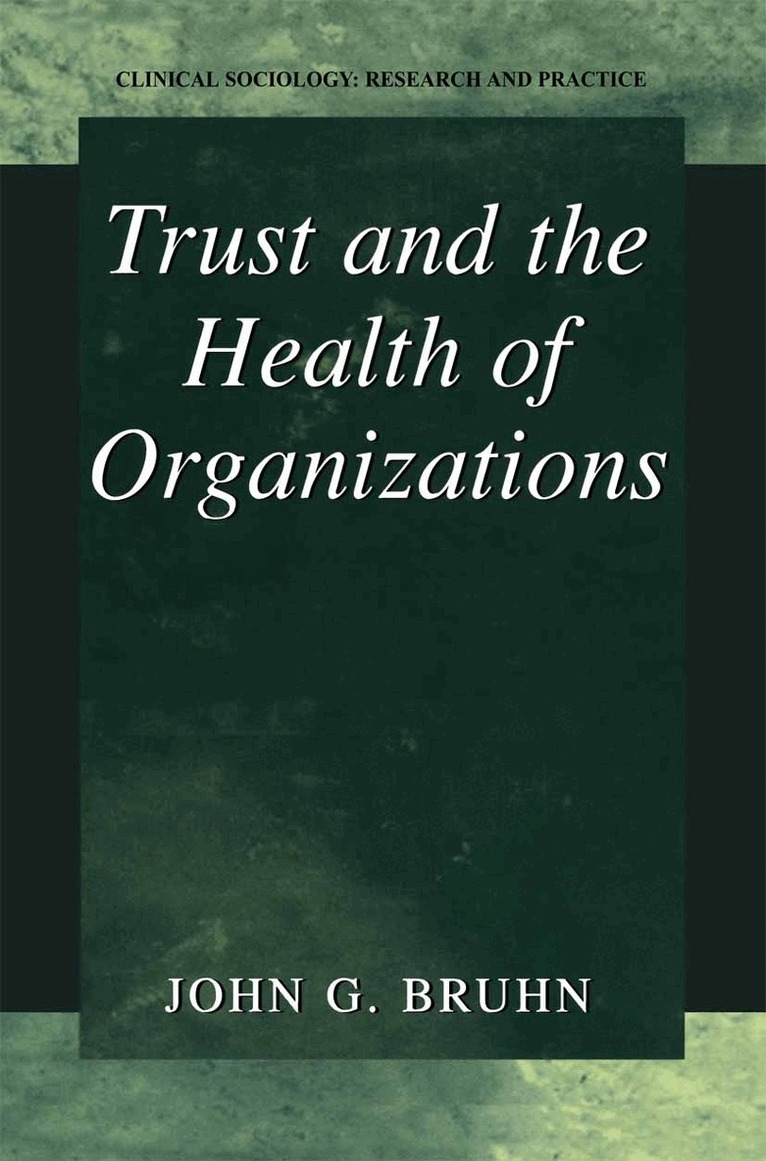
    Trust and the Health of Organizations

    AvJohn G. Bruhn

    Häftad, Engelska, 2012

    Del i serien Clinical Sociology: Research and Practice

    1 086 kr

    Beställningsvara. Skickas inom 10-15 vardagar. Fri frakt över 249 kr.

    Fler format och utgåvor

    Inbunden

    1 086 kr

    E-bok

    1 416 kr

    Beskrivning

    Leaders are usually held responsible for the trust, health and success of an organization, but it is the culture of organizations that provides the true foundation for these important factors. The leader's personality and skills influence how a trustful environment and working relationship is created, but the organization has a culture, tradition and experience of its own which influences the leader's success. The level of trust in an organization's culture will ultimately determine whether or not it is trustful, healthy and successful.Based on the interview of current and former chief executive officers from profit and non profit organizations to record their experiences in creating trust in their environment and their perceptions of the health of their organizations. The collected data reveals: - The qualities of a "trusted" leader; - How they created trust or; - How trust was destroyed in organizations; - How leaders worked in distrustful environments; - How to create a more healthy organization. This timely work will be of interest to organizations and occupational sociologists, human resource workers, social psychologists, and students of management courses.

    Produktinformation

    • Utgivningsdatum:2012-09-20
    • Mått:155 x 235 x 14 mm
    • Vikt:371 g
    • Format:Häftad
    • Språk:Engelska
    • Serie:Clinical Sociology: Research and Practice
    • Antal sidor:222
    • Upplaga:2001
    • Förlag:Springer-Verlag New York Inc.
    • ISBN:9781461352181

    Utforska kategorier

    • Ledarskapsböcker inom Ekonomi och Ledarskap
    • Sociologi inom Samhälle och politik

    Recensioner i media

    "Trust and the Health of Organizations is a rich source of suggestions for elevating trust in organizations." (Richard E. Kopelman; Contemporary Sociology 33, 2)

    Innehållsförteckning

    • 1. The Decline of Trust.- The Health Professions.- Government.- Corporate Business.- Education.- Churches.- Wall Street.- Is the Trend Real?.- Our Focus: Trust in Organizations.- Summary.- 2. Trust in Persons.- Creating Trust.- The Beginning of Trust.- Risk and Trusting.- A Trusted Person.- When Trust Fails.- Networks of Trust.- Summary.- 3. Trust in Organizations.- The Culture of Trust.- Leadership Behaviors and Trust.- Followership and Trust.- Trust-Building and Organizational Citizenship Behaviors.- CEO’s and Cultures Change: What About Trust?.- Summary.- 4. Trust and the Lifecycle of Organizations.- Organizations As Persons.- Organizational Lifecycle Transitions.- Relationships Between Trust, Organizational Culture, and Leadership Behavior.- Characteristics of a Trustful Organization.- Virtual Trust.- Summary.- 5. How Trust and Distrust Work in Organizations.- Indicators of Trust.- Building a Culture of Distrust.- Indicators of Distrust.- Pockets of Trust and Distrust.- Tough and Easy Cultures.- No Organization is a 10.- Intuition and Trust.- How CEO’s Learned Trust: Mentors and Models.- Summary.- 6. Challenges to Trust During Change and Crises.- Planned Change and Trust.- Unplanned Change and Trust.- Typical Organizational Change and Trust.- Organizational Crises and Trust.- Organizational Coping and Survival.- Change and Trust.- Change Changes Relationships.- Building, Managing, and Preventing Organizational Fires.- Do People Really Change?.- Summary.- 7. The Culture That Wouldn’t Budge: A Case Study.- Ten Themes.- Analysis.- Summary.- 8. The Health of Organizations.- What is a Healthy Organization?.- Similarities and Differences Between Individuals and Organizations.- Characteristics of Healthy Organizations.- How Organizations Become Unhealthy.- Cycles ofSickness and Health.- Degrees of Organizational Health.- How an Organization Solves Problems.- Preparing for Uncertain Change.- Trust and the Health of Organizations.- Can Trust Be Trusted? Family Businesses: Two Sides of the Same Coin.- Summary.- 9. The Ethical Organization.- What is an Ethical Organization?.- The Organization as an Ethical Community.- A Culture of Ethics.- How Organizations and Individual Members Become Unethical.- Why Unethical Leaders Persist.- Finding Integrity, Creating Trust.- Summary.- Notes.- Appendix A.- Appendix B.