Häftad, Engelska, 2012
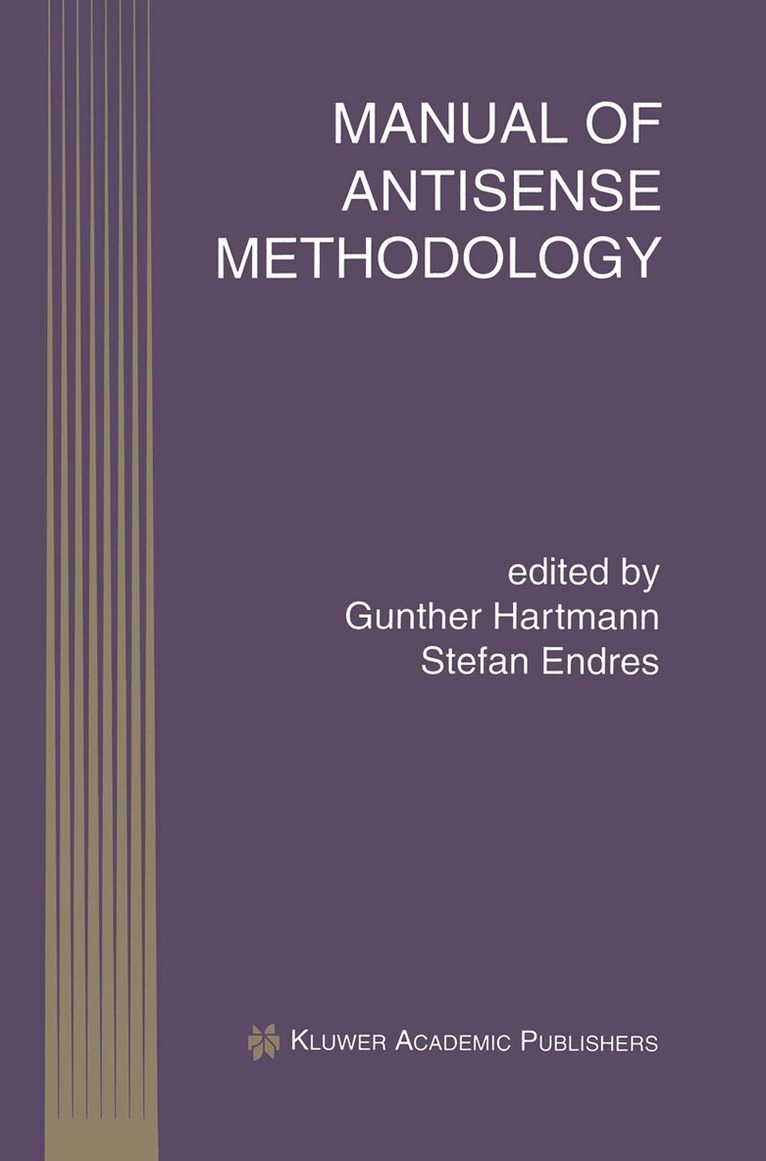
Manual of Antisense Methodology
Av Gunther Hartmann, Stefan Endres
1688 kr
Beställningsvara. Skickas inom 10-15 vardagar. Fri frakt över 249 kr.
Beskrivning
In the past few years, antisense methodology has moved from in vitro studies to in vivo studies and first human trials. While the basic concept of antisense technology is simple, the methodological problems associated with its use are numerous and complex. Antisense- based methods have proven to be a field of research where careful attention to experimental protocols and appropriate controls is necessary.
The Manual of Antisense Methodology emphasizes the application of antisense oligonucleotides, and is a guide for the identification of antisense and non-antisense effects in different experimental settings. The work is organized into three sections: antisense application in vitro, antisense application in vivo (animal models) and finally, clinical antisense studies. Where at all possible, the methods are described in sufficient detail to allow reproduction of a given experiment.
The Manual of Antisense Methodology will be of interest to researchers in immunology, cancer research, pharmacology and internal medicine; and physicians conducting clinical studies in these fields.
The Manual of Antisense Methodology emphasizes the application of antisense oligonucleotides, and is a guide for the identification of antisense and non-antisense effects in different experimental settings. The work is organized into three sections: antisense application in vitro, antisense application in vivo (animal models) and finally, clinical antisense studies. Where at all possible, the methods are described in sufficient detail to allow reproduction of a given experiment.
The Manual of Antisense Methodology will be of interest to researchers in immunology, cancer research, pharmacology and internal medicine; and physicians conducting clinical studies in these fields.
Produktinformation
- Utgivningsdatum: 2012-10-12
- Mått: 155 x 235 x 13 mm
- Vikt: 347 g
- Format: Häftad
- Språk: Engelska
- Serie: Perspectives in Antisense Science
- Antal sidor: 205
- Förlag: Springer-Verlag New York Inc.
- ISBN: 9781461373049
Utforska kategorier
Betyg & recensioner
0 recensioner
Inga recensioner tillgängliga.