• Fri frakt över 249 kr
  • •
  • Snabba leveranser
  • •
  • Billiga böcker
Kundservice

Du är på sajten för privatpersoner.

Företag, bibliotek eller offentlig verksamhet?

Du handlar på classic.bokus.com, där alla dina funktioner finns intakta.
Till classic.bokus.com
Bokus logotyp. Gå till startsidan.
  • Erbjudanden
  • Student
  • Topplistor
  • Barn & ungdom
  • Bokus Play
  • E-böcker
  • Ljudböcker
  • Pocketböcker
  • Spel och pussel

Pocketfynda! Hundratals böcker för 49 kr/st →

Sidfot

Mina sidor

    Hjälp

    • Kundservice
    • Vanliga frågor och svar
    • Frakt och leverans
    • Retur vid ångerrätt
    • Reklamera vara
    • Betalning
    • Köpvillkor
    • Allmänna villkor
    • Information om webbplatsens tillgänglighet

    Om Bokus

    • Om oss
    • Pressrum
    • För studenter
    • För företag
    • För bibliotek och offentlig verksamhet
    • För leverantörer
    • Hållbarhet

    Populärt

    • Aktuella erbjudanden
    • Presentkort
    • Studentlitteratur
    • Nya böcker
    • Topplistor
    • Signerade böcker
    • Engelska böcker

    Inspiration

    • Boktips
    • BookTok
    • Barnbokskaraktärer
    • Populära författare
    Logotyp för Bokus
    Följ oss på Facebook (extern länk)Följ oss på Instagram (extern länk)Följ oss på YouTube (extern länk)Följ oss på TikTok (extern länk)
    bokus @ CookiesAnpassa cookiesIntegritetspolicyKöpvillkor
    Till Citymail hemsida (extern länk)Till Budbee hemsida (extern länk)Till Postnord hemsida (extern länk)Till Schenker hemsida (extern länk)Till Early Bird hemsida (extern länk)Till Walleys hemsida (extern länk)
    1. Naturvetenskap och teknik
    2. Teknik och industri
    3. Energiteknik

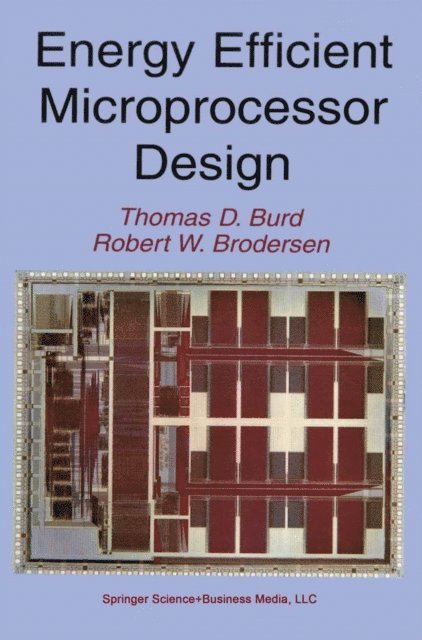
    Energy Efficient Microprocessor Design

    AvRobert W. Brodersen,Thomas D. Burd

    E-bok
    PDF, Engelska, 2012

    1 413 kr

    Läs direkt i Bokus Reader – eller ladda ned till din enhet (PDF kräver ofta zoom och scroll på små skärmar).

    Beskrivning

    This work began in 1995 as an outgrowth of the InfoPad project which showed us that in order to reduce the energy consumption of a portable multimedia terminal that something had to be done about the consumption of the microprocessor subsystem. The design of the InfoPad attempted to reduce the requirements of this general pur­ pose processor by moving the computation into the network or by the use of highly optimized integrated circuits, but in spite of these efforts it still was a major consumer of energy. The reasons for this became apparent as we determined that the energy required to perform a function in dedicated hardware could be several orders of magnitude lower than that consumed in the InfoPad microprocessor. We therefore set out on a full fledged attack on all aspects of the microprocessor energy consumption [1 J. After considerable analysis it became clear that though better circuit design and a stream­ lined architecture would assist in our goal of energy reduction, that the biggest gains were to be found by operating at reduced voltages. For the busses and VO this could be accomplished without significant degradation of the processor performance, but this was not a straightforward solution when applied to the core of the processor sub­ system (CPU and memory).

    Produktinformation

    • Utgivningsdatum:2012-12-06
    • Språk:Engelska
    • Filformat:PDF
    • Kopieringsskydd:LCP
    • ISBN:9781461508755
    • Förlag:Springer US

    Utforska kategorier

    • Energiteknik inom Naturvetenskap och teknik
    • Elektronik och kommunikationer inom Naturvetenskap och teknik
    • CAD-program inom Data och IT