• Fri frakt över 249 kr
  • •
  • Snabba leveranser
  • •
  • Billiga böcker
Kundservice

Du är på sajten för privatpersoner.

Företag, bibliotek eller offentlig verksamhet?

Du handlar på classic.bokus.com, där alla dina funktioner finns intakta.
Till classic.bokus.com
Bokus logotyp. Gå till startsidan.
  • Erbjudanden
  • Nyheter
  • Student
  • Topplistor
  • Barn & ungdom
  • Bokus Play
  • E-böcker
  • Pocketböcker
  • Spel & pussel

10% rabatt på allt med kod NYSTART10 →

Sidfot

Mina sidor

    Hjälp

    • Kundservice
    • Vanliga frågor och svar
    • Frakt och leverans
    • Retur vid ångerrätt
    • Reklamera vara
    • Betalning
    • Köpvillkor
    • Allmänna villkor
    • Information om webbplatsens tillgänglighet

    Om Bokus

    • Om oss
    • Pressrum
    • För studenter
    • För företag
    • För bibliotek och offentlig verksamhet
    • För leverantörer
    • Hållbarhet

    Populärt

    • Aktuella erbjudanden
    • Presentkort
    • Studentlitteratur
    • Nya böcker
    • Topplistor
    • Signerade böcker
    • Engelska böcker

    Inspiration

    • Boktips
    • BookTok
    • Populära bokserier
    • Barnbokskaraktärer
    • Populära författare
    Logotyp för Bokus
    Följ oss på Facebook (extern länk)Följ oss på Instagram (extern länk)Följ oss på YouTube (extern länk)Följ oss på TikTok (extern länk)
    bokus @ CookiesAnpassa cookiesIntegritetspolicyKöpvillkor
    Till Citymail hemsida (extern länk)Till Budbee hemsida (extern länk)Till Postnord hemsida (extern länk)Till Schenker hemsida (extern länk)Till Early Bird hemsida (extern länk)Till Walleys hemsida (extern länk)
    1. Naturvetenskap och teknik
    2. Matematik och naturvetenskap
    3. Biologi
    4. Zoologi

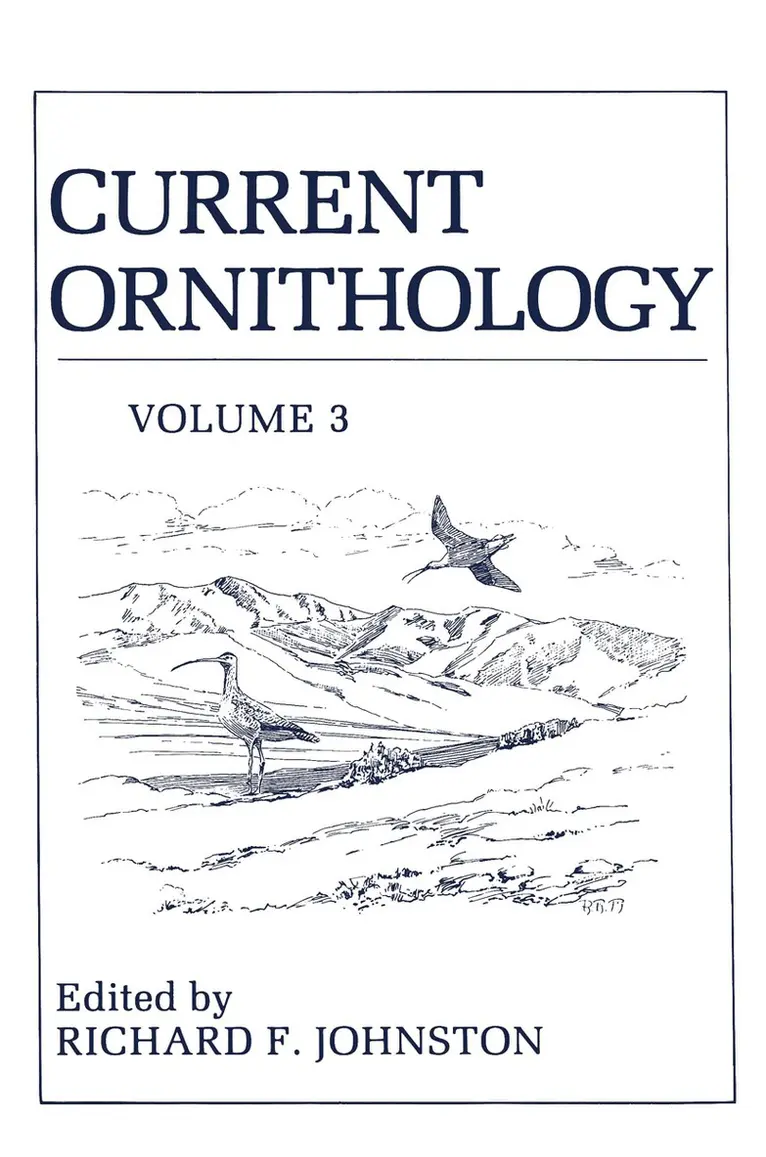
    Current Ornithology

    Volume 3

    AvRichard Johnston

    Häftad, Engelska, 2012

    546 kr

    Beställningsvara. Skickas inom 10-15 vardagar. Fri frakt över 249 kr.

    Beskrivning

    If it is still true that more than 80% of the ornithologists in North America are primarily interested or engaged in ecological studies on birds (J. R. King and W. J. Bock, Final Report of the Workshop on a National Plan For Ornithology, 1978), then Volume 3 of Current Orni­ thology is preadapted for their consideration. All but one article in this volume are somehow concerned with the ecological aspects of the bi­ ology of birds. Variation in the scope of topical coverage is relatively broad, and includes conservation, reproduction, behavior, community structure, and evolutionary ecology. Three reviews concern the pervasive effects of man and industry on various bird populations of the world. Risebrough provides a de­ tailed description of the relationships between pesticides and bird pop­ ulations. Morrison ass es ses aspects of bird population numbers as in­ dicators of environmental change, and Temple outlines current research on endangered species. The broad spectrum of reproductive ecology of birds is variously treated in this volume. Jehl and Murray explore sexual selection and some of the resulting complexities in the evolution of sexual size di­ morphism, primarily in shorebirds. Lawton and Lawton are concerned with the relationships between social behavior and breeding systems in which variation is found in the age at which reproduction is first undertaken. Oring examines the wide-ranging variation in polyandrous breeding systems in birds, while Rohwer is concerned with adoption versus infanticide in birds, and their relationships to reproductive fit­ ness.

    Produktinformation

    • Utgivningsdatum:2012-05-14
    • Mått:152 x 229 x 30 mm
    • Vikt:778 g
    • Format:Häftad
    • Språk:Engelska
    • Antal sidor:522
    • Förlag:Springer-Verlag New York Inc.
    • ISBN:9781461567868

    Utforska kategorier

    • Zoologi inom Naturvetenskap och teknik
    • Djurböcker inom Djur och Natur

    Innehållsförteckning

    • 1 The Evolution of Normal and Reverse Sexual Size Dimorphism in Shorebirds and Other Birds.- 1. Introduction.- 2. Methods.- 3. The Shorebirds.- 4. Patterns of Size Dimorphism.- 5. Theories Pertaining to the Evolution of Sexual Size Dimorphism.- 6. A General Theory for the Evolution of Sexual Size Dimorphism.- 7. Effects of Ecological Factors on Size Dimorphism.- 8. Sexual Size Dimorphism in Other Taxa.- 9. Future Research.- 10. Conclusions.- References.- 2 Bird Songs and Avian Systematics.- 1. Introduction.- 2. Bird Song and Species Problems.- 3. Experimental Tests of Species Distinctiveness.- 4. Bird Songs and the Phylogeny of Speciation.- 5. Discussion.- References.- 3 Social Dominance, Mating and Spacing Systems, Female Fecundity, and Vocal Dialects in Captive and Free-Ranging Brown-Headed Cowbirds.- 1. Introduction.- 2. Studies of Captive Cowbirds.- 3. Discussion of the Aviary Results and of Recent Field Studies on Mating and Spacing Patterns.- 4. Field Studies of Phenomena That Show Little Geographic Variation.- 5. Field Studies of Phenomena That Vary Geographically.- 6. Concluding Remarks.- References.- 4 Heterochrony, Deferred Breeding, and Avian Sociality.- 1. Introduction.- 2. Advantages of Delayed Somatic Maturation.- 3. Evidence of Paedomorphosis in the Class Aves.- 4. Heterochronic Trends in the Corvids.- 5. Ecological and Evolutionary Significance of Avian Heterochrony.- References.- 5 Avian Frugivory and Seed Dispersal in Eastern North America.- 1. Introduction.- 2. Methods.- 3. Bird-Dispersed Plants and Some of Their Characteristics.- 4. Avian Frugivores and Some of Their Characteristics.- 5. Effects of Dispersal and Frugivory on Plant Populations.- 6. Effects of Frugivory on Bird Populations.- 7. Plant Community Comparisons.- 8. Bird Community Comparisons.- 9. Summary.- References.- 6 Competition in Migrant Birds in the Nonbreeding Season.- 1. Introduction.- 2. Intraspecific Competition.- 3. Interspecific Competition.- 4. Conclusions.- References.- 7 Avian Polyandry.- 1. Introduction.- 2. Classical Polyandry.- 3. Evolution of Classical Polyandry.- 4. Did Polyandry Evolve from Monogamy via a Multi-Clutch Polygamy Stage?.- 5. Cooperative Polyandry.- 6. Theories on the Evolution of Cooperative Polyandry.- 7. Birds Improperly Considered Polyandrous.- 8. Conclusion.- References.- 8 Selection for Adoption Versus Infanticide by Replacement “Mates” in Birds.- 1. Introduction.- 2. A Review of Adoption and Infanticide in Birds.- 3. A Prospective Analysis for Birds.- 4. Alternate Hypotheses for Adoption in Birds.- 5. Adaptive or Maladaptive? A Review of Cases.- 6. Infanticide in Other Contexts.- References.- 9 Pesticides and Bird Populations.- 1. Introduction.- 2. Biocidal Chemicals.- 3. Impacts upon Bird Populations.- 4. Prospects for the Future.- References.- 10 Bird Populations as Indicators of Environmental Change.- 1. Introduction.- 2. Quantity of Habitat.- 3. Quality of Habitat.- 4. Summary and Conclusions.- References.- 11 The Problem of Avian Extinctions.- 1. Introduction.- 2. The Magnitude of the Endangered Bird Problem.- 3. Causes of Declines in Avian Populations.- 4. How to Deal with Declining and Endangered Birds.- 5. Status of Efforts to Prevent Extinctions.- References.- Author Index.- Bird Name Index.