• Fri frakt över 249 kr
  • •
  • Snabba leveranser
  • •
  • Billiga böcker
Kundservice

Du är på sajten för privatpersoner.

Företag, bibliotek eller offentlig verksamhet?

Du handlar på classic.bokus.com, där alla dina funktioner finns intakta.
Till classic.bokus.com
Bokus logotyp. Gå till startsidan.
  • Erbjudanden
  • Nyheter
  • Student
  • Topplistor
  • Barn & ungdom
  • Bokus Play
  • E-böcker
  • Pocketböcker
  • Spel & pussel

10% rabatt på allt med kod: NYSTART10 →

Sidfot

Mina sidor

    Hjälp

    • Kundservice
    • Vanliga frågor och svar
    • Frakt och leverans
    • Retur vid ångerrätt
    • Reklamera vara
    • Betalning
    • Köpvillkor
    • Allmänna villkor
    • Information om webbplatsens tillgänglighet

    Om Bokus

    • Om oss
    • Pressrum
    • För studenter
    • För företag
    • För bibliotek och offentlig verksamhet
    • För leverantörer
    • Hållbarhet

    Populärt

    • Aktuella erbjudanden
    • Presentkort
    • Studentlitteratur
    • Nya böcker
    • Topplistor
    • Signerade böcker
    • Engelska böcker

    Inspiration

    • Boktips
    • BookTok
    • Populära bokserier
    • Barnbokskaraktärer
    • Populära författare
    Logotyp för Bokus
    Följ oss på Facebook (extern länk)Följ oss på Instagram (extern länk)Följ oss på YouTube (extern länk)Följ oss på TikTok (extern länk)
    bokus @ CookiesAnpassa cookiesIntegritetspolicyKöpvillkor
    Till Citymail hemsida (extern länk)Till Budbee hemsida (extern länk)Till Postnord hemsida (extern länk)Till Schenker hemsida (extern länk)Till Early Bird hemsida (extern länk)Till Walleys hemsida (extern länk)
    1. Psykologi och pedagogik
    2. Psykologi

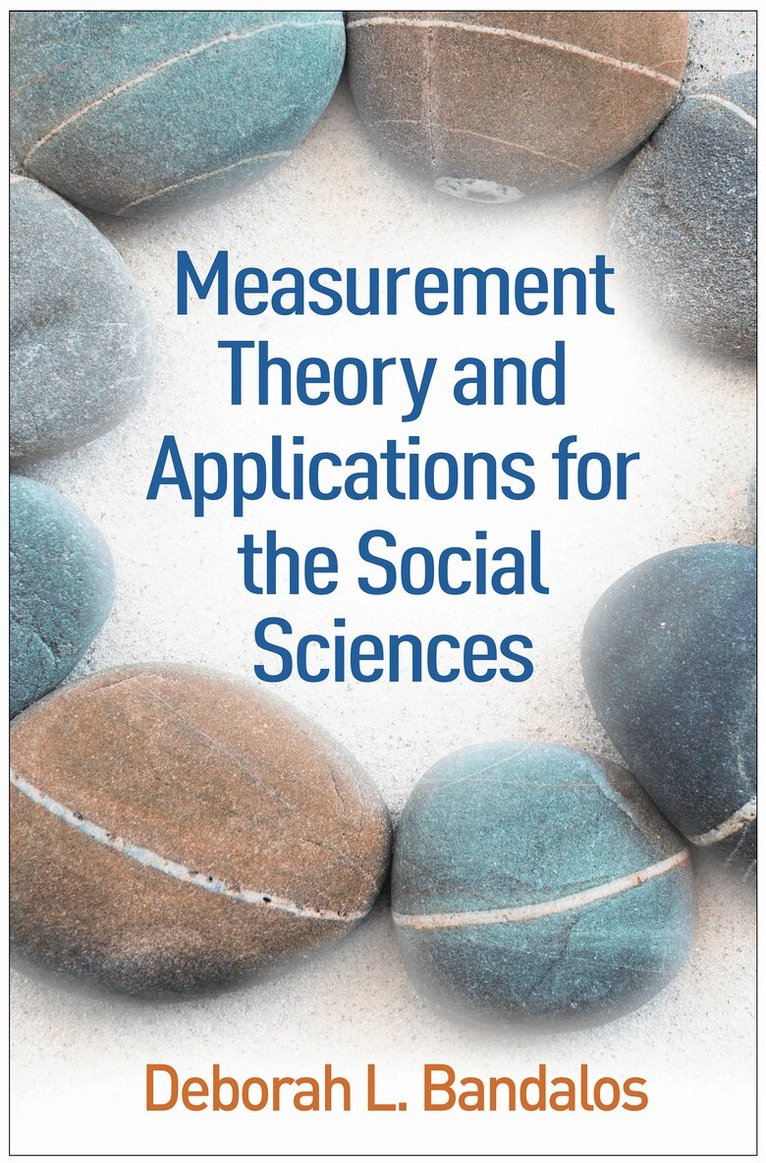
    Measurement Theory and Applications for the Social Sciences

    AvDeborah L. Bandalos

    Inbunden, Engelska, 2018

    Del i serien Methodology in the Social Sciences

    1 057 kr

    Beställningsvara. Skickas inom 10-15 vardagar. Fri frakt över 249 kr.

    Beskrivning

    Which types of validity evidence should be considered when determining whether a scale is appropriate for a given measurement situation? What about reliability evidence? Using clear explanations illustrated by examples from across the social and behavioral sciences, this engaging text prepares students to make effective decisions about the selection, administration, scoring, interpretation, and development of measurement instruments. Coverage includes the essential measurement topics of scale development, item writing and analysis, and reliability and validity, as well as more advanced topics such as exploratory and confirmatory factor analysis, item response theory, diagnostic classification models, test bias and fairness, standard setting, and equating. End-of-chapter exercises (with answers) emphasize both computations and conceptual understanding to encourage readers to think critically about the material. The companion website (www.guilford.com/bandalos-materials) provides annotated examples, syntax, and datasets in both SPSS and SAS (for most chapters), so that readers can redo the analyses in each chapter.

    Produktinformation

    • Utgivningsdatum:2018-03-22
    • Mått:178 x 254 x 37 mm
    • Vikt:1 378 g
    • Format:Inbunden
    • Språk:Engelska
    • Serie:Methodology in the Social Sciences
    • Antal sidor:661
    • Förlag:Guilford Publications
    • ISBN:9781462532131

    Utforska kategorier

    • Psykologi inom Psykologi och pedagogik
    • Psykologisk metod inom Psykologi och pedagogik

    Mer om författaren

    Deborah L. Bandalos, PhD, is Professor and Director of the Assessment and Measurement Doctoral Program in the Department of Graduate Psychology at James Madison University, where she teaches courses in exploratory factor analysis, measurement theory, and missing data methodologies. Her research areas include structural equation modeling and the effects of item wording changes in instrument development. Dr. Bandalos has published articles and book chapters in the areas of structural equation modeling, exploratory factor analysis, and item and scale development. She is an associate editor of Multivariate Behavioral Research and a past associate editor of Structural Equation Modeling. In addition, Dr. Bandalos serves on the editorial boards of Psychological Methods and Applied Measurement in Education, is on the Executive Committee of Division 5 (Quantitative and Qualitative Methods) of the American Psychological Association, and has been elected 2019 President of the Society for Multivariate Experimental Psychology.

    Recensioner i media

    "Highly readable--the statistical and measurement concepts are described so clearly that even students who think they hate math should be able to grasp the fundamentals. The writing style adds a personal touch to the technical content. Additional strengths are examples from a wide variety of disciplines, the breadth and depth of content coverage, and the step-by-step derivations of mathematical equations."--Lihshing Leigh Wang, PhD, Quantitative and Mixed Methods Research Methodologies Program, College of Education, Criminal Justice, and Human Services, University of Cincinnati"This text is perfect for psychometrics courses for clinical graduate students, and is also a great introductory text for those who plan to become researchers. It provides equations and explains them for students with varying backgrounds in mathematics. This book meets my needs! It covers the more complex topics that I teach (generalizability theory, item response theory) with sufficient technical detail, but does so in a way that is accessible to most graduate students."--Marcus Boccaccini, PhD, Clinical Psychology Doctoral Program, Sam Houston State University“A pleasure to read. Effective examples show me that the author really knows the information, and better yet, is able to communicate it well. Many tests and measurement texts are more successful in boring students to death, rather than teaching them, but not this one! It covers much of the material I teach in my course."--John Wallace, PhD, Department of Psychological Science, Ball State University"Presents a thorough explanation of measurement theory and how it applies to test development in the educational, cognitive, and affective domains. Because of its practicality and comprehensiveness, this text will be extremely useful to any student or faculty member interested in measurement theory."--Scott L. Graves Jr., PhD, Department of Counseling, Psychology, and Special Education, Duquesne University -For many years I found myself dissatisfied with an increasingly out-of-date classic psychometrics text but unwilling to adopt newer texts that did not provide the content coverage that I wanted for my psychometrics course. Deborah Bandalos's measurement theory text finally let me lay that old classic to rest….[Measurement Theory and Applications for the Social Sciences] consistently presents the material in an accessible and understandable fashion without falling into the converse error of failing to convey the full complexity of the topics covered. Bandalos often begins chapters with personal anecdotes and maintains an engaging, conversational tone throughout. The chapters offer plentiful concrete examples….In a field in which the up-to-date texts tend to have either narrow or shallow coverage and the comprehensive texts tend to have fallen out of date, Bandalos's text offers a welcome arrival that provides comprehensive and up-to-date coverage.--Psychometrika, 6/3/2019

    Innehållsförteckning

    • I. Instrument Development and Analysis1. Introduction2. Norms and Standardized Scores3. The Test Development Process4. Writing Cognitive Items5. Writing Noncognitive Items6. Item Analysis for Cognitive and Noncognitive ItemsII. Reliability and Validity7. Introduction to Reliability and the Classical Test Theory Model8. Methods of Assessing Reliability9. Interrater Agreement and Reliability10. Generalizability Theory11. ValidityIII. Advanced Topics in Measurement Theory12. Exploratory Factor Analysis13. Confirmatory Factor Analysis14. Item Response Theory, with Christine E. DeMars15. Diagnostic Classification Models, with Laine P. Bradshaw16. Bias, Fairness, and Legal Issues in Testing17. Standard Setting18. Test Equating