• Fri frakt över 249 kr
  • •
  • Snabba leveranser
  • •
  • Billiga böcker
Kundservice

Du är på sajten för privatpersoner.

Företag, bibliotek eller offentlig verksamhet?

Du handlar på classic.bokus.com, där alla dina funktioner finns intakta.
Till classic.bokus.com
Bokus logotyp. Gå till startsidan.
  • Erbjudanden
  • Nyheter
  • Student
  • Topplistor
  • Barn & ungdom
  • Bokus Play
  • E-böcker
  • Pocketböcker
  • Spel & pussel

10% rabatt på allt med kod NYSTART10 →

Sidfot

Mina sidor

    Hjälp

    • Kundservice
    • Vanliga frågor och svar
    • Frakt och leverans
    • Retur vid ångerrätt
    • Reklamera vara
    • Betalning
    • Köpvillkor
    • Allmänna villkor
    • Information om webbplatsens tillgänglighet

    Om Bokus

    • Om oss
    • Pressrum
    • För studenter
    • För företag
    • För bibliotek och offentlig verksamhet
    • För leverantörer
    • Hållbarhet

    Populärt

    • Aktuella erbjudanden
    • Presentkort
    • Studentlitteratur
    • Nya böcker
    • Topplistor
    • Signerade böcker
    • Engelska böcker

    Inspiration

    • Boktips
    • BookTok
    • Populära bokserier
    • Barnbokskaraktärer
    • Populära författare
    Logotyp för Bokus
    Följ oss på Facebook (extern länk)Följ oss på Instagram (extern länk)Följ oss på YouTube (extern länk)Följ oss på TikTok (extern länk)
    bokus @ CookiesAnpassa cookiesIntegritetspolicyKöpvillkor
    Till Citymail hemsida (extern länk)Till Budbee hemsida (extern länk)Till Postnord hemsida (extern länk)Till Schenker hemsida (extern länk)Till Early Bird hemsida (extern länk)Till Walleys hemsida (extern länk)
    1. Psykologi och pedagogik
    2. Psykologi
    3. Socialpsykologi och gruppsykologi

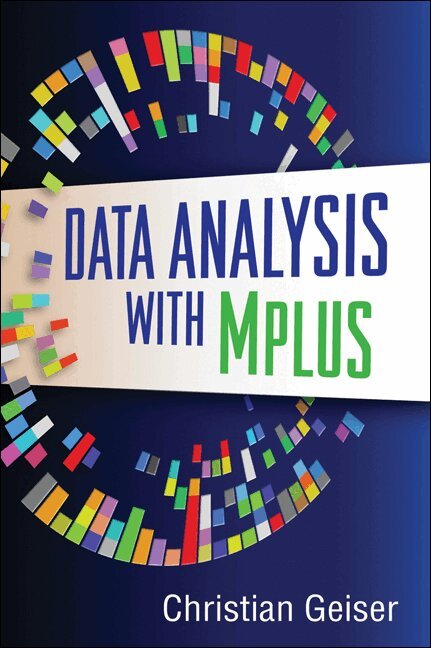
    Data Analysis with Mplus

    AvChristian Geiser

    Häftad, Engelska, 2013

    Del i serien Methodology in the Social Sciences

    730 kr

    Beställningsvara. Skickas inom 5-8 vardagar. Fri frakt över 249 kr.

    Fler format och utgåvor

    E-bok

    815 kr

    Beskrivning

    A practical introduction to using Mplus for the analysis of multivariate data, this volume provides step-by-step guidance, complete with real data examples, numerous screen shots, and output excerpts. The author shows how to prepare a data set for import in Mplus using SPSS. He explains how to specify different types of models in Mplus syntax and address typical caveats--for example, assessing measurement invariance in longitudinal SEMs. Coverage includes path and factor analytic models as well as mediational, longitudinal, multilevel, and latent class models. Specific programming tips and solution strategies are presented in boxes in each chapter. The companion website (www.guilford.com/geiser-materials) features data sets, annotated syntax files, and output for all of the examples. Of special utility to instructors and students, many of the examples can be run with the free demo version of Mplus.

    Produktinformation

    • Utgivningsdatum:2013-01-22
    • Mått:156 x 234 x 14 mm
    • Vikt:448 g
    • Format:Häftad
    • Språk:Engelska
    • Serie:Methodology in the Social Sciences
    • Antal sidor:305
    • Förlag:Guilford Publications
    • ISBN:9781462502455

    Utforska kategorier

    • Socialpsykologi och gruppsykologi inom Psykologi och pedagogik
    • Psykoterapi som behandlingsmetod inom Medicin
    • Psykologisk metod inom Psykologi och pedagogik

    Mer om författaren

    Christian Geiser, PhD, is a former professor of quantitative psychology. He currently works as an instructor and statistical consultant. His areas of expertise are in structural equation modeling, longitudinal data analysis, latent class modeling, multitrait–multimethod analysis, and measurement. His website is https://christiangeiser.com/.

    Recensioner i media

    "Mplus is arguably the most flexible commercially available software program for SEM and all of its special cases. Geiser has provided an admirable service to the community of researchers who use Mplus with this highly readable book. The book is an indispensable companion to more advanced SEM texts and is certainly an important supplementary text for graduate courses on SEM."--David Kaplan, PhD, Hilldale Professor and Patricia Busk Professor of Quantitative Methods, Department of Educational Psychology, University of Wisconsin–Madison"More and more researchers all over the world are using Mplus. I know of no other book that provides such a truly helpful tutorial on everything from the very first steps to how to run complicated SEM models like latent growth models. Beginners will very much appreciate how much attention the author pays to the basics. Many easy-to-make mistakes can be prevented by keeping this book within arm's reach. It is perfect for researchers at any career stage seeking an accessible, informative introduction to analyzing data with Mplus."--Rens van de Schoot, PhD, Department of Methodology and Statistics, Utrecht University, Netherlands"This text combines an extensive tutorial in Mplus programming with clear descriptions of the statistical models being implemented. Coverage includes standard path and factor analytic models, as well as longitudinal, multilevel, and latent class models. Many real examples are analyzed throughout the book, with careful explanations of syntax, screen shots to help navigate the program, and thorough discussions of results. The companion website provides the data, input, output, and annotated syntax files for all examples. This book will be of great interest to students and researchers who want not only to learn about Mplus, but also to gain a better understanding of SEM."--Roger E. Millsap, PhD, Department of Psychology, Arizona State University"Absolutely fantastic! I really wish I had had this book when I was a grad student. I will strongly recommend it to my own students, as well as to colleagues who ask for help with Mplus. The breadth of statistical techniques covered goes far beyond conventional SEM and makes this a valuable resource for both new and experienced Mplus users."--Alex Bierman, PhD, Department of Sociology, University of Calgary, Canada -

    Innehållsförteckning

    • 1. Data Management in SPSS1.1 Coding Missing Values1.2 Exporting an ASCII Data File for Mplus2. Reading Data into Mplus2.1 Importing and Analyzing Individual Data (Raw Data)2.1.1 Basic Structure of the Mplus Syntax and Basic Analysis2.1.2 Mplus Output for Basic Analysis2.2 Importing and Analyzing Summary Data (Covariance or Correlation Matrices)3. Linear Structural Equation Models3.1 What are Linear SEMs?3.2 Simple Linear Regression Analysis with Manifest Variables3.3 Latent Regression Analysis3.4 Confirmatory Factor Analysis3.4.1 First-Order CFA3.4.2 Second-Order CFA3.5 Path Models and Mediator Analysis3.5.1 Introduction and Manifest Path Analysis3.5.2 Manifest Path Analysis in Mplus3.5.3 Latent Path Analysis3.5.4 Latent Path Analysis in Mplus4. Structural Equation Models for Measuring Variability and Change4.1 Latent State Analysis4.1.1 LS versus LST Models4.1.2 Analysis of LS Models in Mplus4.1.3 Modeling Indicator-Specific Effects4.1.4 Testing for Measurement Invariance across Time4.2 LST Analysis4.3 Autoregressive Models4.3.1 Manifest Autoregressive Models4.3.2 Latent Autoregressive Models4.4 Latent Change Models4.5 Latent Growth Curve Models4.5.1 First-Order LGCMs4.5.2 Second-Order LGCMs5. Multilevel Regression Analysis5.1 Introduction to Multilevel Analysis5.2 Specification of Multilevel Models in Mplus5.3 Option two level basic5.4 Random Intercept Models5.4.1 Null Model (Intercept-Only Model)5.4.2 One-Way Random Effects of ANCOVA5.4.3 Means-as-Outcomes Model5.5 Random Intercept and Slope Models5.5.1 Random Coefficient Regression Analysis5.5.2 Intercepts-and-Slopes-as-Outcomes Model6. Latent Class Analysis6.1 Introduction to Latent Class Analysis6.2 Specification of LCA Models in Mplus6.3 Model Fit Assessment and Model Comparisons6.3.1 Absolute Model Fit6.3.2 Relative Model Fit6.3.3 InterpretabilityAppendix A: Summary of Key Mplus Commands Discussed in This BookAppendix B: Common Mistakes in the Mplus Input Setup and TroubleshootingAppendix C: Further Readings