Häftad, Engelska, 2014
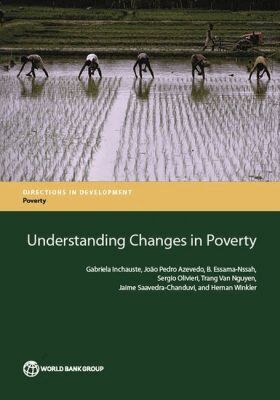
Understanding Changes in Poverty
Av Joao Pedro Azevedo, B. Essama-Nssah, Gabriela Inchauste
404 kr
Skickas inom 10-15 vardagar
Beskrivning
The 2015 Millennium Development Goal to cut in half the share of the world's population living in extreme poverty was met with time to spare. By 2013, the percentage of developing-country populations living in extreme poverty decreased from 43 percent in 1990 to 21 percent by 2010. Clearly, there is still a long way to go, with 1.2 billion people without enough to eat. What can we learn from the recent success?This volume presents recent methods to decompose the contributions to poverty reduction. What was the main contributor to poverty reduction? Using a simple accounting approach, we find that labor income growth was the largest contributor to moderate poverty reduction for a group of 21 countries with substantial reductions in poverty over the past decade. Moreover, in most cases, it was the growth in income per worker that contributed the most to poverty reduction, rather than an increase in employment. Changes in demographics, public transfers and remittances helped, but made relatively smaller contributions to poverty reduction. Public transfers were important in reducing extreme poverty, pointing to the crucial role of social protection systems.How was labor income growth able to reduce poverty? After a review of the literature, a structural decomposition method is presented and implemented in three countries. The results show that that labor income grew mainly because of higher returns to human capital endowments. This could signal increases in productivity, a higher relative price of labor, or both. In Bangladesh and Peru, this was driven by higher returns to workers with low levels of education, which may have partly been driven by higher food prices. In contrast, in Thailand, poverty fell partly due to increasing returns to education.
Produktinformation
- Utgivningsdatum: 2014-08-21
- Mått: 178 x 254 x 10 mm
- Vikt: 416 g
- Format: Häftad
- Språk: Engelska
- Antal sidor: 208
- Förlag: World Bank Publications
- Serie: Directions in Development - Poverty
- ISBN: 9781464802997
Utforska kategorier
Betyg & recensioner
0 recensioner
Inga recensioner tillgängliga.