• Fri frakt över 249 kr
  • •
  • Snabba leveranser
  • •
  • Billiga böcker
Kundservice

Du är på sajten för privatpersoner.

Företag, bibliotek eller offentlig verksamhet?

Du handlar på classic.bokus.com, där alla dina funktioner finns intakta.
Till classic.bokus.com
Bokus logotyp. Gå till startsidan.
  • Erbjudanden
  • Nyheter
  • Student
  • Topplistor
  • Barn & ungdom
  • Bokus Play
  • E-böcker
  • Pocketböcker
  • Spel & pussel

10% rabatt på allt med kod: NYSTART10 →

Sidfot

Mina sidor

    Hjälp

    • Kundservice
    • Vanliga frågor och svar
    • Frakt och leverans
    • Retur vid ångerrätt
    • Reklamera vara
    • Betalning
    • Köpvillkor
    • Allmänna villkor
    • Information om webbplatsens tillgänglighet

    Om Bokus

    • Om oss
    • Pressrum
    • För studenter
    • För företag
    • För bibliotek och offentlig verksamhet
    • För leverantörer
    • Hållbarhet

    Populärt

    • Aktuella erbjudanden
    • Presentkort
    • Studentlitteratur
    • Nya böcker
    • Topplistor
    • Signerade böcker
    • Engelska böcker

    Inspiration

    • Boktips
    • BookTok
    • Populära bokserier
    • Barnbokskaraktärer
    • Populära författare
    Logotyp för Bokus
    Följ oss på Facebook (extern länk)Följ oss på Instagram (extern länk)Följ oss på YouTube (extern länk)Följ oss på TikTok (extern länk)
    bokus @ CookiesAnpassa cookiesIntegritetspolicyKöpvillkor
    Till Citymail hemsida (extern länk)Till Budbee hemsida (extern länk)Till Postnord hemsida (extern länk)Till Schenker hemsida (extern länk)Till Early Bird hemsida (extern länk)Till Walleys hemsida (extern länk)
    1. Djur och Natur
    2. Naturböcker
    3. Växtböcker

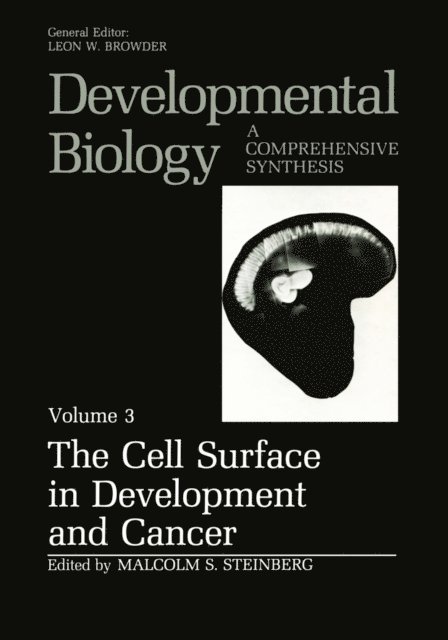
    Cell Surface in Development and Cancer

    AvMalcolm S. Steinberg

    Häftad, Engelska, 2013

    Del i serien Developmental Biology

    547 kr

    Beställningsvara. Skickas inom 10-15 vardagar. Fri frakt över 249 kr.
    Beskrivning

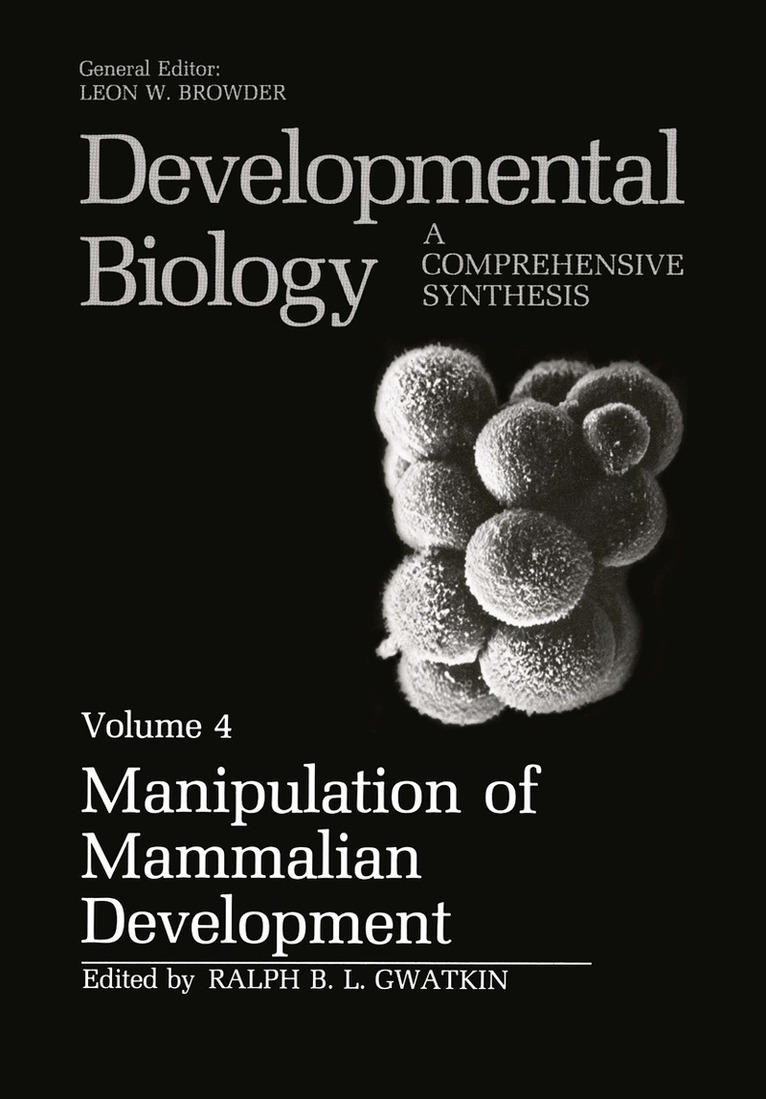
    This series was established to create comprehensive treatises on specific topics in developmental biology. Such volumes serve a useful role in developmental biology, since it is a very diverse field that receives contributions from a wide variety of disciplines. This series is a meeting-ground for the various practi­ tioners of this science, facilitating an integration of heterogeneous information on specific topics. Each volume is intended to provide the conceptual basis for a comprehen­ sive understanding of its topic as well as an analysis of the key experiments upon which that understanding is based. The specialist in any aspect of devel­ opmental biology should understand the experimental background of the field and be able to place that body of information in context to ascertain where additional research would be fruitful. At that point, the creative process gener­ ates new experiments. This series is intended to be a vital link in that ongoing process of learning and discovery.

    Produktinformation

    • Utgivningsdatum:2013-08-12
    • Mått:178 x 254 x 21 mm
    • Vikt:721 g
    • Format:Häftad
    • Språk:Engelska
    • Serie:Developmental Biology
    • Antal sidor:364
    • Förlag:Springer-Verlag New York Inc.
    • ISBN:9781468450521

    Utforska kategorier

    • Växtböcker inom Djur och Natur
    • Botanik inom Naturvetenskap och teknik
    • Biologi inom Naturvetenskap och teknik

    Innehållsförteckning

    • l • Cell Surfaces in the Control of Growth and Morphogenesis.- 1. Introduction.- 2. Cell Surfaces in the Control of Cell Proliferation.- 3. Cell Surfaces and the Control of Multicellular Assembly.- 4. Adhesive Specification of Pronephric Duct Segregation and Migration.- References.- 2 • The Cell Surface and Cancer Metastasis.- 1. Introduction.- 2. Tumor Models.- 3. Tumor Cell Heterogeneity and Correlation of Cell Surface Changes with Metastatic Behavior.- 4. Obligatory and Nonobligatory Phenotypes: Demonstrating Causality between Phenotypic Change and Metastatic Behavior.- 5. Experimental Manipulation of the Metastatic Properties of Tumor Cells: Fulfilling Koch’s Postulates at the Molecular Level.- References.- 3 • Shedding of Plasma Membrane Fragments: Neoplastic and Developmental Importance.- 1. Introduction.- 2. Historical Background.- 3. Membrane Structure.- 4. Characteristics of Shedding.- 5. Mechanisms of Shedding.- 6. Nonimmunological Consequences of Shedding.- 7. Immunological Consequences of Shedding.- 8. Embryological and Developmental Importance of Shedding.- 9. Summary.- References.- 4 • Regulation of Glycoprotein Synthesis during Development of the Sea Urchin Embryo.- 1. Introduction.- 2. The Effect of Tunicamycin on Development.- 3. Requirement of Dolichol Synthesis for Gastrulation.- 4. Metabolic Interconversion of Dolichol and Dolichylphosphate during Development.- 5. Regulation of the Synthesis of Glycosylatable Proteins.- 6. The Role of Glycoproteins in the Gastrulation Process.- 7. Conclusions.- References.- 5 • The Morphological Oncogenic Signature: Reorganization of Epithelial Cytoarchitecture and Metabolic Regulation Transformation.- 1. Introduction.- 2. Promoter-Induced Alterations of Epithelial Morphology: Scanning ElectronMicroscopy.- 3. Cytoskeletal Reorganization in Response to TPA.- 4. Morphological Alterations Retained in the NM-IF Scaffold.- 5. Immunofluorescent Localization of Cytokeratin and Desmosomal Proteins in NM-IF Scaffolds after TPA.- 6. Protein Synthesis and Distribution after Exposure to TPA.- 7. Alteration of Protein Synthesis in Suspension Culture.- 8. Induction of Morphological Signature in Permanently Transformed MDCK Cells.- 9. Summary.- References.- 6 • Growth Control in Capillary Endothelium.- 1. Introduction.- 2. Methods for the Study of Angiogenesis.- 3. Events of Capillary Growth.- 4. The Role of Mast Cells and Heparin in Angiogenesis.- 5. Angiogenic Factors.- 6. Angiogenesis Inhibitors.- 7. Conclusions.- References.- 7 • The Growth Factor-Platelet-Transformation Connection.- 1. Introduction.- 2. Why Does Serum Stimulate the Growth of Cultured Animal Cells?.- 3. Platelet Derived Growth Factor.- 4. Epidermal Growth Factor in Platelets.- 5. Transforming Growth Factors.- 6. PDGF-like Molecules Produced by Transformed Cells.- 7. The Platelet as a Circulating Paracrine Cell—A Role for Transforming Growth Factors in Normal Animals.- References.- 8 • Intercellular Recognition and Adhesion in Desmosomes.- 1. Introduction.- 2. Cell Junctions and Intercellular Adhesion.- 3. The Adhaerens Junction.- 4. Molecular Architecture of the Desmosome.- 5. Desmosomes in Intercellular Recognition.- 6. The Hemidesmosome.- 7. Desmosomes and Hemidesmosomes in Morphogenetic Processes.- 8. Desmosomes and Cancer.- 9. Concluding Remarks: Future Problems.- References.- 9 • Dual Adhesive Recognition Systems in Chick Embryonic Cells.- 1. Introduction.- 2. Dual Systems of Embryonic Adhesion.- 3. Adhesive Specificity and Cellular “Recognition”.- 4. Conclusions.- References.- 10• Gap Junctions in Development.- 1. Introduction.- 2. Structure of Junctions.- 3. Study of Junctions in Embryonic Systems.- 4. Cell Communication in Embryonic Systems.- 5. Conclusions.- References.- 11 • Cell-Cell and Cell-Matrix Interactions in the Morphogenesis of Skeletal Muscle.- 1. Introduction to Skeletal Myogenesis.- 2. Experimental Analysis of Cell-Substratum Attachment in Muscle Cell Cultures.- 3. Effects of a Fibronectin-Containing Matrix on Muscle Morphogenesis.- 4. Effects of Fibronectin on Other Events in Myogenesis.- 5. Perspectives.- References.- 12 • Extracellular Matrix Involvement in Epithelial Branching Morphogenesis.- 1. Introduction.- 2. Collagen in Branching Morphogenesis of Embryonic Salivary Gland and Lung.- 3. Glycoconjugates in Branching Morphogenesis.- 4. Proteoglycans in Branching Morphogenesis.- 5. Tunicamycin Effects on Branching Morphogenesis.- 6. Anionic Sites in the Salivary Basal Lamina.- 7. Conclusions.- References.- 13 • Cell-Cell Interactions in the Development of Dictyostelium.- 1. Life Cycle.- 2. Aggregation.- 3. Chemotaxis.- 4. cAMP Signaling.- 5. Identification of the Cell Surface cAMP Receptor.- 6. Putative GTP-Binding Regulatory Protein in D. discoideum.- 7. Progress in Purification of Adenylate Cyclase and Receptor.- 8. Summary.- References.- 14 • Growth Cone Guidance and Cell Recognition in Insect Embryos.- 1. Introduction.- 2. The First Growth Cones in the Insect CNS.- 3. Selective Affinity for Nonneuronal and Neuronal Surfaces.- 4. Cell-Ablation Experiments.- 5. Conclusions.- References.- 15 • Guidance of Neural Crest Migration: Latex Beads as Probes of Surface-Substratum Interactions.- 1. Neural Crest Migratory Pathways.- 2. Microinjection Technique.- 3. Translocation of Embryonic Cells on the Ventral NeuralCrest Pathway.- 4. Latex Beads as Probes of the Neural Crest Ventral Pathway.- 5. Laser Ablation of the Avian Neural Crest.- 6. Summary.- References.- 16 • Cell Traction in Relationship to Morphogenesis and Malignancy.- 1. Introduction.- 2. Traction and Its Detection: Observations using Elastic Substrata.- 3. Silicone Rubber Substrata.- 4. Collagen Substrata and the Tractional Structuring Phenomenon.- 5. Reduced Tractional Strength and Its Relationship to Invasiveness.- References.