
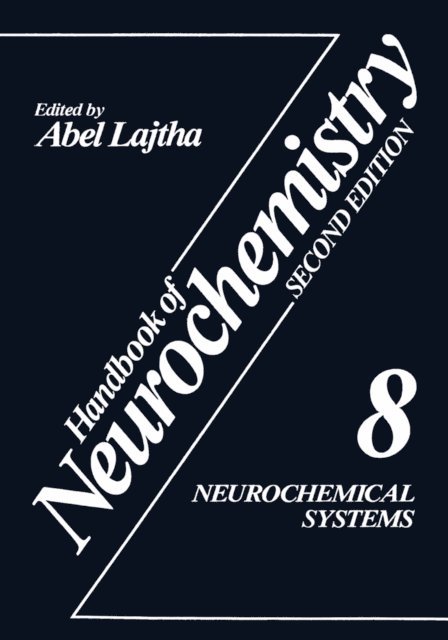
Neurochemical Systems
Häftad, Engelska, 2013
554 kr
Beställningsvara. Skickas inom 10-15 vardagar. Fri frakt över 249 kr.
Fler format och utgåvor
Beskrivning
The content of Volume 8 of the Handbook of Neurochemistry is a perfect example and sample of what occupies neurochemists in the late 1980s. What occupies them are questions, concepts, and technology that either did not start with the nervous system, or rapidly moved out of its exclusivity (see, for in- stance, chapters on neurotensin, beta-lipotropin, behavioral and neurochemical effects of ACTH, cholecystokinin, etc.). Thus, the neurochemist is more and more seen as a biochemist occupied by questions, concepts, and technology that are not unique to the nervous system, even though the ultimate substrate of these questions, as well as the ultimate functions so studied and occasionally explained, are of the nervous system. Look at the case of the hypothalamic hypophysiotropic peptides, also called hypothalamic releasing factors, or hypothalamic releasing hormones. These are all small-to-medium-size polypeptides originally characterized in ex- tracts of the hypothalamus on the basis of bioassays directed at studying their effects on one or another of the secretions of the adenohypophysis.We know now that TRFs (See Chapter 8), the thyrotropin and prolactin releasing factor, somatostatin, the hypothalamic inhibitor of the secretion of growth hormone, as well as LRF, the hypothalamic decapeptide stimulating the secretion of pituitary gonadotropins, are to be found in parts of the brain other than the hypothalamus, where their function is obviously not hypophysiotropic. Such is also the case for CRF-the corticotropin and beta-endorphin releasing factor.
Produktinformation
Utforska kategorier
Innehållsförteckning
Hoppa över listan


Mer från samma författare
Role of Proteases in the Pathophysiology of Neurodegenerative Diseases
Abel Lajtha, Naren L. Banik
Inbunden, 2001
1 702 kr
Role of Proteases in the Pathophysiology of Neurodegenerative Diseases
Naren L. Banik, Abel Lajtha
E-bok
20072 110 kr
Handbook of Neurochemistry and Molecular Neurobiology
Lajtha, Abel Lajtha, Naren Banik
Inbunden, 2007
2 202 kr
Handbook of Neurochemistry and Molecular Neurobiology
Abel Lajtha, Sylvester E. Vizi
Inbunden, 2008
2 267 kr
Role of Proteases in the Pathophysiology of Neurodegenerative Diseases
Abel Lajtha, Naren L. Banik
Häftad, 2010
1 698 kr
Hoppa över listan





Du kanske också är intresserad av
- 10% rabatt på allt
Role of Proteases in the Pathophysiology of Neurodegenerative Diseases
Abel Lajtha, Naren L. Banik
Häftad, 2010
1 698 kr
Role of Proteases in the Pathophysiology of Neurodegenerative Diseases
Abel Lajtha, Naren L. Banik
Inbunden, 2001
1 702 kr