• Fri frakt över 249 kr
  • •
  • Snabba leveranser
  • •
  • Billiga böcker
Kundservice

Du är på sajten för privatpersoner.

Företag, bibliotek eller offentlig verksamhet?

Du handlar på classic.bokus.com, där alla dina funktioner finns intakta.
Till classic.bokus.com
Bokus logotyp. Gå till startsidan.
  • Erbjudanden
  • Nyheter
  • Student
  • Topplistor
  • Barn & ungdom
  • Bokus Play
  • E-böcker
  • Pocketböcker
  • Spel & pussel

10% rabatt på allt med kod: NYSTART10 →

Sidfot

Mina sidor

    Hjälp

    • Kundservice
    • Vanliga frågor och svar
    • Frakt och leverans
    • Retur vid ångerrätt
    • Reklamera vara
    • Betalning
    • Köpvillkor
    • Allmänna villkor
    • Information om webbplatsens tillgänglighet

    Om Bokus

    • Om oss
    • Pressrum
    • För studenter
    • För företag
    • För bibliotek och offentlig verksamhet
    • För leverantörer
    • Hållbarhet

    Populärt

    • Aktuella erbjudanden
    • Presentkort
    • Studentlitteratur
    • Nya böcker
    • Topplistor
    • Signerade böcker
    • Engelska böcker

    Inspiration

    • Boktips
    • BookTok
    • Populära bokserier
    • Barnbokskaraktärer
    • Populära författare
    Logotyp för Bokus
    Följ oss på Facebook (extern länk)Följ oss på Instagram (extern länk)Följ oss på YouTube (extern länk)Följ oss på TikTok (extern länk)
    bokus @ CookiesAnpassa cookiesIntegritetspolicyKöpvillkor
    Till Citymail hemsida (extern länk)Till Budbee hemsida (extern länk)Till Postnord hemsida (extern länk)Till Schenker hemsida (extern länk)Till Early Bird hemsida (extern länk)Till Walleys hemsida (extern länk)
    1. Naturvetenskap och teknik
    2. Matematik och naturvetenskap
    3. Biologi
    4. Biovetenskap

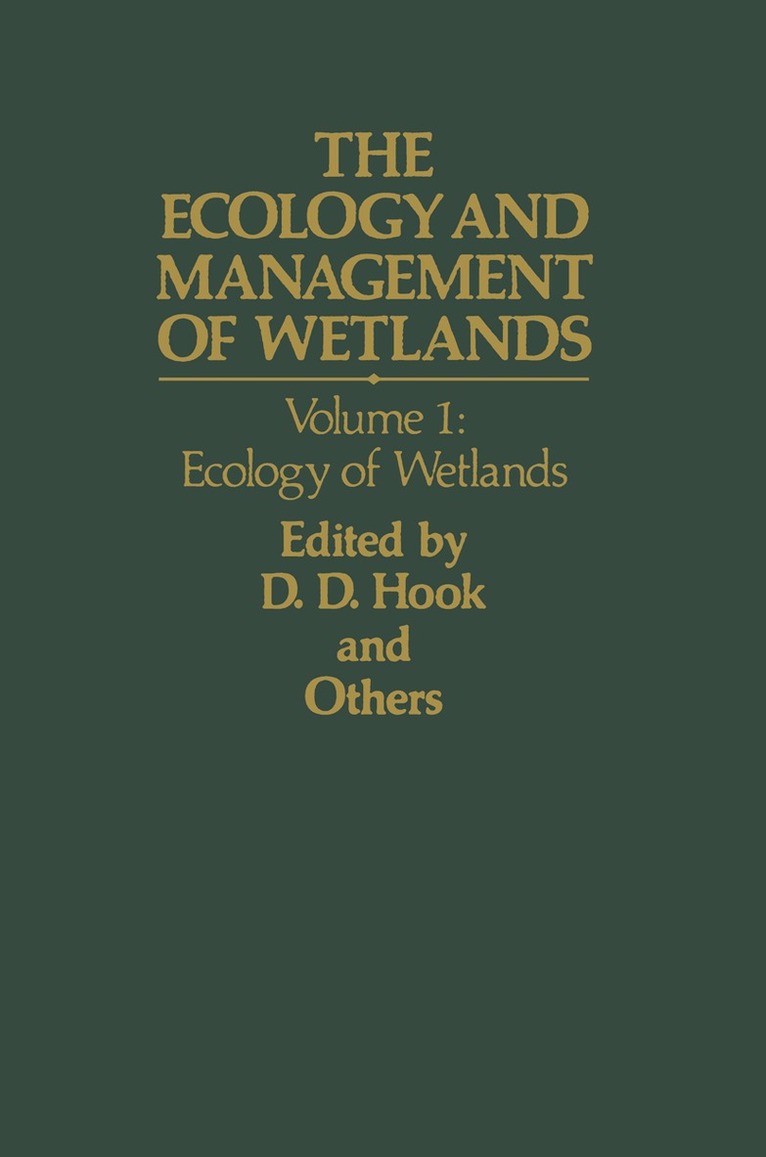
    Ecology and Management of Wetlands

    Volume 1: Ecology of Wetlands

    AvDonal D. Hook,W. H. McKee Jr

    Häftad, Engelska, 2012

    1 086 kr

    Beställningsvara. Skickas inom 10-15 vardagar. Fri frakt över 249 kr.

    Fler format och utgåvor

    Häftad

    547 kr

    Beskrivning

    This book contains the proceedings of a symposium held at the College of Charleston, Charleston, South Carolina, USA, 16-20 June 1986. The seed for this symposium arose from a group of physiologists , soU scientists and biochemists that met in Leningrad, USSR in July 1975 at the 12th Botanical Conference in a Session organized by Professor B.B. Vartepetian. This group and others later conspired to contribute to a book entitled Plant Life in Anaerobic Environments (eds. D. D. Hook and R. M. M. Crawford, Ann Arbor Science, 1978). Several contributors to the book suggested in 1983 that a broad-scoped symposium on wetlands would be useful (a) in facilitating communication among the diverse research groups involved in wetlands research (b) in bringing researchers and managers together and (c) in presenting a com­ prehensive and balanced coverage on the status of ecology ami management of wetlands from a global perspective. With this encouragement, the senior editor organized a Plan­ ning Committee that encompassed expertise from many disciplines of wetland scientists and managers. This Committee, with input from their colleagues around the world, organized a symposium that addressed almost every aspect of wetland ecology and management.

    Produktinformation

    • Utgivningsdatum:2012-05-18
    • Mått:155 x 235 x 34 mm
    • Vikt:925 g
    • Format:Häftad
    • Språk:Engelska
    • Antal sidor:592
    • Upplaga:1988
    • Förlag:Springer-Verlag New York Inc.
    • ISBN:9781468483802

    Utforska kategorier

    • Biovetenskap inom Naturvetenskap och teknik

    Innehållsförteckning

    • I. The Resource.- 1. Global Wetlands — History, Current Status and Future.- 2. The Functions of a Pristine Estuarine Ecosystem.- 3. Aquatic Animal Production and Wetland Relationships: Insights Gleaned Following Wetland Loss or Gain.- River Regulation Effects on Floodplain Hydrology and Ecology.- 5. Expertise in Wetlands Research and Management: The Need and Some Priorities for North-South Transfer.- II. Hydrologic and Water Quality Values of Wetlands.- 6. A Review of the Recharge-Discharge Function of Wetlands.- 7. Some Comments on the Relation Between Ground Water and Wetlands.- 8. Water Quality Functions of Wetlands: Natural and Managed Systems.- 9. Analysis of Flood Peak Moderation by Depressional Wetland Sites.- 10. Physical and Biological Control of Mangrove Pore Water Chemistry.- 11. The Value of Wetlands in Low Relief Landscapes.- 12. Wetland Evapotranspiration in Temperate and Arid Climates.- 13. Role of Coastal Marshes in Energy Dissipation and Shore Protection.- 14. Ground-water and Surface-water Interactions in Minnesota and Wisconsin Wetlands.- III. Biological Values of Wetlands.- 15. Wetlands and Their Relationship to Migrating and Winter Populations of Waterfowl.- 16. Aquatic Habitats of Breeding Waterfowl.- 17. Coastal Wetlands — Major Ecological Entities for Wading and Shore Birds.- 18. Mammals and Wetlands.- 19. Endangered, Threatened and Rare Wetland Plants and Animals of the Continental United States.- 20. Aquatic Invertebrates of Freshwater Wetlands: Function and Ecology.- IV. Formation, Chemistry and Biology of Wetland Soils.- 21. Soil Formation Under Hydromorphic Conditions.- 22. Characterization and Origin of Delmarva Bay Basin Fill.- 23. Gas Exchange and Atmospheric Properties of Flooded Soils.- 24. Chemistry of Metals and Trace Elements ina Submerged Soil.- 25. Phosphorus Transformations in Flooded Soils.- 26. Carbon and Nitrogen Dynamics in Wetland Soils.- 27. The Influence of Redox Potential on the Environmental Chemistry of Contaminants in Soils and Sediments.- 28. Wetland Soils with High Sulfide Contents.- 29. Soil Nitrogen, Phosphorus and Organic Carbon in Transplanted Estuarine Marshes.- V. The Tolerance of Plant Species to Wetland Sites.- 30. Biochemical Adaptations to Anoxia in Barnyard Grass.- 31. Involvement of the Hormones Ethylene and Abscisic Acid in Some Adaptive Responses of Plants to Submergence, Soil Waterlogging and Oxygen Shortage.- 32. Nutrient Uptake and Acclimation to Soil Waterlogging and Oxygen Shortage in Non-wetland Plants.- 33. Cytoplasmic Acidosis and Flooding Tolerance in Crop Plants.- 34. The Relationship of Soil Parameters and Root Metabolism to Primary Production in Periodically Inundated Soils.- 35. Mineral Nutrition of Oxygen-stressed Crops and its Relationship to some Physiological Responses.- 36. Responses of Woody Seedlings to Elevated Flood Water Temperatures.- 37. Ultrastructure Studies as a Means of Evaluating Plant Tolerance to Flooding.- 38. Use of Oxygen Microelectrodes to Measure Aeration in the Roots of Intact Tree Seedlings.- 39. Flood Tolerance Indices for Palustrine Forest Species.- 40. Interspecific Genetic Variation of Loblolly Pine Tolerance to Soil Waterlogging.- VI. Estuarine Wetlands and Interactions Among Their Components.- 41. Pathways and Controls of the Carbon Cycle in Salt Marshes.- 42. Irregularly Flooded Salt Marshes of the Gulf and Atlantic Coasts of the United States.- 43. A Comparison of Vascular Plant Communities in Tidal Freshwater and Saltwater Marshes.- 44. Herbivore Population Dynamics in Intertidal Marshlands: The Role of Host Plant Nutrition.- 45. The Utilization of Seagrass Meadows by Fishery Organisms.- 46. A Comparison of Fish and Invertebrate Community Composition in Tidal Freshwater and Oligohaline Marsh Systems.- 47. Pattern and Process in Arid-region Salt Marshes — Southern California.