• Fri frakt över 249 kr
  • •
  • Snabba leveranser
  • •
  • Billiga böcker
Kundservice

Du är på sajten för privatpersoner.

Företag, bibliotek eller offentlig verksamhet?

Du handlar på classic.bokus.com, där alla dina funktioner finns intakta.
Till classic.bokus.com
Bokus logotyp. Gå till startsidan.
  • Erbjudanden
  • Nyheter
  • Student
  • Topplistor
  • Barn & ungdom
  • Bokus Play
  • E-böcker
  • Pocketböcker
  • Spel & pussel

10% studentrabatt med kod TERM26

Sidfot

Mina sidor

    Hjälp

    • Kundservice
    • Vanliga frågor och svar
    • Frakt och leverans
    • Retur vid ångerrätt
    • Reklamera vara
    • Betalning
    • Köpvillkor
    • Allmänna villkor
    • Information om webbplatsens tillgänglighet

    Om Bokus

    • Om oss
    • Pressrum
    • För studenter
    • För företag
    • För bibliotek och offentlig verksamhet
    • För leverantörer
    • Hållbarhet

    Populärt

    • Aktuella erbjudanden
    • Presentkort
    • Studentlitteratur
    • Nya böcker
    • Topplistor
    • Signerade böcker
    • Engelska böcker

    Inspiration

    • Boktips
    • BookTok
    • Populära bokserier
    • Barnbokskaraktärer
    • Populära författare
    Logotyp för Bokus
    Följ oss på Facebook (extern länk)Följ oss på Instagram (extern länk)Följ oss på YouTube (extern länk)Följ oss på TikTok (extern länk)
    bokus @ CookiesAnpassa cookiesIntegritetspolicyKöpvillkor
    Till Citymail hemsida (extern länk)Till Budbee hemsida (extern länk)Till Postnord hemsida (extern länk)Till Schenker hemsida (extern länk)Till Early Bird hemsida (extern länk)Till Walleys hemsida (extern länk)
    1. Samhälle och politik
    2. Samhälle och kultur
    3. Kultur och medier
    4. Kulturvetenskap

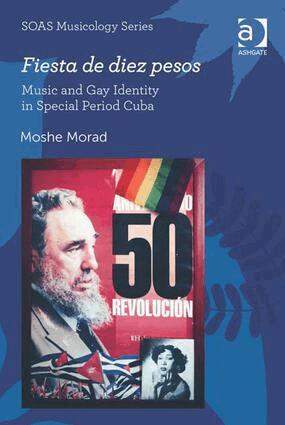
    Fiesta de diez pesos: Music and Gay Identity in Special Period Cuba

    AvMoshe Morad

    Inbunden, Engelska, 2014

    Del i serien SOAS Studies in Music

    2 506 kr

    Beställningsvara. Skickas inom 10-15 vardagar. Fri frakt över 249 kr.

    Fler format och utgåvor

    Häftad

    763 kr

    E-bok

    898 kr

    E-bok

    901 kr

    Beskrivning

    The ‘Special Period’ in Cuba was an extended era of economic depression starting in the early 1990s, characterized by the collapse of revolutionary values and social norms, and a way of life conducted by improvised solutions for survival, including hustling and sex-work. During this time there developed a thriving, though constantly harassed and destabilized, clandestine gay scene (known as the ‘ambiente’). In the course of eight visits between 1995 and 2007, the last dozen years of Fidel Castro’s reign, Moshe Morad became absorbed in Havana’s gay scene, where he created a wide social network, attended numerous secret gatherings-from clandestine parties to religious rituals-and observed patterns of behavior and communication. He discovered the role of music in this scene as a marker of identity, a source of queer codifications and identifications, a medium of interaction, an outlet for emotion and a way to escape from a reality of scarcity, oppression and despair.Morad identified and conducted his research in different types of ‘musical space,’ from illegal clandestine parties held in changing locations, to ballet halls, drag-show bars, private living-rooms and kitchens and santería religious ceremonies. In this important study, the first on the subject, he argues that music plays a central role in providing the physical, emotional, and conceptual spaces which constitute this scene and in the formation of a new hybrid ‘gay identity’ in Special-Period Cuba.

    Produktinformation

    • Utgivningsdatum:2014-12-28
    • Mått:156 x 234 x 26 mm
    • Vikt:703 g
    • Format:Inbunden
    • Språk:Engelska
    • Serie:SOAS Studies in Music
    • Antal sidor:312
    • Förlag:Taylor & Francis Ltd
    • ISBN:9781472424570
    • Utmärkelser:Commended for Alan Merriam Prize for Outstanding Book in Ethnomusicology 2013

    Utforska kategorier

    • Kulturvetenskap inom Samhälle och politik
    • HBTQ+ inom Samhälle och politik
    • Musikböcker inom Kultur

    Mer om författaren

    Moshe Morad is an ethnomusicologist, journalist and radio broadcaster, who has also presented 'on location' world music programmes on BBC Radio. His vast experience in the music industry includes managing the 'Hemisphere' world music label at EMI. He completed his PhD at SOAS, London, in 2013, following longitudinal fieldwork in Cuba.

    Recensioner i media

    Winner of the Marcia Herndon Book Prize (Gender and Sexualities Section) 2016:"As the inaugural winner of this new prize, Fiesta de diez pesos exemplifies the highest qualities of writing, ethnography, provocative interpretation, and commitment to political justice." Alan Merriam Prize 2015 - Honorable Mention:"An honorable mention for the Merriam prize goes to Moshe Morad’s book, Fiesta de diez pesos: Music and gay identity in Special Period Cuba. Fiesta de diez pesos is a brilliantly rich and vivid ethnography of (male) gay musical spaces and identities in Cuba, exploring underground or conveniently unnoticed worlds and the centrality of music and dance to their existence and operation. It spans an impressive range of contexts: the precarious yet irrepressible world of underground fiestas, dance parties held in changing secret locations; the national ballet, which Morad terms the ‘most obvious discreet gay space in Havana’; Santeria ritual performances, an indigenous arena that embraces space for gay and transgender performance and performers; and the ordinary domestic worlds of music and queer identification.""This book is engagingly interconnected through the common elements of tribalism, nostalgia, liminality and marginality, among others, that Morad effectively demonstrates are imitated in the musical structures of the genres themselves, as they advance from physical, to conceptual, and finally, emotional spaces. As an ethnomusicological enquiry, the study skillfully blends urban anthropology and queer studies to present a comprehensive understanding of gay life and identity in Special Period Cuba, manifested through music-albeit Havana-centric. Furthermore, as an investigation of gay consumers of non-western music genres, and not of music-makers, the research is a leading contribution within its discipline. For these reasons it will be of use to students and researchers interested in studying queer Cuban life and even more broadly throughout the Caribbean and Latin America. The content is especially timely as the world anticipates Cuba’s entry into its new phase of economic and social transition, coupled with the revitalized calls for the end of discrimination against sexually diverse individuals through the advocacy of Dr Mariela Castro-Espín." -Louis Vincent Di Paolo, Journal of Iberian and Latin American Research"What we have here is an important study of transcultural synthesis...With such thought-provoking material and interpretations, Fiesta de diez pesos is a stellar contribution to the field of music, gender and sexuality studies, and is highly recommended for students and scholars of anthropology, ethnomusicology, cultural studies and the Americas." -Jun Zubillaga-Pow, Ethnomusicology Forum"Morad’s work is geared toward exposing the complexity of gay culture and experience in Cuba, a country that is often depicted as homophobic in both popular media and academic literature [...] [The] book provides an engrossing glimpse into a world of drag shows, glitz, and fast dancing. His suggestion of Santería as a queer space will be controversial for some, enlightening for others, and his descriptions of his own experiences in Havana are entertaining. This is a much-needed area of study, and Morad does well to begin the debate."- Julianne Graper, Latin American Music Review

    Innehållsförteckning

    • Contents: Preface; Introduction. Part I Understanding… (Setting the Scene): Understanding Cuban homosexualities: from ‘maricón’ to ‘gay’; ‘Swing to sunshine in gay Havana’: the capital’s musicscape, ethnoscape, and homoscape. Part II Dance Music and the Fiestas: The fiestas de diez pesos scene; ‘Watch how the locas do the despelote!’: dance music genres and their queer appropriation; ‘Dancing identity’: social and musical analysis of the fiestas scene. Part III ‘El Chow’: Performance, Performativity, and Audience: Performance, performativity and camp: a brief introduction to Part III; Drag shows: glamour, empowerment, and resistance; El Ballet Nacional, ‘the most obvious discreet gay space in Havana’; Changó versus Santa Barbara: Santería ritual performance as a gay space; ¡Yo soy el bolero!: queer appropriation and identification in the kitchen. Conclusion and some theoretical framing; Epilogue: ¡Ya empezó la fiesta! (the party has already begun!); Appendix; Bibliography; Index.