• Fri frakt över 249 kr
  • •
  • Snabba leveranser
  • •
  • Billiga böcker
Kundservice

Du är på sajten för privatpersoner.

Företag, bibliotek eller offentlig verksamhet?

Du handlar på classic.bokus.com, där alla dina funktioner finns intakta.
Till classic.bokus.com
Bokus logotyp. Gå till startsidan.
  • Erbjudanden
  • Nyheter
  • Student
  • Topplistor
  • Barn & ungdom
  • Bokus Play
  • E-böcker
  • Pocketböcker
  • Spel & pussel

10% studentrabatt med kod TERM26

Sidfot

Mina sidor

    Hjälp

    • Kundservice
    • Vanliga frågor och svar
    • Frakt och leverans
    • Retur vid ångerrätt
    • Reklamera vara
    • Betalning
    • Köpvillkor
    • Allmänna villkor
    • Information om webbplatsens tillgänglighet

    Om Bokus

    • Om oss
    • Pressrum
    • För studenter
    • För företag
    • För bibliotek och offentlig verksamhet
    • För leverantörer
    • Hållbarhet

    Populärt

    • Aktuella erbjudanden
    • Presentkort
    • Studentlitteratur
    • Nya böcker
    • Topplistor
    • Signerade böcker
    • Engelska böcker

    Inspiration

    • Boktips
    • BookTok
    • Populära bokserier
    • Barnbokskaraktärer
    • Populära författare
    Logotyp för Bokus
    Följ oss på Facebook (extern länk)Följ oss på Instagram (extern länk)Följ oss på YouTube (extern länk)Följ oss på TikTok (extern länk)
    bokus @ CookiesAnpassa cookiesIntegritetspolicyKöpvillkor
    Till Citymail hemsida (extern länk)Till Budbee hemsida (extern länk)Till Postnord hemsida (extern länk)Till Schenker hemsida (extern länk)Till Early Bird hemsida (extern länk)Till Walleys hemsida (extern länk)
    1. Samhälle och politik
    2. Samhälle och kultur
    3. Kultur och medier
    4. Referensverk och tvärvetenskap

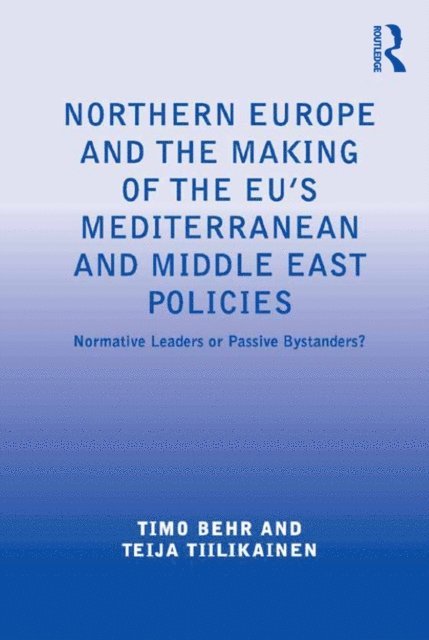
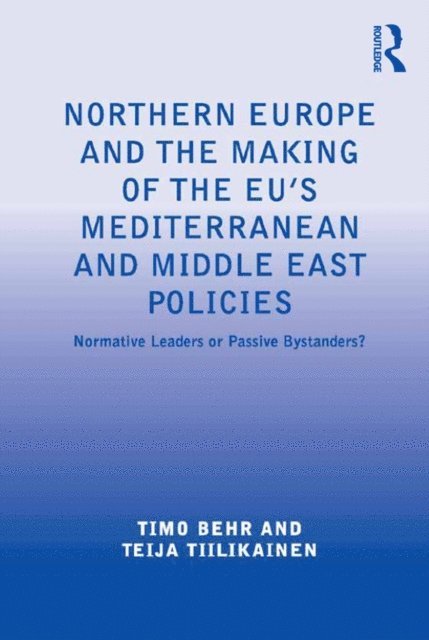
    Northern Europe and the Making of the EU's Mediterranean and Middle East Policies

    Normative Leaders or Passive Bystanders?

    AvTimo Behr,Teija Tiilikainen

    Inbunden, Engelska, 2015

    2 434 kr

    Beställningsvara. Skickas inom 10-15 vardagar. Fri frakt över 249 kr.

    Beskrivning

    What drives European foreign policy towards the wider Mediterranean and Middle East region? This collection takes an innovative approach to answering this question, by considering the impact of intra-European divisions on European polices towards this crucial region. European foreign policy has traditionally been defined by a clear division of labour: southern European member states take the lead in the EU’s southern neighbourhood, while central and northern European countries drive policies in the EU’s eastern neighbourhood. The resulting north-south split has entrenched geo-clientalistic behaviour as a core principle of EU foreign policy-making and has fuelled a static intra-European competition over influence and resources. However, as European power dynamics shift, these old divisions no longer hold and northern and central European countries have been pushed towards a more pro-active role in the region. But what factors are shaping the foreign policies of these countries in the Mediterranean and Middle East? What has been their contribution to common EU polices? And does their growing activism signal an end to old geo-clientalistic division as a core driver of European foreign policy?

    Produktinformation

    • Utgivningsdatum:2015-01-28
    • Mått:156 x 234 x 22 mm
    • Vikt:640 g
    • Format:Inbunden
    • Språk:Engelska
    • Antal sidor:260
    • Förlag:Taylor & Francis Ltd
    • ISBN:9781472430434

    Utforska kategorier

    • Referensverk och tvärvetenskap inom Samhälle och politik
    • Politik och statsskick inom Samhälle och politik
    • Internationella relationer inom Samhälle och politik

    Mer om författaren

    Dr Timo Behr has been a senior research fellow at the Finnish Institute of International Affairs (FIIA) in Helsinki from 2009-2013, where he acted as a project leader for FIIA’s research project on the Middle East and North Africa. He holds a Ph.D. and M.A. in International Relations from the Paul H. Nitze School of Advanced International Studies (SAIS) of the Johns Hopkins University in Washington DC. He is the author of several articles and book chapters on Middle Eastern politics, the Arab Spring, Euro-Mediterranean relations, and EU foreign policy. Timo currently works as an adviser to several governance entities in the Middle East. Dr Teija Tiilikainen is the director of the Finnish Institute of International Affairs and editor-in-chief of Ulkopolitiikka magazine. Previously Dr Tiilikainen worked as the director of the Network for European Studies at the University of Helsinki (2003-2008) and as State Secretary in the Finnish Foreign Ministry (2007-2008).

    Recensioner i media

    ’As instability, authoritarianism and conflict south of Europe increase, EU policy towards the Mediterranean acquires relevance and becomes more complex. From this perspective, this book is a fascinating journey through the EU’s northern members’ changing policies towards the southern neighbourhood in the context of their differences with southern members. At the same time, it is a timely and cogent contribution to the broad analysis of EU foreign policy’s evolution and its inner strategic balance.’ Roberto Aliboni, The Institute for International Affairs, Italy ’This informative book takes a thorough look at northern EU member states’ relations with the Mediterranean and the wider Middle East and provides substantial insights into the drivers of foreign policy of these countries. It is a timely and valuable contribution to the study of European foreign policy making towards this strategically important region.’ Volker Perthes, Director of the German Institute for International and Security Affairs (SWP), Germany

    Innehållsförteckning

    • Chapter 1 Introduction, Timo Behr, Teija Tiilikainen; Chapter 2 The Making of Middle East Policies: The Conceptual Framework of Foreign Policy-Making, Teija Tiilikainen; Chapter 3 Power and Politics in the Making of Euro–Mediterranean Policies: Exploring the Role of the ‘North–South Split’, Timo Behr; Chapter 4 Germany: From Self-Restraint to Leadership?, Timo Behr; Chapter 5 Austria: Historic Entanglement, High-Profile Engagement and EU Streamlining, Wolfgang Mühlberger; Chapter 6 The Netherlands: Follow Washington, Be a Good European, Jort Statema, Paul Aarts; Chapter 7 Denmark: Between Clumsy Hans and Thumbelina?, Helle Malmvig; Chapter 8 Sweden: A ‘Supporting Actor’ to the EU?, Elisabeth Johansson-Nogués; Chapter 9 Finland: From Neutrality to Constructive Europeanness, Teija Tiilikainen; Chapter 10 The Czech Republic: Many Allies, One Friend, Lucia Najšlová; Chapter 11 Poland: From Onlooker to Wannabe Agenda-Setter, Patrycja Sasnal; Chapter 12 Conclusions, Timo Behr, Teija Tiilikainen;