Teija Tiilikainen – författare
Visar alla böcker från författaren Teija Tiilikainen. Handla med fri frakt och snabb leverans.
16 produkter
16 produkter
422 kr
Läs direkt efter köp
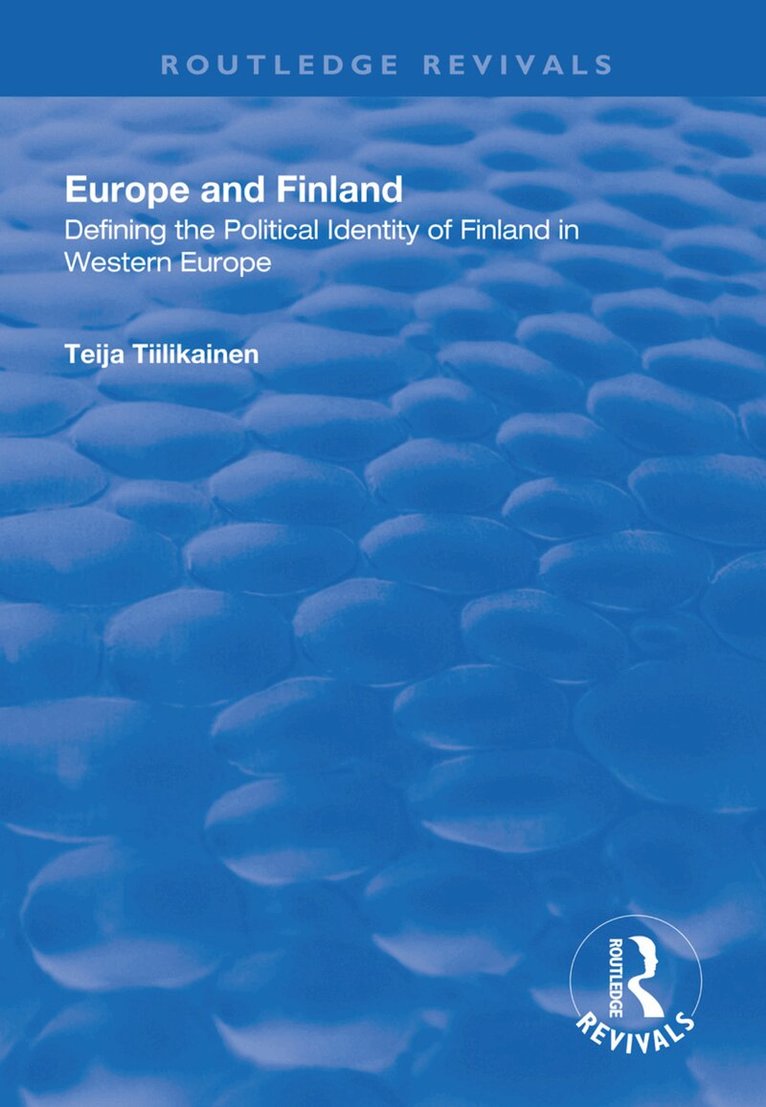
First published in 1998, this volume asked the question, what is Europe?. What is Finland’s position in Europe?. The author tries to give an answer to these questions by defining first Europe in terms of its key political traditions and then locating Finland into this map of historical ideas. The ultimate purpose of this analysis of historical ideas is very pragmatic as it tries to find an answer to the core problems of European unification. Why are different European countries at differing levels of readiness as far as the project of unification is concerned?. The answer can be found again in political traditions.
E-bok
PDF, Engelska, 2018422 kr
Läs direkt efter köp
First published in 1998, this volume asked the question, what is Europe?. What is Finland’s position in Europe?. The author tries to give an answer to these questions by defining first Europe in terms of its key political traditions and then locating Finland into this map of historical ideas. The ultimate purpose of this analysis of historical ideas is very pragmatic as it tries to find an answer to the core problems of European unification. Why are different European countries at differing levels of readiness as far as the project of unification is concerned?. The answer can be found again in political traditions.
Inbunden, Engelska, 2003
638 kr
Skickas inom 10-15 vardagar
With a focus on governmental institutions, this book explores the ways in which EU membership has altered the balance of power among key political actors. The authors discuss cultural adaptation to integration, as well as examining the views of the elite and voters. The transformation in national identity, sovereignty and neutrality are also examined.
Häftad, Engelska, 2003
372 kr
Skickas inom 10-15 vardagar
With a focus on governmental institutions, this book explores the ways in which EU membership has altered the balance of power among key political actors. The authors discuss cultural adaptation to integration, as well as examining the views of the elite and voters. The transformation in national identity, sovereignty and neutrality are also examined.
E-bok
Engelska, 2004422 kr
Läs direkt efter köp
With a focus on governmental institutions, this book explores the ways in which EU membership has altered the balance of power among key political actors. The authors discuss cultural adaptation to integration, as well as examining the views of the elite and voters. The transformation in national identity, sovereignty and neutrality are also examined.
E-bok
PDF, Engelska, 2004422 kr
Läs direkt efter köp
With a focus on governmental institutions, this book explores the ways in which EU membership has altered the balance of power among key political actors. The authors discuss cultural adaptation to integration, as well as examining the views of the elite and voters. The transformation in national identity, sovereignty and neutrality are also examined.
Inbunden, Engelska, 2018
1 481 kr
Skickas inom 10-15 vardagar
First published in 1998, this volume asked the question, what is Europe?. What is Finland’s position in Europe?. The author tries to give an answer to these questions by defining first Europe in terms of its key political traditions and then locating Finland into this map of historical ideas. The ultimate purpose of this analysis of historical ideas is very pragmatic as it tries to find an answer to the core problems of European unification. Why are different European countries at differing levels of readiness as far as the project of unification is concerned?. The answer can be found again in political traditions.
Häftad, Engelska, 2020
372 kr
Skickas inom 10-15 vardagar
First published in 1998, this volume asked the question, what is Europe?. What is Finland’s position in Europe?. The author tries to give an answer to these questions by defining first Europe in terms of its key political traditions and then locating Finland into this map of historical ideas. The ultimate purpose of this analysis of historical ideas is very pragmatic as it tries to find an answer to the core problems of European unification. Why are different European countries at differing levels of readiness as far as the project of unification is concerned?. The answer can be found again in political traditions.
E-bok
Engelska, 2016746 kr
Läs direkt efter köp
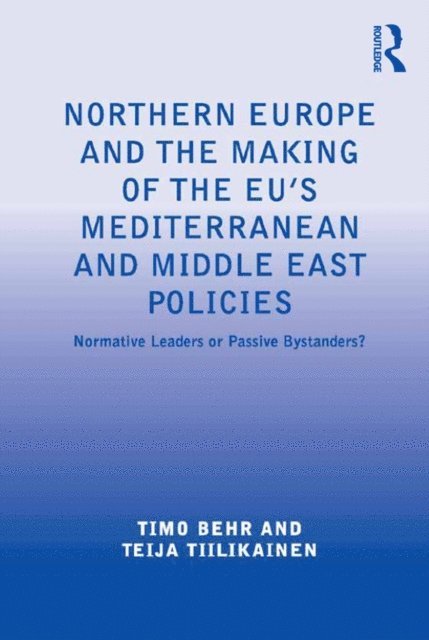
What drives European foreign policy towards the wider Mediterranean and Middle East region? This collection takes an innovative approach to answering this question, by considering the impact of intra-European divisions on European polices towards this crucial region. European foreign policy has traditionally been defined by a clear division of labour: southern European member states take the lead in the EU’s southern neighbourhood, while central and northern European countries drive policies in the EU’s eastern neighbourhood. The resulting north-south split has entrenched geo-clientalistic behaviour as a core principle of EU foreign policy-making and has fuelled a static intra-European competition over influence and resources. However, as European power dynamics shift, these old divisions no longer hold and northern and central European countries have been pushed towards a more pro-active role in the region. But what factors are shaping the foreign policies of these countries in the Mediterranean and Middle East? What has been their contribution to common EU polices? And does their growing activism signal an end to old geo-clientalistic division as a core driver of European foreign policy?
E-bok
PDF, Engelska, 2016746 kr
Läs direkt efter köp
What drives European foreign policy towards the wider Mediterranean and Middle East region? This collection takes an innovative approach to answering this question, by considering the impact of intra-European divisions on European polices towards this crucial region. European foreign policy has traditionally been defined by a clear division of labour: southern European member states take the lead in the EU’s southern neighbourhood, while central and northern European countries drive policies in the EU’s eastern neighbourhood. The resulting north-south split has entrenched geo-clientalistic behaviour as a core principle of EU foreign policy-making and has fuelled a static intra-European competition over influence and resources. However, as European power dynamics shift, these old divisions no longer hold and northern and central European countries have been pushed towards a more pro-active role in the region. But what factors are shaping the foreign policies of these countries in the Mediterranean and Middle East? What has been their contribution to common EU polices? And does their growing activism signal an end to old geo-clientalistic division as a core driver of European foreign policy?
Inbunden, Engelska, 2015
2 182 kr
Skickas inom 10-15 vardagar
What drives European foreign policy towards the wider Mediterranean and Middle East region? This collection takes an innovative approach to answering this question, by considering the impact of intra-European divisions on European polices towards this crucial region. European foreign policy has traditionally been defined by a clear division of labour: southern European member states take the lead in the EU’s southern neighbourhood, while central and northern European countries drive policies in the EU’s eastern neighbourhood. The resulting north-south split has entrenched geo-clientalistic behaviour as a core principle of EU foreign policy-making and has fuelled a static intra-European competition over influence and resources. However, as European power dynamics shift, these old divisions no longer hold and northern and central European countries have been pushed towards a more pro-active role in the region. But what factors are shaping the foreign policies of these countries in the Mediterranean and Middle East? What has been their contribution to common EU polices? And does their growing activism signal an end to old geo-clientalistic division as a core driver of European foreign policy?
Häftad, Engelska, 2022
159 kr
Skickas inom 5-8 vardagar
On May 18, 2022, the Swedish and Finnish NATO ambassadors formally submitted their countries’ membership applications to the alliance. In doing so, they ended decades – in Sweden’s case, centuries – of military nonalignment and overlapping but varied security arrangements in the Nordics and Baltics. Sweden and Finland, whose bilateral defense cooperation has deepened substantially in recent years, will now contribute to NATO’s defense of the Arctic and the Baltic Sea region. In this anthology, launched in cooperation between Stockholm Free World Forum and Konrad Adenauer Stiftung, writers from Sweden, Finland, and beyond explore how Sweden and Finland will adapt to NATO and vice versa. The chapters deal with topics such as how Sweden and Finland will contribute to burden sharing and specialization within NATO, what lessons can be drawn from past enlargements, and how Sweden and Finland can help the alliance deal with hybrid threats.
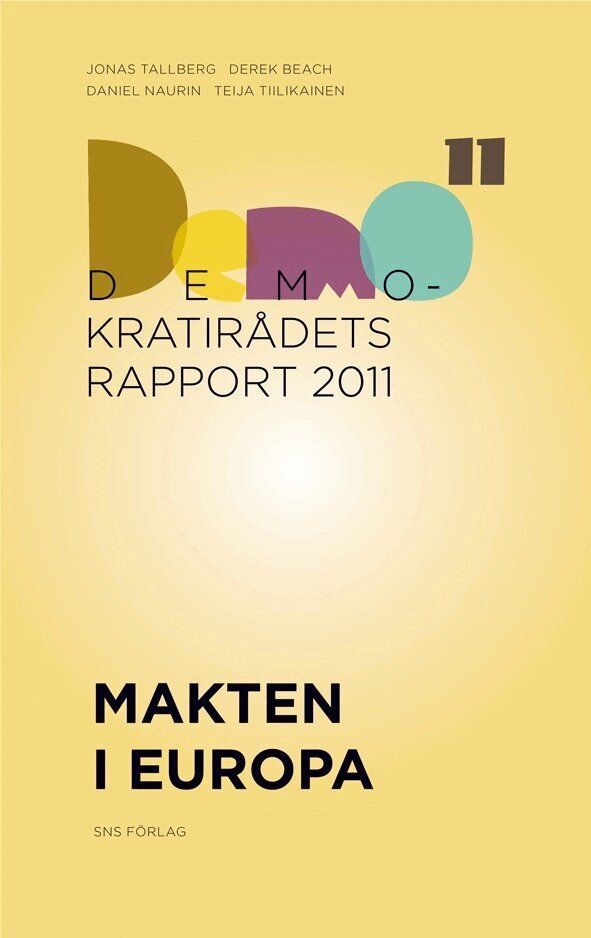
Del 2011 - Demokratirådets rapport
Makten i Europa
Häftad, Svenska, 2011
288 kr
Skickas inom 5-8 vardagar
Var finns egentligen den politiska makten i EU? Håller makten inom EU på att förändras? Demokratirådet 2011 undersöker maktens natur i EU. Den kommande rapporten från SNS Demokratiråd handlar om relationerna mellan och dynamiken inom tre kategorier av aktörer: medlemsregeringarna (den mellanstatliga makten), EU:s institutioner (den överstatliga makten) och organiserade intressen (den transnationella makten). Projektets resultat kommer att redovisas i form av en rapport från SNS Demokratiråd i maj 2011, den sista av tre rapporter från Demokratirådet med fokus på Europafrågor. Medverkande forskare: Jonas Tallberg (ordf.), professor, Statsvetenskapliga institutionen, Stockholms universitet Derek Beach, docent och lektor i statsvetenskap, Aarhus universitet, Danmark Daniel Naurin, docent och lektor, Statsvetenskapliga institutionen och Centrum för Europaforskning, Göteborgs universitet Teija Tiilikainen, direktör för Finska Utrikespolitiska Institutet, tidigare den finländska regeringens representant i EU:s framtidskonvent och statssekreterare i Finlands utrikesdepartement
E-bok
Svenska79 kr
Läs direkt efter köp
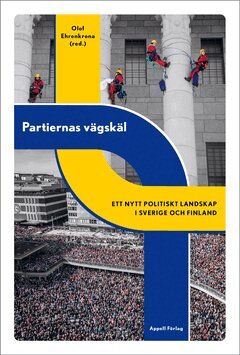
Finland och Sverige har en lång gemensam historia och likartade förvaltningstraditioner, och de är båda medlemmar i Europeiska unionen. De politiska utmaningarna är oftast desamma – men gäller det också lösningarna? Här beskriver en rad finländska och svenska statsvetare och jurister hur det nya politiska landskapet påverkar partierna samt deras vägval, och tidigare EU-kommissionärer belyser relationen mellan nationell och europeisk politik. Boken inleds med en introduktion om de politiska systemen i Sverige och Finland och avslutas med reflexioner av dess redaktör. "Partiernas vägskäl" bjuder läsarna på en initierad diskussion om maktdelningen i den liberala demokratin, de nya partiernas roll och rättighetsfrågornas växande betydelse samt de båda ländernas geopolitiska förutsättningar. Den ger olika finländska och svenska perspektiv på några av vår tids viktigaste frågor och riktar sig till alla som är intresserade av politik och svensk-finländska förhållanden.
E-bok
PDF, Finska, 2019278 kr
Läs direkt efter köp
Euroopan integraatio on aiheuttanut suuria haasteita yhteiskuntatieteelliselle tutkimukselle. Integraation tuloksena syntynyt Euroopan unioni ei ole valtio, mutta se poikkeaa selvästi myös perinteisistä kansainvälisistä järjestöistä. Valtioiden tutkimiseen kehitetyt yhteiskuntatieteelliset välineet eivät kaikilta osin sovellu integraation tutkimiseen. Tutkijoiden on täytynyt pohtia, millaisia teorioita, käsitteitä ja metodeja tähän tarpeeseen on kehitettävä. Tässä teoksessa esitellään integraatiotutkimuksen pääasiallisia muotoja politiikan tutkimuksessa. Vallitsevien tutkimussuuntausten ohella käydään läpi integraatiotutkimuksen historiaa. Politiikan tutkimuksen painopistealueiden ja keskeisten teoreettisten lähestymistapojen lisäksi selvitetään sitä, miten kansainvälisten suhteiden tutkimus on tarkastellut integraatiota ja Euroopan unionia. Teoksessa hahmotellaan lisäksi integraatiotutkimuksen päälinjoja politiikan ja kansainvälisten suhteiden tutkimuksen lähimaastossa: sosiologiassa, taloustieteessä ja oikeustieteessä. Teos sopii oppikirjaksi Eurooppa-opintoihin ja muihin yhteiskuntatieteisiin. Se on myös oivallinen käsikirja alan tutkijoille.
E-bok
Finska, 2019164 kr
Läs direkt efter köp
Kuinka maailma rajoittaa vapauttamme? Mihin minulla itselläni on valtaa, mihin vapaus? Piileekö vapaudessa velvollisuuksia? Kaikki vapaudesta uppoutuu vapauden rajankäynteihin. Mahdollisen ja mahdottoman erottava raja on liukuva. Tuon rajan paikasta neuvottelevat jatkuvasti erilaiset vastinparit - me ja he, ihminen ja luonto, yksilö ja valtio. Monet ennen ehdottomat rajat ovat liudentuneet: valtiota ei rakenneta enää yhden kansallisuuden varaan ja uskonnoista voi poimia itselle sopivimmat tavat. Samalla uusia, utopistisiltakin kuulostavia mahdollisuuksia tuntuu olevan aivan ulottuvillamme. Geenejä ja luonnon rakenteita muokkaamalla voidaan parantaa sairauksia ja kenties jarruttaa ihmiskehon väistämätöntä rappeutumista. Lisääntyvä vapaus voi kääntyä myös itseään vastaan: pystymmekö järkeviin valintoihin tavarapaljouden ja nokkelien mainostajien armoilla? Kykenemmekö seulomaan kohtaamastamme tietotulvasta toden ja valheen? ”Vapaus ei lopulta ole rajoitusten puuttumista vaan lukematon määrä sosiaalisia ja ekologisia siteitä, jotka kannattelevat meitä ihmisinä.”