• Fri frakt över 249 kr
  • •
  • Snabba leveranser
  • •
  • Billiga böcker
Kundservice

Du är på sajten för privatpersoner.

Företag, bibliotek eller offentlig verksamhet?

Du handlar på classic.bokus.com, där alla dina funktioner finns intakta.
Till classic.bokus.com
Bokus logotyp. Gå till startsidan.
  • Erbjudanden
  • Nyheter
  • Student
  • Topplistor
  • Barn & ungdom
  • Bokus Play
  • E-böcker
  • Pocketböcker
  • Spel & pussel

10% rabatt på allt med kod: NYSTART10 →

Sidfot

Mina sidor

    Hjälp

    • Kundservice
    • Vanliga frågor och svar
    • Frakt och leverans
    • Retur vid ångerrätt
    • Reklamera vara
    • Betalning
    • Köpvillkor
    • Allmänna villkor
    • Information om webbplatsens tillgänglighet

    Om Bokus

    • Om oss
    • Pressrum
    • För studenter
    • För företag
    • För bibliotek och offentlig verksamhet
    • För leverantörer
    • Hållbarhet

    Populärt

    • Aktuella erbjudanden
    • Presentkort
    • Studentlitteratur
    • Nya böcker
    • Topplistor
    • Signerade böcker
    • Engelska böcker

    Inspiration

    • Boktips
    • BookTok
    • Populära bokserier
    • Barnbokskaraktärer
    • Populära författare
    Logotyp för Bokus
    Följ oss på Facebook (extern länk)Följ oss på Instagram (extern länk)Följ oss på YouTube (extern länk)Följ oss på TikTok (extern länk)
    bokus @ CookiesAnpassa cookiesIntegritetspolicyKöpvillkor
    Till Citymail hemsida (extern länk)Till Budbee hemsida (extern länk)Till Postnord hemsida (extern länk)Till Schenker hemsida (extern länk)Till Early Bird hemsida (extern länk)Till Walleys hemsida (extern länk)
    1. Samhälle och politik
    2. Sociologi och antropologi
    3. Sociologi

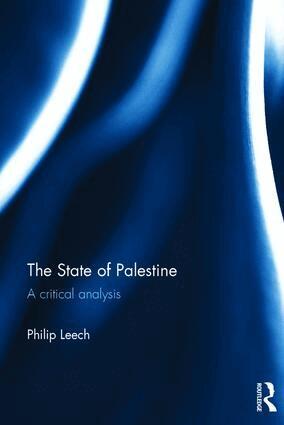
    State of Palestine

    A critical analysis

    AvPhilip Leech

    Inbunden, Engelska, 2016

    2 724 kr

    Beställningsvara. Skickas inom 10-15 vardagar. Fri frakt över 249 kr.

    Fler format och utgåvor

    Häftad

    686 kr

    E-bok

    788 kr

    E-bok

    788 kr

    Beskrivning

    The Palestinian national movement reached a dead end and came close to disintegration at the beginning of the present century. This critical analysis of internal Palestinian politics in the West Bank traces the re-emergence of the Palestinian Authority's established elite in the aftermath of the failed unity government and examines the main security and economic agendas pursued by them during that period. Based on extensive field research interviews and participant observation undertaken across several sites in Nablus and the surrounding area, it provides a bottom-up interpretation of the Palestinian Authority's agenda and challenges the popular interpretation that its governance represents the only realistic path to Palestinian independence. As the first major account of the Palestinian Authority's political agenda since the collapse of the unity government this book offers a unique explanation for the failure to bring a Palestinian state into being and challenges assumptions within the existing literature by addressing the apparent incoherence between mainstream debates on Palestine and the reality of conditions there.This book is a key addition to students and scholars interested in Politics, Middle-Eastern Studies, and International Relations.

    Produktinformation

    • Utgivningsdatum:2016-07-25
    • Mått:156 x 234 x 18 mm
    • Vikt:560 g
    • Format:Inbunden
    • Språk:Engelska
    • Antal sidor:218
    • Förlag:Taylor & Francis Ltd
    • ISBN:9781472447760

    Utforska kategorier

    • Sociologi inom Samhälle och politik
    • Statsvetenskap och politisk teori inom Samhälle och politik
    • Mellanösterns historia inom Historia och arkeologi

    Mer om författaren

    Philip Leech is Senior Fellow at the Institute for Government at the University of Ottawa, Canada, and a Visiting Fellow at the Kenyon Institute in Jerusalem. He has a PhD from Exeter University’s Institute for Arab and Islamic Studies and is the co-editor of Political Identities and Popular Uprisings in the Middle East (2016).

    Recensioner i media

    The State of Palestine’ provides a comprehensive critique of the false messiah of state-building as a strategy for Palestinian emancipation. Based on extensive research in the occupied Palestinian territory, particularly in the city of Nablus, Leech critically assesses 20 years of the Palestinian Authority, but with a focus on the post-2006 era. This book is essential reading for those who wish to understand Palestinian politics today and for why the so-called ‘two-state solution’ was - and remains - so fundamentally flawed.- Dr Mandy Turner, Director of the Kenyon Institute in Jerusalem (Council for British Research in the Levant)The first thorough and scholarly examination of the post-Oslo reality in the West Bank. This careful and forensic study exposes the fallacies surrounding the reality on the ground in the areas under the Palestinian Authority control. A highly important source of information and deconstruction for anyone who wishes genuinely to understand, and change, the dismal reality on the ground in the West Bank and beyond.- Ilan Pappe, Professor of History at the Institute for Arab and Islamic Studies, Exeter University Drawing upon original fieldwork in the north of the West Bank, Phil Leech provides a meticulous and much-needed critique of the Palestinian Authority’s ‘state building’ project. This is a fascinating and timely account of Palestinian politics that deserves to be widely read.- Adam Hanieh, Senior Lecturer in Development Studies, the School of Oriental and African Studies, University of London.Leech makes a compelling case that the Palestinian Authority's and the international community's statebuilding project in the Occupied Territories never stood a real chance. Extensive engagement with the lived experience of those in cities, villages and refugee camps is married to a grasp of the higher politics and economi

    Innehållsförteckning

    • Introduction The ‘State’ and Palestine The Fragmentation of Palestine Making Plans Palestinian Authoritarianism The ‘State of Palestine’ ‘Economic Peace’ Disaster, Capitalism and Palestine Conclusions