• Fri frakt över 249 kr
  • •
  • Snabba leveranser
  • •
  • Billiga böcker
Kundservice

Du är på sajten för privatpersoner.

Företag, bibliotek eller offentlig verksamhet?

Du handlar på classic.bokus.com, där alla dina funktioner finns intakta.
Till classic.bokus.com
Bokus logotyp. Gå till startsidan.
  • Erbjudanden
  • Nyheter
  • Student
  • Topplistor
  • Barn & ungdom
  • Bokus Play
  • E-böcker
  • Pocketböcker
  • Spel & pussel

10% rabatt på allt med kod NYSTART10 →

Sidfot

Mina sidor

    Hjälp

    • Kundservice
    • Vanliga frågor och svar
    • Frakt och leverans
    • Retur vid ångerrätt
    • Reklamera vara
    • Betalning
    • Köpvillkor
    • Allmänna villkor
    • Information om webbplatsens tillgänglighet

    Om Bokus

    • Om oss
    • Pressrum
    • För studenter
    • För företag
    • För bibliotek och offentlig verksamhet
    • För leverantörer
    • Hållbarhet

    Populärt

    • Aktuella erbjudanden
    • Presentkort
    • Studentlitteratur
    • Nya böcker
    • Topplistor
    • Signerade böcker
    • Engelska böcker

    Inspiration

    • Boktips
    • BookTok
    • Populära bokserier
    • Barnbokskaraktärer
    • Populära författare
    Logotyp för Bokus
    Följ oss på Facebook (extern länk)Följ oss på Instagram (extern länk)Följ oss på YouTube (extern länk)Följ oss på TikTok (extern länk)
    bokus @ CookiesAnpassa cookiesIntegritetspolicyKöpvillkor
    Till Citymail hemsida (extern länk)Till Budbee hemsida (extern länk)Till Postnord hemsida (extern länk)Till Schenker hemsida (extern länk)Till Early Bird hemsida (extern länk)Till Walleys hemsida (extern länk)
    1. Naturvetenskap och teknik
    2. Geovetenskap
    3. Regional planering

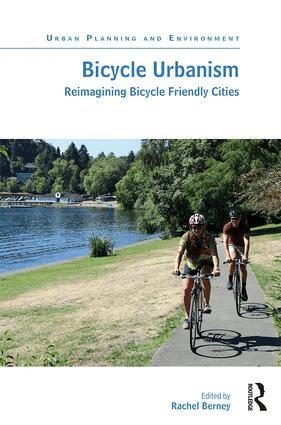
    Bicycle Urbanism

    Reimagining Bicycle Friendly Cities

    AvRachel Berney

    Inbunden, Engelska, 2018

    Del i serien Urban Planning and Environment

    2 423 kr

    Beställningsvara. Skickas inom 10-15 vardagar. Fri frakt över 249 kr.

    Beskrivning

    Over recent decades, bicycling has received renewed interest as a means of improving transportation through crowded cities, improving personal health, and reducing environmental impacts associated with travel. Much of the discussion surrounding cycling has focused on bicycle facility design—how to best repurpose road infrastructure to accommodate bicycling. While part of the discussion has touched on culture, such as how to make bicycling a larger part of daily life, city design and planning have been sorely missing from consideration. Whilst interdisciplinary in its scope, this book takes a primarily planning approach to examining active transportation, and especially bicycling, in urban areas. The volume examines the land use aspects of the city—not just the streetscape. Illustrated using a range of case studies from the USA, Canada, and Australia, the volume provides a comprehensive overview of key topics of concern around cycling in the city including: imagining the future of bicycle-friendly cities; integrating bicycling into urban planning and design; the effects of bike use on health and environment; policies for developing bicycle infrastructure and programs; best practices in bicycle facility design and implementation; advances in technology, and economic contributions.

    Produktinformation

    • Utgivningsdatum:2018-02-12
    • Mått:156 x 234 x 18 mm
    • Vikt:498 g
    • Format:Inbunden
    • Språk:Engelska
    • Serie:Urban Planning and Environment
    • Antal sidor:236
    • Förlag:Taylor & Francis Ltd
    • ISBN:9781472456632

    Utforska kategorier

    • Regional planering inom Naturvetenskap och teknik
    • Geografi inom Naturvetenskap och teknik

    Mer om författaren

    Rachel Berney is an Assistant Professor in the Department of Urban Design and Planning at the University of Washington, Seattle, USA.

    Innehållsförteckning

    • Advancing Bicycle Urbanism, Rachel Berney; 1. Bike paths to nowhere: Bicycle infrastructure that ignores the street network, Steven Fleming; 2. Traffic signal equity: Crossing the street to active transportation, Cathy Tuttle; 3. The role of personas in cycling advocacy, Robert W. Edmiston; 4. Instagramming urban design along the Ohlone Greenway, Benedict Han; 5. A look at bicycle commuting by low-income New Yorkers using the CEO Poverty Measure, Todd Seidel, Mark Levitan, Christine D’Onofrio, John Krampner, and Daniel Scheer; 6. Middle modalism: The proliferation of e-bikes and implications for planning and urban design, Derek Chisholm and Justin Healy; 7. Why we should stop talking about speed limits and start talking about speed, Arthur Slabosky; 8. A framework to analyze the economic feasibility of cycling facilities, Mingxin Li and Ardeshir Faghri; 9. Secure investment for active transport: Willingness to pay for secured bicycle parking in Montreal, Canada, Dea van Lierop, Brian H.Y. Lee, and Ahmed M. El-Geneidy; 10. Site suitability and public participation: A study for a bike-sharing program in a college town, Yuwen Hou and Mônica A. Haddad; 11. How GPS route data collected from smartphones can benefit bicycle planning, Joel L. Meyer and Jennifer C. Duthie; 12. Mapping GPS data and assessing mapping accuracy, Katie A. Kam, Joel L. Meyer, Jennifer C. Duthie, and Hamza Khan