Rachel Berney - Böcker
Visar alla böcker från författaren Rachel Berney. Handla med fri frakt och snabb leverans.
3 produkter
3 produkter
634 kr
Skickas inom 10-15 vardagar
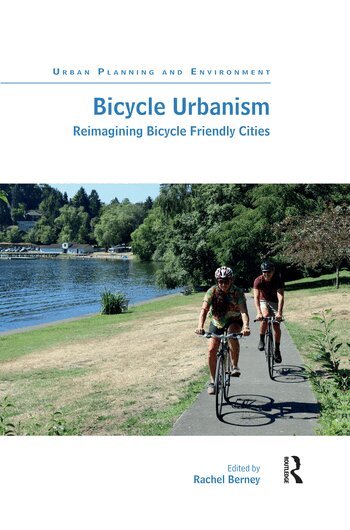
Over recent decades, bicycling has received renewed interest as a means of improving transportation through crowded cities, improving personal health, and reducing environmental impacts associated with travel. Much of the discussion surrounding cycling has focused on bicycle facility design—how to best repurpose road infrastructure to accommodate bicycling. While part of the discussion has touched on culture, such as how to make bicycling a larger part of daily life, city design and planning have been sorely missing from consideration. Whilst interdisciplinary in its scope, this book takes a primarily planning approach to examining active transportation, and especially bicycling, in urban areas. The volume examines the land use aspects of the city—not just the streetscape. Illustrated using a range of case studies from the USA, Canada, and Australia, the volume provides a comprehensive overview of key topics of concern around cycling in the city including: imagining the future of bicycle-friendly cities; integrating bicycling into urban planning and design; the effects of bike use on health and environment; policies for developing bicycle infrastructure and programs; best practices in bicycle facility design and implementation; advances in technology, and economic contributions.
2 236 kr
Skickas inom 10-15 vardagar
Over recent decades, bicycling has received renewed interest as a means of improving transportation through crowded cities, improving personal health, and reducing environmental impacts associated with travel. Much of the discussion surrounding cycling has focused on bicycle facility design—how to best repurpose road infrastructure to accommodate bicycling. While part of the discussion has touched on culture, such as how to make bicycling a larger part of daily life, city design and planning have been sorely missing from consideration. Whilst interdisciplinary in its scope, this book takes a primarily planning approach to examining active transportation, and especially bicycling, in urban areas. The volume examines the land use aspects of the city—not just the streetscape. Illustrated using a range of case studies from the USA, Canada, and Australia, the volume provides a comprehensive overview of key topics of concern around cycling in the city including: imagining the future of bicycle-friendly cities; integrating bicycling into urban planning and design; the effects of bike use on health and environment; policies for developing bicycle infrastructure and programs; best practices in bicycle facility design and implementation; advances in technology, and economic contributions.
440 kr
Skickas inom 7-10 vardagar
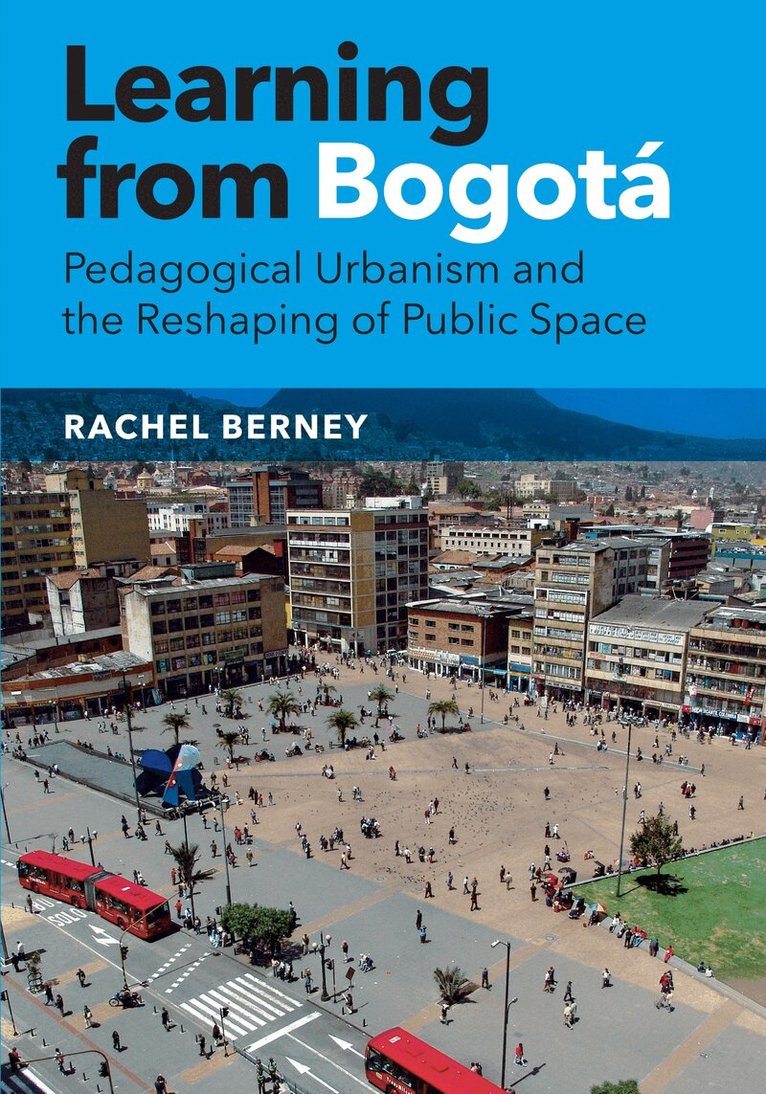
Once known as a “drug capital” and associated with kidnappings, violence, and excess, BogotÁ, Colombia, has undergone a transformation that some have termed “the miracle of BogotÁ.” Beginning in the late 1980s, the city emerged from a long period of political and social instability to become an unexpected model of urban development through the redesign and revitalization of the public realm-parks, transportation, and derelict spaces-under the leadership of two “public space mayors,” Antanas Mockus and Enrique PeÑalosa (the latter reelected in 2015). In Learning from BogotÁ, Rachel Berney analyzes how these mayors worked to reconfigure the troubled city into a pedagogical one whose public spaces and urban policy have helped shape a more tolerant and aware citizenry.Berney examines the contributions of Mockus and PeÑalosa through the lenses of both spatial/urban design and the city’s history. She shows how, through the careful intertwining of new public space and transportation projects, the reclamation of privatized public space, and the refurbishment of dilapidated open spaces, the mayors enacted an ambitious urban vision for BogotÁ without resorting to the failed method of the top-down city master plan. Illuminating the complex interplay between formal politics, urban planning, and improvised social strategies, as well as the negative consequences that accompanied BogotÁ’s metamorphosis, Learning from BogotÁ offers significant lessons about the possibility for positive and lasting change in cities around the world.