• Fri frakt över 249 kr
  • •
  • Snabba leveranser
  • •
  • Billiga böcker
Kundservice

Du är på sajten för privatpersoner.

Företag, bibliotek eller offentlig verksamhet?

Du handlar på classic.bokus.com, där alla dina funktioner finns intakta.
Till classic.bokus.com
Bokus logotyp. Gå till startsidan.
  • Erbjudanden
  • Student
  • Topplistor
  • Barn & ungdom
  • Bokus Play
  • E-böcker
  • Ljudböcker
  • Pocketböcker
  • Spel och pussel

Pocketfynda! Hundratals böcker för 49 kr/st →

Sidfot

Mina sidor

    Hjälp

    • Kundservice
    • Vanliga frågor och svar
    • Frakt och leverans
    • Retur vid ångerrätt
    • Reklamera vara
    • Betalning
    • Köpvillkor
    • Allmänna villkor
    • Information om webbplatsens tillgänglighet

    Om Bokus

    • Om oss
    • Pressrum
    • För studenter
    • För företag
    • För bibliotek och offentlig verksamhet
    • För leverantörer
    • Hållbarhet

    Populärt

    • Aktuella erbjudanden
    • Presentkort
    • Studentlitteratur
    • Nya böcker
    • Topplistor
    • Signerade böcker
    • Engelska böcker

    Inspiration

    • Boktips
    • BookTok
    • Barnbokskaraktärer
    • Populära författare
    Logotyp för Bokus
    Följ oss på Facebook (extern länk)Följ oss på Instagram (extern länk)Följ oss på YouTube (extern länk)Följ oss på TikTok (extern länk)
    bokus @ CookiesAnpassa cookiesIntegritetspolicyKöpvillkor
    Till Citymail hemsida (extern länk)Till Budbee hemsida (extern länk)Till Postnord hemsida (extern länk)Till Schenker hemsida (extern länk)Till Early Bird hemsida (extern länk)Till Walleys hemsida (extern länk)
    1. Ekonomi och Ledarskap
    2. Nationalekonomi
    3. Internationell ekonomi

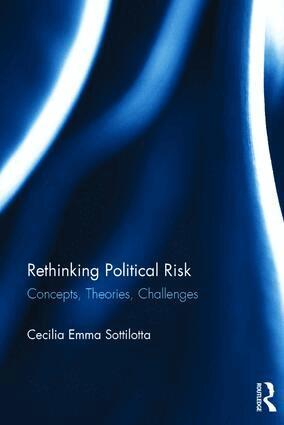
    Rethinking Political Risk

    Concepts, Theories, Challenges

    AvCecilia Emma Sottilotta

    Inbunden, Engelska, 2016

    2 410 kr

    Beställningsvara. Skickas inom 10-15 vardagar. Fri frakt över 249 kr.

    Fler format och utgåvor

    Häftad

    622 kr

    E-bok

    740 kr

    E-bok

    738 kr

    Beskrivning

    Political risk was first introduced as a component for assessing risk not directly linked to economic factors following the flow of capital from the US to Europe after the Second World War. However, the concept has rapidly gained relevance since, with both public and private institutions developing complex methodologies designed to evaluate political risk factors and keep pace with the internationalization of trade and investment. Continued global and regional economic and political instability means a plethora of different actors today conduct a diverse range of political risk analyses and assessments. Starting from the epistemological foundations of political risk, this books bridges the gap between theory and practice, exploring operationalization and measurement issues with the support of an empirical case study on the Arab uprisings, discussing the role of expert judgment in political forecasting, and highlighting the main challenges and opportunities political risk analysts face in the wake of the digital revolution.

    Produktinformation

    • Utgivningsdatum:2016-10-25
    • Mått:156 x 234 x 16 mm
    • Vikt:360 g
    • Format:Inbunden
    • Språk:Engelska
    • Antal sidor:150
    • Förlag:Taylor & Francis Ltd
    • ISBN:9781472477514

    Utforska kategorier

    • Internationell ekonomi inom Ekonomi och Ledarskap
    • Ekonomisk politik inom Ekonomi och Ledarskap
    • Statsvetenskap och politisk teori inom Samhälle och politik

    Mer om författaren

    Cecilia Emma Sottilotta is currently a post-doctoral research fellow in political science at LUISS Guido Carli, Rome, and an adjunct faculty member at the American University of Rome and at the University of Calabria, Italy.

    Innehållsförteckning

    • Introduction1. Political risk as a social science concept2. Thinking about a theoretical framework3. From theory to practice: a case study of the Arab Spring4. Forecasting political events: issues and techniques5. The cross-cutting role of expert judgment6. The impact of the digital revolution on political risk analysis and assessment Concluding remarks