• Fri frakt över 249 kr
  • •
  • Snabba leveranser
  • •
  • Billiga böcker
Kundservice

Du är på sajten för privatpersoner.

Företag, bibliotek eller offentlig verksamhet?

Du handlar på classic.bokus.com, där alla dina funktioner finns intakta.
Till classic.bokus.com
Bokus logotyp. Gå till startsidan.
  • Erbjudanden
  • Nyheter
  • Student
  • Topplistor
  • Barn & ungdom
  • Bokus Play
  • E-böcker
  • Pocketböcker
  • Spel & pussel

10% rabatt på allt med kod: NYSTART10 →

Sidfot

Mina sidor

    Hjälp

    • Kundservice
    • Vanliga frågor och svar
    • Frakt och leverans
    • Retur vid ångerrätt
    • Reklamera vara
    • Betalning
    • Köpvillkor
    • Allmänna villkor
    • Information om webbplatsens tillgänglighet

    Om Bokus

    • Om oss
    • Pressrum
    • För studenter
    • För företag
    • För bibliotek och offentlig verksamhet
    • För leverantörer
    • Hållbarhet

    Populärt

    • Aktuella erbjudanden
    • Presentkort
    • Studentlitteratur
    • Nya böcker
    • Topplistor
    • Signerade böcker
    • Engelska böcker

    Inspiration

    • Boktips
    • BookTok
    • Populära bokserier
    • Barnbokskaraktärer
    • Populära författare
    Logotyp för Bokus
    Följ oss på Facebook (extern länk)Följ oss på Instagram (extern länk)Följ oss på YouTube (extern länk)Följ oss på TikTok (extern länk)
    bokus @ CookiesAnpassa cookiesIntegritetspolicyKöpvillkor
    Till Citymail hemsida (extern länk)Till Budbee hemsida (extern länk)Till Postnord hemsida (extern länk)Till Schenker hemsida (extern länk)Till Early Bird hemsida (extern länk)Till Walleys hemsida (extern länk)
    1. Skönlitteratur
    2. Litteraturvetenskap
    3. Litteraturvetenskap

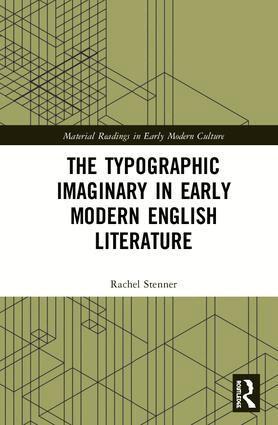
    Typographic Imaginary in Early Modern English Literature

    AvRachel Stenner

    Inbunden, Engelska, 2018

    Del i serien Material Readings in Early Modern Culture

    2 784 kr

    Beställningsvara. Skickas inom 10-15 vardagar. Fri frakt över 249 kr.

    Fler format och utgåvor

    Häftad

    783 kr

    E-bok

    926 kr

    E-bok

    928 kr

    Beskrivning

    The typographic imaginary is an aesthetic linking authors from William Caxton to Alexander Pope, this study centrally contends. Early modern English literature engages imaginatively with printing and this book both characterizes that engagement and proposes the typographic imaginary as a framework for its analysis. Certain texts, Rachel Stenner states, describe the people, places, concerns, and processes of printing in ways that, over time, generate their own figurative authority. The typographic imaginary is posited as a literary phenomenon shared by different writers, a wider cultural understanding of printing, and a critical concept for unpicking the particular imaginative otherness that printing introduced to literature. Authors use the typographic imaginary to interrogate their place in an evolving media environment, to assess the value of the printed text, and to analyse the roles of other text-producing agents. This book treats a broad array of authors and forms: printers’ manuals; William Caxton’s paratexts; the pamphlet dialogues of Robert Copland and Ned Ward; poetic miscellanies; the prose fictions of William Baldwin, George Gascoigne, and Thomas Nashe; the poetry and prose of Edmund Spenser; writings by John Taylor and Alexander Pope. At its broadest, this study contributes to an understanding of how technology changes cultures. Located at the crossroads between literary, material, and book historical research, the particular intervention that this work makes is threefold. In describing the typographic imaginary, it proposes a new framework for analysis of print culture. It aims to focus critical engagement on symbolic representations of material forms. Finally, it describes a lineage of late medieval and early modern authors, stretching from the mid-fifteenth to the mid-eighteenth centuries, that are linked by their engagement of a particular aesthetic.

    Produktinformation

    • Utgivningsdatum:2018-07-26
    • Mått:152 x 229 x 18 mm
    • Vikt:440 g
    • Format:Inbunden
    • Språk:Engelska
    • Serie:Material Readings in Early Modern Culture
    • Antal sidor:204
    • Förlag:Taylor & Francis Ltd
    • ISBN:9781472480422

    Utforska kategorier

    • Litteraturvetenskap inom Skönlitteratur
    • Naturvetenskapens historia inom Naturvetenskap och teknik

    Mer om författaren

    Rachel Stenner lectures in Renaissance Literature at the University of Sheffield, UK.

    Innehållsförteckning

    • ContentsList of Figures v Acknowledgements viNote on Quotation viiAbbreviations viiiIntroduction: Print and the Difference it Makes 1Implications 7Critical Mapping 16Cases 26Chapter 1: Instructional Texts and Print Symbolism: Christopher Plantin, Hieronymus Hornschuch, and Joseph Moxon 51Processes 55People 69Conclusion 77Chapter 2: An Emergent Typographic Imaginary in William Caxton’s Paratexts 86Life in Literature, Diplomacy, and Commerce 88The Benefits of Printing in Recuyell of the Historyes of Troye 90Imagined Typographic Space 96Reorganising Continuity: Mirrour of the World 104Conclusion 112Chapter 3: Robert Copland, Thomas Blague, and the Printer-Author Dialogue 124Printer-Author Dialogue and its Mutations 126Characterising the Printer: Gatekeepers of the Press 130Print and Metacommunication: Uses of the Dialogue Form 145Conclusion 153Chapter 4: Protestant Printing and Humanism in Beware the Cat: Undoing Printing 164Protestant Printer and Humanist Scholar 168Dead Bodies and Printer’s Devils 174Printing and Penning 178Conclusion 183Chapter 5: George Gascoigne and Richard Tottel: Negotiating Manuscript and Print in the Poetic Miscellany 193Typographic Value in the Prefatory Poses of A Hundreth Sundrie Flowres 199The Benefits of Printing in The Posies of George Gascoigne Esquire 209Conclusion 215Chapter 6: Edmund Spenser’s Early and Mid Career: Public Image and Machine Horror223Early Career Self-Presentation: The Shepeardes Calender and Three Proper, and Wittie, Familiar Letters 225Monstrous Typographic Fertility in The Faerie Queene 232Resonant Errour in ‘The Teares of the Muses’ 244Conclusion 247Chapter 7 St Paul’s Churchyard and the Meanings of Print: Pierce Penilesse His Supplication to the Divell 259Nashe’s Mosaic of the Print Trade 266Waste and Matter 274The Figurative Authority of Print 280Conclusion 282Conclusion: Love and Loathing in Grub Street 289