• Fri frakt över 249 kr
  • •
  • Snabba leveranser
  • •
  • Billiga böcker
Kundservice

Du är på sajten för privatpersoner.

Företag, bibliotek eller offentlig verksamhet?

Du handlar på classic.bokus.com, där alla dina funktioner finns intakta.
Till classic.bokus.com
Bokus logotyp. Gå till startsidan.
  • Erbjudanden
  • Nyheter
  • Student
  • Topplistor
  • Barn & ungdom
  • Bokus Play
  • E-böcker
  • Pocketböcker
  • Spel & pussel

10% rabatt på allt med kod: NYSTART10 →

Sidfot

Mina sidor

    Hjälp

    • Kundservice
    • Vanliga frågor och svar
    • Frakt och leverans
    • Retur vid ångerrätt
    • Reklamera vara
    • Betalning
    • Köpvillkor
    • Allmänna villkor
    • Information om webbplatsens tillgänglighet

    Om Bokus

    • Om oss
    • Pressrum
    • För studenter
    • För företag
    • För bibliotek och offentlig verksamhet
    • För leverantörer
    • Hållbarhet

    Populärt

    • Aktuella erbjudanden
    • Presentkort
    • Studentlitteratur
    • Nya böcker
    • Topplistor
    • Signerade böcker
    • Engelska böcker

    Inspiration

    • Boktips
    • BookTok
    • Populära bokserier
    • Barnbokskaraktärer
    • Populära författare
    Logotyp för Bokus
    Följ oss på Facebook (extern länk)Följ oss på Instagram (extern länk)Följ oss på YouTube (extern länk)Följ oss på TikTok (extern länk)
    bokus @ CookiesAnpassa cookiesIntegritetspolicyKöpvillkor
    Till Citymail hemsida (extern länk)Till Budbee hemsida (extern länk)Till Postnord hemsida (extern länk)Till Schenker hemsida (extern länk)Till Early Bird hemsida (extern länk)Till Walleys hemsida (extern länk)
    1. Samhälle och politik
    2. Sociologi och antropologi
    3. Antropologi

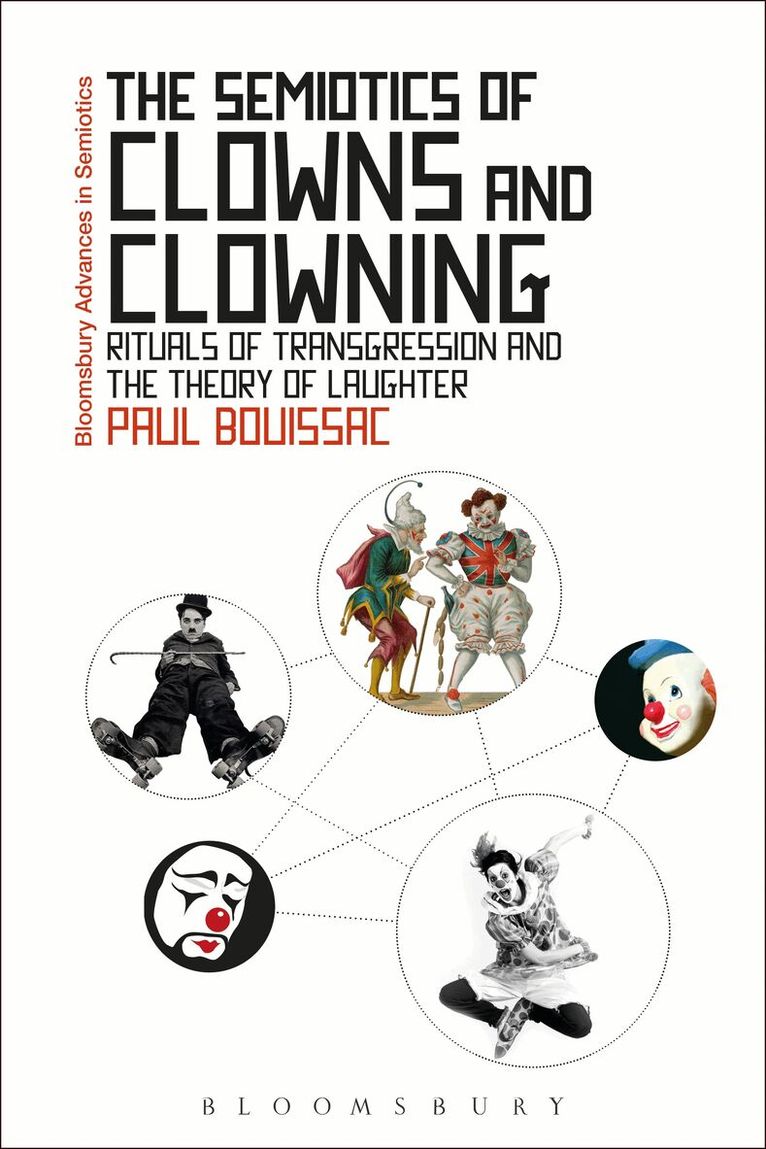
    Semiotics of Clowns and Clowning

    Rituals of Transgression and the Theory of Laughter

    AvPaul Bouissac,Gregory Paschalidis

    Inbunden, Engelska, 2015

    Del i serien Bloomsbury Advances in Semiotics

    2 151 kr

    Beställningsvara. Skickas inom 10-15 vardagar. Fri frakt över 249 kr.

    Fler format och utgåvor

    E-bok

    606 kr

    E-bok

    606 kr

    Häftad

    564 kr

    Beskrivning

    During the last 300 years circus clowns have emerged as powerful cultural icons. This is the first semiotic analysis of the range of make-up and costumes through which the clowns' performing identities have been established and go on developing. It also examines what Bouissac terms 'micronarratives' - narrative meanings that clowns generate through their acts, dialogues and gestures. Putting a repertory of clown performances under the semiotic microscope leads to the conclusion that the performances are all interconnected and come from what might be termed a 'mythical matrix'. These micronarratives replicate in context-sensitive forms a master narrative whose general theme refers to the emergence of cultures and constraints that they place upon instinctual behaviour. From this vantage point, each performance can be considered as a ritual which re-enacts the primitive violence inherent in all cultures and the temporary resolutions which must be negotiated as the outcome. Why do these acts of transgression and re-integration then trigger laughter and wonder? What kind of mirror does this put up to society? In a masterful semiotic analysis, Bouissac delves into decades of research to answer these questions.

    Produktinformation

    • Utgivningsdatum:2015-05-21
    • Mått:162 x 236 x 20 mm
    • Vikt:500 g
    • Format:Inbunden
    • Språk:Engelska
    • Serie:Bloomsbury Advances in Semiotics
    • Antal sidor:232
    • Förlag:Bloomsbury Publishing PLC
    • ISBN:9781472521736

    Utforska kategorier

    • Antropologi inom Samhälle och politik
    • Referensverk och tvärvetenskap inom Samhälle och politik
    • Cirkus och cirkuskonster inom Kultur

    Mer om författaren

    Paul Bouissac is Professor Emeritus at the University of Toronto (Victoria College), Canada. He is a world renowned figure in semiotics and a pioneer of circus studies. He runs the SemiotiX Bulletin [www.semioticon.com/semiotix] which has a global readership.

    Recensioner i media

    One of the major contributions of the book is that, after reading it, watching clown performances can never be the same: the author guides us through the semiotics of clowning in such detail that every move and feature of clown acts will be overloaded with meaning(s) for the readers ... [A] reader-friendly book and an invaluable ethnographic approach to an area of study that has been most neglected by (humour and other) scholars ... particularly interesting for humour researchers, especially those who investigate clown performances in or, mostly nowadays, outside circuses.

    Innehållsförteckning

    • Introduction1. The Faces of the ClownAppearance and identityThe making of a faceKinds and scales of facial transformations in clownsThe crafting of a clown’s make-upThe face of dominanceInterpreting the face of a clownThe modern face of the clownWhen clowns go post-modern2. The Costumes of the ClownsThe clowns’ trunksSplendor and sophistication of the whitefaceThe auguste’s misfits and tattersSociosemiotics and biosemiotics of clown costumesClowns in drag: cross-dressing and transvestism3. The Clown’s WorkshopThe semiotics of artifactsA visit to Charlie Cairoli’s workshopWhen clowns play magicClowns as craftsmen and engineersThe clown’s barnyard4. The Semiotics of GagsWhat is a gag?Gags in contextRob Torres: a solo clown act in New YorkThe semiotic anatomy of gagsThe physics of gags5. The Game of the RulesThe language of clowningThe straight, the tight, and the looseIdentity: one in two, two in one6. Clown and Trickster Master of tricksToo good to be trueTransgression and consequencesMaster of fireThe trickster and his avatarsUnderstanding tricksters and clownsPeering in the cultural past: a reasoned speculation7. Clowns and Gender Play: Politics and Economy of SexBeyond sex and genderImages of desireAn odd coupleA “normal” coupleA bird taleGender play8. Clowns, Death, and LaughterDeath at the circusDeath of the augusteRealm of the macabre: ghosts, corpses, and skeletonsClowns and death in the arts: laughter at the edge9. Profaning the Sacred The avatars of ClownA grand narrative and its fractal performancesThe sacred and the profanePutting things inside out and upside down10. Clowns without BordersMapping clowns on the worldClowns without borders?Clowning beyond the cultural fencesClowning in JavaThe gentrification of clownsClowns with a missionConclusion: Contribution to the Theory of LaughterWhat is laughter?The meaning of laughterSenseless laughingLaughter as addiction: a hypothesis and an agendaReferences