• Fri frakt över 249 kr
  • •
  • Snabba leveranser
  • •
  • Billiga böcker
Kundservice

Du är på sajten för privatpersoner.

Företag, bibliotek eller offentlig verksamhet?

Du handlar på classic.bokus.com, där alla dina funktioner finns intakta.
Till classic.bokus.com
Bokus logotyp. Gå till startsidan.
  • Erbjudanden
  • Nyheter
  • Student
  • Topplistor
  • Barn & ungdom
  • Bokus Play
  • E-böcker
  • Pocketböcker
  • Spel & pussel

10% rabatt på allt med kod: NYSTART10 →

Sidfot

Mina sidor

    Hjälp

    • Kundservice
    • Vanliga frågor och svar
    • Frakt och leverans
    • Retur vid ångerrätt
    • Reklamera vara
    • Betalning
    • Köpvillkor
    • Allmänna villkor
    • Information om webbplatsens tillgänglighet

    Om Bokus

    • Om oss
    • Pressrum
    • För studenter
    • För företag
    • För bibliotek och offentlig verksamhet
    • För leverantörer
    • Hållbarhet

    Populärt

    • Aktuella erbjudanden
    • Presentkort
    • Studentlitteratur
    • Nya böcker
    • Topplistor
    • Signerade böcker
    • Engelska böcker

    Inspiration

    • Boktips
    • BookTok
    • Populära bokserier
    • Barnbokskaraktärer
    • Populära författare
    Logotyp för Bokus
    Följ oss på Facebook (extern länk)Följ oss på Instagram (extern länk)Följ oss på YouTube (extern länk)Följ oss på TikTok (extern länk)
    bokus @ CookiesAnpassa cookiesIntegritetspolicyKöpvillkor
    Till Citymail hemsida (extern länk)Till Budbee hemsida (extern länk)Till Postnord hemsida (extern länk)Till Schenker hemsida (extern länk)Till Early Bird hemsida (extern länk)Till Walleys hemsida (extern länk)
    1. Samhälle och politik
    2. Sociologi och antropologi
    3. Sociologi

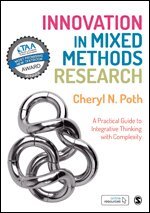
    Innovation in Mixed Methods Research

    A Practical Guide to Integrative Thinking with Complexity

    AvCheryl N. Poth

    Häftad, Engelska, 2018

    1 403 kr

    Beställningsvara. Skickas inom 3-6 vardagar. Fri frakt över 249 kr.

    Fler format och utgåvor

    Inbunden

    2 784 kr

    E-bok

    538 kr

    Beskrivning

    Explaining both why and how to use mixed methods for discovering solutions to complex research problems, this guide gives readers the tools to adapt approaches to suit their own research conditions. Written in a warm, encouraging tone and packed with helpful diagrams and visual organizers, it provides an easy-to-follow map to the mixed methods process, covering everything from ‘what is mixed methods research?’ to framing, integrating, and describing a complexity-sensitive mixed methods approach.

    Features include:

    • Key questions to navigate the important concepts of each chapter
    • Practice alerts to provide practical tips on working in the field
    • Chapter check-ins to assess development of key skills
    • Further reading to expand and deepen knowledge of mixed methods practices
    • An annotated glossary to get to grips with foundational terms and revise for exams

    Supported throughout by real-world examples and advice from the author and other mixed methods experts, this book helps readers succeed in their projects and think innovatively about the methods they use. 

    Produktinformation

    • Utgivningsdatum:2018-11-10
    • Mått:170 x 242 x 20 mm
    • Vikt:670 g
    • Format:Häftad
    • Språk:Engelska
    • Antal sidor:384
    • Upplaga:1
    • Förlag:SAGE Publications
    • ISBN:9781473906693

    Utforska kategorier

    • Sociologi inom Samhälle och politik

    Mer om författaren

    Cheryl N. Poth, PhD, is a Professor in the Faculty of Education and faculty member of theresearch-intensive Centre for Research and Applied Measurement and Evaluation at theUniversity of Alberta. In this role, she has developed and taught graduate-level research methodsand program evaluation courses in addition to supervising and mentoring students, faculty,and local as well as global community members in qualitative, quantitative, and mixed methodsresearch. She is the author of over 50 peer-reviewed journal articles, three books as well asnumerous book chapters. Her work has been recognized by the American Educational ResearchAssociation with the Division D Significant Contributions to Research Methodology Awardin 2023 (with Peggy Shannon-Baker) and by the Textbook & Academic Authors Associationwith the Most Promising New Textbook Award in 2020 and the McGuffey Longevity Awardfor Qualitative Research book in 2018 (with John Creswell). She served as Editor of the SAGEHandbook of Mixed Methods Research (2023) and as Guest Coeditor of several journal specialissues, including the International Journal of Qualitative Methods. In addition to more than40 invited talks and 150 conference presentations, she has led research methods workshopswith diverse audiences on four continents. She served as an Advisory Board Member of the International Institute of Qualitative Methodology (2014–2020); the President of the MixedMethods International Research Association (2017–2018); a Research Fellow at the Universityof South Africa (2018–2020); a Helen Glass Scholar in the College of Nursing within the RadyFaculty of Health Sciences at the University of Manitoba (2022); and as a MERIT VisitingProfessor in the Faculty of Health Sciences at McMaster University (2023–2025). In 2009, shecofounded the interdisciplinary Alberta Clinical and Community-Based Evaluation ResearchTeam to advance innovative community–university research partnership supports for programplanning and impact assessments of service delivery for individuals with complex needs. Sheserves as the Methodologist on several cross-disciplinary research teams and has led federally,provincially, and locally funded research projects. She is an Associate Editor of the Journal ofMixed Methods Research and is an editorial board member of several journals. Updates on herwork can be found on her website at https://sites.google.com/ualberta.ca/cheryl-poth/.

    Recensioner i media

    Big data and increasingly sophisticated research challenges mean that we can no longer rely on ‘off the shelf’ methodologies. This book is essential reading for anyone engaging in mixed methods work, offering a positive call to action and essential guidance.

    Innehållsförteckning

    • Part I: Getting Started with Essential FoundationsChapter 1: Embracing Complexity in Mixed Methods ResearchPurpose and Need for the BookPositioning MyselfDefining Conditions of Complexity and Innovations for PracticeAudiences for the BookOrganization and Learning FeaturesSelection of Six Featured Mixed Methods StudiesChapter 2: Positioning Demand for Innovation in Complex Mixed Methods ResearchWhy Use Mixed Methods Research?What Distinguishes Mixed Methods Research?Key Practice Dilemmas Under Highly Complex ConditionsDemand for Innovations and Innovators in Mixed Methods ResearchSurvey of Six Featured Mixed Methods StudiesChapter 3: Advancing Integrative Thinking with Complexity in Mixed Methods ResearchWhy Integrative Thinking with Complexity in Mixed Methods Research?Examples of Complex Adaptive Systems Under StudyOpportunities Afforded by Complexity Science for Mixed Methods ResearchersIndicators of Integrative Thinking with Complexity in Mixed Methods ResearchIndicators of Six Featured Mixed Methods StudiesGuiding Practices for Integrative Thinking with Complexity in Mixed Methods ResearchPart II: Realizing Innovation in Guiding PracticesChapter 4: Diagnosing Complexity of Mixed Methods Research ConditionsWhy Diagnose Complexity of Mixed Methods Research Conditions?Diagnosing Opportunities and Hazards for Mixed Methods ResearchersGuiding Procedures for Diagnosing Five Complexity Dimensions of Research ConditionsFeatures that Engage Readers with Research ConditionsInnovations in Diagnosing Complexity of Mixed Methods Research ConditionsChapter 5: Framing Intentions of Complex Mixed Methods Research ProblemsWhy Frame Intentions of Complex Mixed Methods Research Problems?Framing Opportunities and Hazards for Mixed Methods ResearchersAn Iterative Process for Framing Complex Mixed Methods Research ProblemsFeatures that Engage Readers with Complex Research ProblemsInnovations in Framing Complex Mixed Methods Research ProblemsChapter 6: Defining Systems of Complex Mixed Methods Research ContextsWhy Define Systems of Complex Mixed Methods Research Contexts?Defining Opportunities and Hazards for Mixed Methods ResearchersRelational Systems Approach to Defining Complex Mixed Methods Research ContextsFeatures that Engage Readers with Complex Research ContextsInnovations in Defining Complex Mixed Methods Research ContextsChapter 7: Describing Designs of Complex Mixed Methods Research IntegrationsWhy Describe Designs of Complex Mixed Methods Research Integrations?Describing Opportunities and Hazards for Mixed Methods ResearchersA Descriptive Design Approach for Complex Mixed Methods Research IntegrationsFeatures that Engage Readers with Complex Mixed Methods Research IntegrationsInnovations in Describing Complex Mixed Methods Research IntegrationsChapter 8: Developing Capacity for Complex Mixed Methods Research InteractionsWhy Develop Capacity in Complex Mixed Methods Research Interactions?Developing Opportunities and Hazards for Mixed Methods ResearchersA Strategy for Developing Complex Mixed Methods Research InteractionsFeatures that Engage Readers with Complex Mixed Methods Research InteractionsInnovations in Developing Complex Mixed Methods Research InteractionsChapter 9: Generating Evidence of Complex Mixed Methods Research OutcomesWhy Generate Evidence of Complex Mixed Methods Research Outcomes?Generating Opportunities and Hazards for Mixed Methods ResearchersA Generative Evidence Approach for Complex Mixed Methods Research OutcomeFeatures that Engage Readers with Complex Mixed Methods Research OutcomesInnovations in Generating Evidence of Complex Mixed Methods Research OutcomesPart III: Onward Considerations for Adaptive PracticesChapter 10: Realizing Complexity-Sensitive Mixed Methods ResearchThe Case for Complexity-Sensitive Mixed Methods ResearchPotential Challenges for Complexity-Sensitive Mixed Methods ResearchersSome Final Guiding Words