• Fri frakt över 249 kr
  • •
  • Snabba leveranser
  • •
  • Billiga böcker
Kundservice

Du är på sajten för privatpersoner.

Företag, bibliotek eller offentlig verksamhet?

Du handlar på classic.bokus.com, där alla dina funktioner finns intakta.
Till classic.bokus.com
Bokus logotyp. Gå till startsidan.
  • Erbjudanden
  • Nyheter
  • Student
  • Topplistor
  • Barn & ungdom
  • Bokus Play
  • E-böcker
  • Pocketböcker
  • Spel & pussel

10% rabatt på allt med kod: NYSTART10 →

Sidfot

Mina sidor

    Hjälp

    • Kundservice
    • Vanliga frågor och svar
    • Frakt och leverans
    • Retur vid ångerrätt
    • Reklamera vara
    • Betalning
    • Köpvillkor
    • Allmänna villkor
    • Information om webbplatsens tillgänglighet

    Om Bokus

    • Om oss
    • Pressrum
    • För studenter
    • För företag
    • För bibliotek och offentlig verksamhet
    • För leverantörer
    • Hållbarhet

    Populärt

    • Aktuella erbjudanden
    • Presentkort
    • Studentlitteratur
    • Nya böcker
    • Topplistor
    • Signerade böcker
    • Engelska böcker

    Inspiration

    • Boktips
    • BookTok
    • Populära bokserier
    • Barnbokskaraktärer
    • Populära författare
    Logotyp för Bokus
    Följ oss på Facebook (extern länk)Följ oss på Instagram (extern länk)Följ oss på YouTube (extern länk)Följ oss på TikTok (extern länk)
    bokus @ CookiesAnpassa cookiesIntegritetspolicyKöpvillkor
    Till Citymail hemsida (extern länk)Till Budbee hemsida (extern länk)Till Postnord hemsida (extern länk)Till Schenker hemsida (extern länk)Till Early Bird hemsida (extern länk)Till Walleys hemsida (extern länk)
    1. Filosofi och religion
    2. Religion och tro
    3. Islam

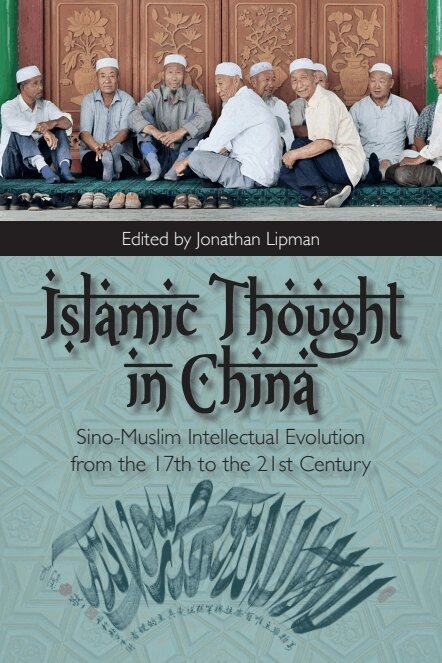
    Islamic Thought in China

    Sino-Muslim Intellectual Evolution from the 17th to the 21st Century

    AvJonathan N Lipman

    Inbunden, Engelska, 2016

    2 174 kr

    Beställningsvara. Skickas inom 3-6 vardagar. Fri frakt över 249 kr.

    Beskrivning

    How can people belong simultaneously to two cultures, originating in two different places and expressed in two different languages, without alienating themselves from either? Muslims have lived in the Chinese culture area for 1400 years, and the intellectuals among them have long wrestled with this problem. Unlike Persian, Turkish, Urdu, or Malay, the Chinese language never adopted vocabulary from Arabic to enable a precise understanding of Islam’s religious and philosophical foundations. Islam thus had to be translated into Chinese, which lacks words and arguments to justify monotheism, exclusivity, and other features of this Middle Eastern religion. Even in the 21st century, Muslims who are culturally Chinese must still justify their devotion to a single God, avoidance of pork, and their communities’ distinctiveness, among other things, to sceptical non-Muslim neighbours and an increasingly intrusive state.   The essays in this collection narrate the continuing translations and adaptations of Islam and Muslims in Chinese culture and society through the writings of Sino-Muslim intellectuals. Progressing chronologically and interlocking thematically, they help the reader develop a coherent understanding of the intellectual issues at stake.

    Produktinformation

    • Utgivningsdatum:2016-06-17
    • Mått:156 x 234 x 21 mm
    • Vikt:579 g
    • Format:Inbunden
    • Språk:Engelska
    • Antal sidor:288
    • Förlag:Edinburgh University Press
    • ISBN:9781474402279

    Utforska kategorier

    • Islam inom Filosofi och religion
    • Historia inom Historia och arkeologi
    • Asiens historia inom Historia och arkeologi

    Mer om författaren

    Jonathan N. Lipman is Felicia Gressitt Bock Professor Emeritus of Asian Studies and Professor Emeritus of History at Mount Holyoke College, Massachusetts. His research focuses on Islam and Muslims in China since the 17th century, including religious, social, political, and economic themes. Jonathan is author (with Barbara Molony and Michael Robinson) of Modern East Asia: An Integrated History (2011), Familiar Strangers: A History of Muslims in Northwest China (1998), (with K.W. Masalski and A. Chalk), Imperial Japan: Expansion and War (1995), and co-editor (with G. Hershatter, E. Honig, and R. Stross) of Remapping China: Fissures in Historical Terrain (1995) and (with S. Harrell) of Violence in Chinese Society: Studies in Culture and Counterculture (State University of New York Press, 1990).

    Recensioner i media

    This book is a captivating narrative of four hundred years of Islamic intellectual history in China. Vivid portraits of Muslim thinkers and luminous studies of complex writings lead the reader into a world of discussions, where the Prophet speaks Chinese while ideograms interpret concepts imported from the Middle East.

    Innehållsförteckning

    • Editor’s Introduction: Four Centuries of Islamic Thought in Chinese; Jonathan Lipman; Part I: The Qing Empire (1636-1912); Chapter 1. A Proper Place for God: Ma Zhu’s Chinese Islamic Cosmogenesis, Jonathan Lipman; Chapter 2. Liu Zhi: The Great Integrator of Chinese Islamic Thought, James D. Frankel; Chapter 3. Tianfang Sanzijing: Exchanges and Changes in China’s Reception of Islamic Law, Roberta Tontini; Chapter 4. The Multiple Meanings of Pilgrimage in Sino-Islamic Thought, Kristian Petersen; Part II: Modern China; Chapter 5. Ethnicity or Religion? Republican-Era Chinese Debates on Islam and Muslims, Wlodzimierz Cieciura; Chapter 6. Selective Learning from the Middle East: The Case of Sino-Muslim Students at al-Azhar University, Yufeng Mao; Chapter 7. Secularization and Modernization of Islam in China: Educational Reform, Japanese Occupation, and the Disappearance of Persian Learning, Masumi Matsumoto; Chapter 8. Between ‘Abd al-Wahhab and Liu Zhi: Chinese Muslim Intellectuals at the Turn of the 21st Century, Leila Chérif-Chebbi; Bibliography; Glossary of East Asian Names; Glossary of East Asian Terms; List of Contributors.