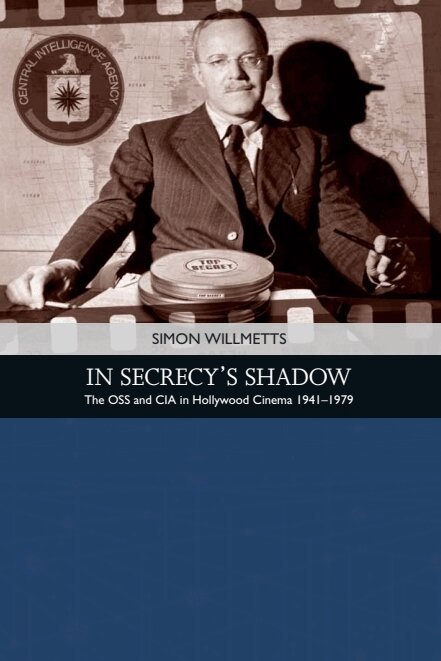
Drawing on extensive archival research, In Secrecy s Shadow explores the revolution in the relationship between Hollywood and the secret state, from unwavering trust and cooperation to extreme scepticism and paranoia.
Simon Willmetts is a lecturer in American Studies at the University of Hull. His research falls broadly within the fields of film history, cultural theory and US foreign policy.
Recensioner i media
Written in an incisive and accessible style, In Secrecy’s Shadow is a welcome addition to the growing literature on Cold War cinema. As Willmetts observes, while the CIA’s engagement in the cultural Cold War through music, literature, and the visual arts has been well documented, its relationship with Hollywood has received far less attention. In Secrecy’s Shadow is also notable for its adept synthesis of scholarship and archival research from academic fields that include intelligence and diplomacy as well as cultural and film studies. This broadly interdisciplinary approach results in a nuanced understanding of the "complex interrelationship between fact and fiction" (16) that has shaped the CIA’s place and meaning in American society.'
Innehållsförteckning
Chapter 1: The Facts of War: Cinematic Intelligence and the Office of Strategic Services John Ford’s Navy Weaponising Cinema Hollywood’s Intelligence Archive Wild Bill Donovan and the Origins of the OSS Field Photographic Unit December 7th: Scripting an Intelligence Failure Zanuck, Ford and the Filming of the North African Invasion The Authority of Cinema at the Nuremberg Trials Chapter 2: ‘What is Past is Prologue’: Hollywood’s History of the OSS and the Establishment of the CIA Hollywood Enlists in General Donovan’s Campaign for a Permanent Peacetime Intelligence Agency O.S.S. (1946) Cloak and Dagger (1946) 13 Rue Madeleine (1947) Chapter 3: Quiet Americans: The CIA and Hollywood in the Early Cold War Cherishing Anonymity: Hollywood and the CIA in the Early Cold War Dangerous Liaisons: The CIA in Hollywood Joseph Mankiewicz’s The Quiet American (1958) Figaro Entertainment’s Unmade CIA Semi-Documentary TV Series Chapter 4: The Death of the ‘Big Lie’ and the Emergance of Postmodern Incredulity in the Spy Cinema of the 1960s Our Man in Havana and the Origins of Cold War Satire North by Northwest (1959) The Man from U.N.C.L.E. and TV Spy Satire in the 1960s Parody Turns Political in The President’s Analyst (1967)Chapter 5: Secrecy, Conspiracy, Cinema and the CIA in the 1970s Scorpio (1973) and CIA Public Relations The Spook Who Sat by the Door (1973) Watergate, The Parallax View (1974) and the Emergence of the Conspiracy Thriller Three Days of the Condor (1975) Emile de Antonio and Philip Agee: The Radical CIA Film that Never Was Fighting Back: The Birth of CIA Public Relations