• Fri frakt över 249 kr
  • •
  • Snabba leveranser
  • •
  • Billiga böcker
Kundservice

Du är på sajten för privatpersoner.

Företag, bibliotek eller offentlig verksamhet?

Du handlar på classic.bokus.com, där alla dina funktioner finns intakta.
Till classic.bokus.com
Bokus logotyp. Gå till startsidan.
  • Erbjudanden
  • Nyheter
  • Student
  • Topplistor
  • Barn & ungdom
  • Bokus Play
  • E-böcker
  • Pocketböcker
  • Spel & pussel

10% rabatt på allt med kod NYSTART10 →

Sidfot

Mina sidor

    Hjälp

    • Kundservice
    • Vanliga frågor och svar
    • Frakt och leverans
    • Retur vid ångerrätt
    • Reklamera vara
    • Betalning
    • Köpvillkor
    • Allmänna villkor
    • Information om webbplatsens tillgänglighet

    Om Bokus

    • Om oss
    • Pressrum
    • För studenter
    • För företag
    • För bibliotek och offentlig verksamhet
    • För leverantörer
    • Hållbarhet

    Populärt

    • Aktuella erbjudanden
    • Presentkort
    • Studentlitteratur
    • Nya böcker
    • Topplistor
    • Signerade böcker
    • Engelska böcker

    Inspiration

    • Boktips
    • BookTok
    • Populära bokserier
    • Barnbokskaraktärer
    • Populära författare
    Logotyp för Bokus
    Följ oss på Facebook (extern länk)Följ oss på Instagram (extern länk)Följ oss på YouTube (extern länk)Följ oss på TikTok (extern länk)
    bokus @ CookiesAnpassa cookiesIntegritetspolicyKöpvillkor
    Till Citymail hemsida (extern länk)Till Budbee hemsida (extern länk)Till Postnord hemsida (extern länk)Till Schenker hemsida (extern länk)Till Early Bird hemsida (extern länk)Till Walleys hemsida (extern länk)
    1. Filosofi och religion
    2. Filosofi
    3. Filosofiska discipliner

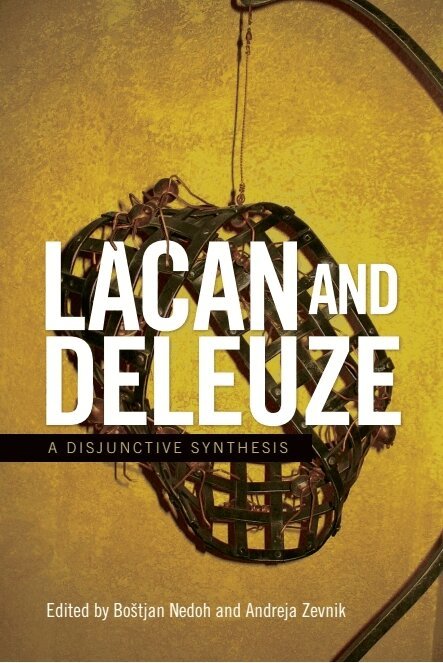
    Lacan and Deleuze

    A Disjunctive Synthesis

    AvBoštjan Nedoh,Andreja Zevnik

    Häftad, Engelska, 2018

    340 kr

    Beställningsvara. Skickas inom 7-10 vardagar. Fri frakt över 249 kr.

    Beskrivning

    A reconfiguration of the reception of Deleuze and Lacan in contemporary Continental philosophyIt is often said that Lacan is the most radical representative of structuralism, a thinker of negativity and alienation, whereas Deleuze is pictured as a great opponent of the structuralist project, a vitalist and a thinker of creative potentialities of desire. It seems the two cannot be further apart. This volume of 12 new essays, breaks the myth of their foreignness (if not hostility) and places the two in a productive conversation. By taking on topics such as baroque, perversion, death drive, ontology/topology, face, linguistics and formalism the essays highlight key entry points for a discussion between Lacan's and Deleuze's respective thoughts. The proposed lines of investigation do not argue for a simple equation of their thoughts, but for a 'disjunctive synthesis', which acknowledges their differences, while insisting on their positive and mutually informed reading.ContributorsLorenzo Chiesa, European University at St Petersburg and the Freud Museum in St Petersburg, Russia. Guillaume Collett, University of Kent, UK.Adrian Johnston, University of New Mexico and Emory Psychoanalytic Institute in Atlanta, USA. Peter Klepec, Slovenian Academy of Sciences and Arts, Slovenia. Paul M. Livingston, University of New Mexico, USA. Bostjan Nedoh, Slovenian Academy of Sciences and Arts, Slovenia. Laurent de Sutter, Vrije Universiteit Brussel, Belgium. Samo Tomsic, Humboldt University of Berlin, Germany. Tadej Troha, Slovenian Academy of Sciences and Arts, Slovenia.Scott Wilson, Kingston University, UK. Andreja Zevnik, University of Manchester, UK. Alenka Zupancic, Slovenian Academy of Sciences and Arts, Slovenia and European Graduate School, Switzerland.

    Produktinformation

    • Utgivningsdatum:2018-02-22
    • Mått:156 x 234 x 20 mm
    • Vikt:372 g
    • Format:Häftad
    • Språk:Engelska
    • Antal sidor:240
    • Förlag:Edinburgh University Press
    • ISBN:9781474432276

    Utforska kategorier

    • Filosofiska discipliner inom Filosofi och religion

    Mer om författaren

    Boštjan Nedoh is a Research Fellow at the Research Centre of the Slovenian Academy of Sciences and Arts, Institute of Philosophy, Ljubljana, Slovenia. He has published extensively on Lacanian psychoanalysis, Italian biopolitical theory and contemporary French philosophy. Andreja Zevnik is Lecturer in International Politics at the University of Manchester. Her research interests include theories of subjectivity, political violence and resistance, aesthetic politics, law and psychoanalysis. She is a member of editorial board for the Journal of Narrative Politics. She recently published Lacan, Deleuze and World Politics: re-thinking the ontology of the political subject (Routledge, 2016) and Jacques Lacan Between Psychoanalysis and Politics (Ed. with Andreja Zevnik; Routledge 2015).

    Recensioner i media

    This book provides substantial, new and creative readings of one of the most significant debates of the 20th Century. The authors are to be commended for taking on the challenge to develop arguments that are of great interest for both theorists and historians of contemporary philosophy.

    Innehållsförteckning

    • Introduction: On a Disjunctive Synthesis Between Deleuze and Lacan1. Peter Klepec, For an Another Deleuze-Lacan Encounter2. Laurent de Sutter, Reciprocal Portrait of Jacques Lacan and Gilles Deleuze3. Boštjan Nedoh, Does the Body without Organs Have Any Sex At All? Lacan and Deleuze on Perversion and Sexual Difference4. Scott Wilson, Gnomology: Deleuze’s Phobias and the Line of Flight between Speech and the Body5. Andreja Zevnik, Lacan, Deleuze and the Politics of the Face6. Tadej Troha, Denkwunderkeiten: On Deleuze, Schreber, and Freud7. Guillaume Collett, Snark, Jabberwock, Poord’jeli: Deleuze and the Lacanian School on the Names-of-the-Father8. Samo Tomšič, Baroque Structuralism: Deleuze, Lacan, and the Critique of Linguistics9. Lorenzo Chiesa, Exalted Obscenity and the Lawyer of God: Lacan, Deleuze, and the Baroque10. Alenka Zupančič, The Death Drive11. Adrian Johnston, Repetition and Difference: Žižek, Deleuze, and Lacanian Drives12. Paul M. Livingston, Lacan, Deleuze, and the Consequences of Formalism