• Fri frakt över 249 kr
  • •
  • Snabba leveranser
  • •
  • Billiga böcker
Kundservice

Du är på sajten för privatpersoner.

Företag, bibliotek eller offentlig verksamhet?

Du handlar på classic.bokus.com, där alla dina funktioner finns intakta.
Till classic.bokus.com
Bokus logotyp. Gå till startsidan.
  • Erbjudanden
  • Nyheter
  • Student
  • Topplistor
  • Barn & ungdom
  • Bokus Play
  • E-böcker
  • Pocketböcker
  • Spel & pussel

10% rabatt på allt med kod: NYSTART10 →

Sidfot

Mina sidor

    Hjälp

    • Kundservice
    • Vanliga frågor och svar
    • Frakt och leverans
    • Retur vid ångerrätt
    • Reklamera vara
    • Betalning
    • Köpvillkor
    • Allmänna villkor
    • Information om webbplatsens tillgänglighet

    Om Bokus

    • Om oss
    • Pressrum
    • För studenter
    • För företag
    • För bibliotek och offentlig verksamhet
    • För leverantörer
    • Hållbarhet

    Populärt

    • Aktuella erbjudanden
    • Presentkort
    • Studentlitteratur
    • Nya böcker
    • Topplistor
    • Signerade böcker
    • Engelska böcker

    Inspiration

    • Boktips
    • BookTok
    • Populära bokserier
    • Barnbokskaraktärer
    • Populära författare
    Logotyp för Bokus
    Följ oss på Facebook (extern länk)Följ oss på Instagram (extern länk)Följ oss på YouTube (extern länk)Följ oss på TikTok (extern länk)
    bokus @ CookiesAnpassa cookiesIntegritetspolicyKöpvillkor
    Till Citymail hemsida (extern länk)Till Budbee hemsida (extern länk)Till Postnord hemsida (extern länk)Till Schenker hemsida (extern länk)Till Early Bird hemsida (extern länk)Till Walleys hemsida (extern länk)
    1. Filosofi och religion
    2. Filosofi
    3. Filosofiska discipliner

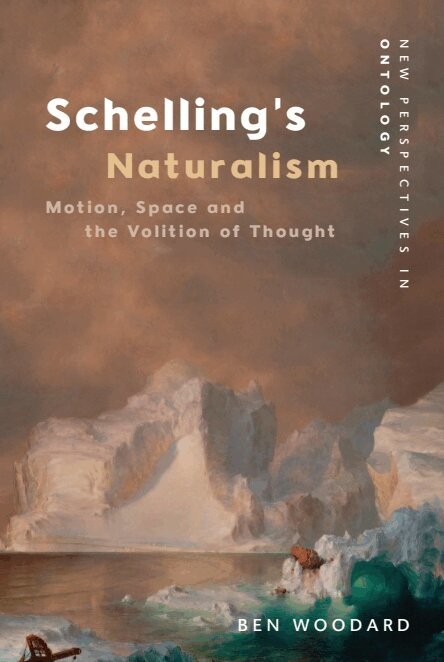
    Schelling's Naturalism

    Motion, Space and the Volition of Thought

    AvBen Woodard

    Häftad, Engelska, 2020

    Del i serien New Perspectives in Ontology

    362 kr

    Skickas . Fri frakt över 249 kr.

    Fler format och utgåvor

    Inbunden

    1 895 kr

    Beskrivning

    Using Schelling’s philosophy, Ben Woodard examines how an expanded form of naturalism changes how we conceive of the division between thought and world, mathematics and motion, sense and dynamics, experiment and materiality, as well as speculation and pragmatism. Nature, in Schelling’s eyes, is not the great outdoors or some authentic pastoral realm, but the various powers, processes and tendencies which run through biology, chemistry, physics and the very possibility of thought itself.

    Produktinformation

    • Utgivningsdatum:2020-11-03
    • Mått:156 x 234 x 18 mm
    • Vikt:381 g
    • Format:Häftad
    • Språk:Engelska
    • Serie:New Perspectives in Ontology
    • Antal sidor:256
    • Förlag:Edinburgh University Press
    • ISBN:9781474438186

    Utforska kategorier

    • Filosofiska discipliner inom Filosofi och religion

    Mer om författaren

    Ben Woodard is an affiliated fellow at the Institute for Cultural Inquiry in Berlin Germany. He has published numerous texts on the relation between naturalism and idealism as well as the history, philosophy, and politics of biology. He is the author of Schelling's Naturalism: Motion, Space and the Volition of Thought (Edinburgh University Press, 2019).

    Recensioner i media

    A rare piece of philosophising combining exemplary historical sweep with immediate contemporary pertinence. At the heart of this work, an admirable conceptual archaeology of Schelling’s powers ontology provides the foundation for a claim entirely Schellingian in inspiration yet contemporary in orientation; namely that constructionism, the idealism of our age, furnishes not an alternative to the philosophy of nature, but forms the choreography of nature-philosophising just when philosophising consequently forms it.

    Innehållsförteckning

    • Table of ContentsAcknowledgementsIntroduction0.1 - Schelling and Contemporary Philosophy0.2 - Schelling’s Ablative Systematicity0.3 - Schelling’s Synthetic Method0.4 - Chapter Outline1.0 - The Natural Forge of the Transcendental: The Movement of Thought and the Space of Nature1.1 - Thought as Direction: Schelling via Kant1.2 - Thought as Activity: Schelling via Fichte1.3 - Thought as Nature: Schelling via Spinoza1.4 - The Missing Gesture: Plato and Aristotle via Schelling2.0 - Castles of Ether and Asymptotic Bridges: Kant, Maimon, Schelling, and the Relation of Inner and Outer Sense2.1 - Kant’s ‘What is Called Orientation in Thinking?’2.2 - The Ether Proofs: Crystallizing Space or Concretizing Ideality?2.3 - Magnitudes and Determination: Maimon’s Polarized Ideality2.4 - Schelling’s Dynamization of The Critique of Judgment3 - The Force of the Continuous: Schelling’s Naturalization of Mathematics3.1 - Schelling on Mathematics3.2 - Schelling’s Extensity/Intensity Relation3.3 - Potencies and Trajectories3.4 - (Re)Constructing Continuity or Folding Math into Nature4 - The Red Threads of the World: Potenzen, Construction, and Inexistence4.1 - Schelling’s Dynamics as Proto-Potenz in The First Outline, The Ideas, System of Transcendental Idealism (1795-1800)4.2 - Schelling’s Potenz in the Universal Deduction, Presentation, and Philosophy of Art (1804)4.3 -Philosophy of Religion (1804), Freedom Essay (1809), Stuttgart Seminars (1810)4.4 - Ages of the World (1815), History of Modern Philosophy (1832-1833) Darstellung der Rein Rationalephilosophie, Grounding (1842-1843)4.5 - Potencies and Modalities5 – Lamps, Rainbows, Unicorns, and Horizons: Spatializing Knowledge in Naturphilosophical Epistemology5.1- Epistemology and the Stufenfolge (Derivation)5.2 - Epistemology and the Field Problem (Determination)5.3 - Rationalizing Rainbows: Between Sense and Observation5.4 - Rationalizing Unicorns: Between Facts and Sense5.5 - Gestural Scars: Châtelet and Intuitive Anchoring6 - Speculative Pragmatism: Traversing the Richtungen of Nature and Thought6.1 - Abducting Matter: Peirce and Schelling6.2 - What Does Naturalism do to the Brain?/What Does Nature do the Mind?6.3 - Impure Immediacies: Sellars and Schelling6.4 - Netting Nature through Norms?: McDowell and Brandom6.5 - Tethered Ekstasis or The Speculative ‘Go of It’BibliographyCurriculum Vitae