• Fri frakt över 249 kr
  • •
  • Snabba leveranser
  • •
  • Billiga böcker
Kundservice

Du är på sajten för privatpersoner.

Företag, bibliotek eller offentlig verksamhet?

Du handlar på classic.bokus.com, där alla dina funktioner finns intakta.
Till classic.bokus.com
Bokus logotyp. Gå till startsidan.
  • Erbjudanden
  • Nyheter
  • Student
  • Topplistor
  • Barn & ungdom
  • Bokus Play
  • E-böcker
  • Pocketböcker
  • Spel & pussel

10% rabatt på allt med kod NYSTART10 →

Sidfot

Mina sidor

    Hjälp

    • Kundservice
    • Vanliga frågor och svar
    • Frakt och leverans
    • Retur vid ångerrätt
    • Reklamera vara
    • Betalning
    • Köpvillkor
    • Allmänna villkor
    • Information om webbplatsens tillgänglighet

    Om Bokus

    • Om oss
    • Pressrum
    • För studenter
    • För företag
    • För bibliotek och offentlig verksamhet
    • För leverantörer
    • Hållbarhet

    Populärt

    • Aktuella erbjudanden
    • Presentkort
    • Studentlitteratur
    • Nya böcker
    • Topplistor
    • Signerade böcker
    • Engelska böcker

    Inspiration

    • Boktips
    • BookTok
    • Populära bokserier
    • Barnbokskaraktärer
    • Populära författare
    Logotyp för Bokus
    Följ oss på Facebook (extern länk)Följ oss på Instagram (extern länk)Följ oss på YouTube (extern länk)Följ oss på TikTok (extern länk)
    bokus @ CookiesAnpassa cookiesIntegritetspolicyKöpvillkor
    Till Citymail hemsida (extern länk)Till Budbee hemsida (extern länk)Till Postnord hemsida (extern länk)Till Schenker hemsida (extern länk)Till Early Bird hemsida (extern länk)Till Walleys hemsida (extern länk)
    1. Historia och arkeologi
    2. Historia
    3. Historia: särskilda händelser och ämnen
    4. Socialhistoria och kulturhistoria

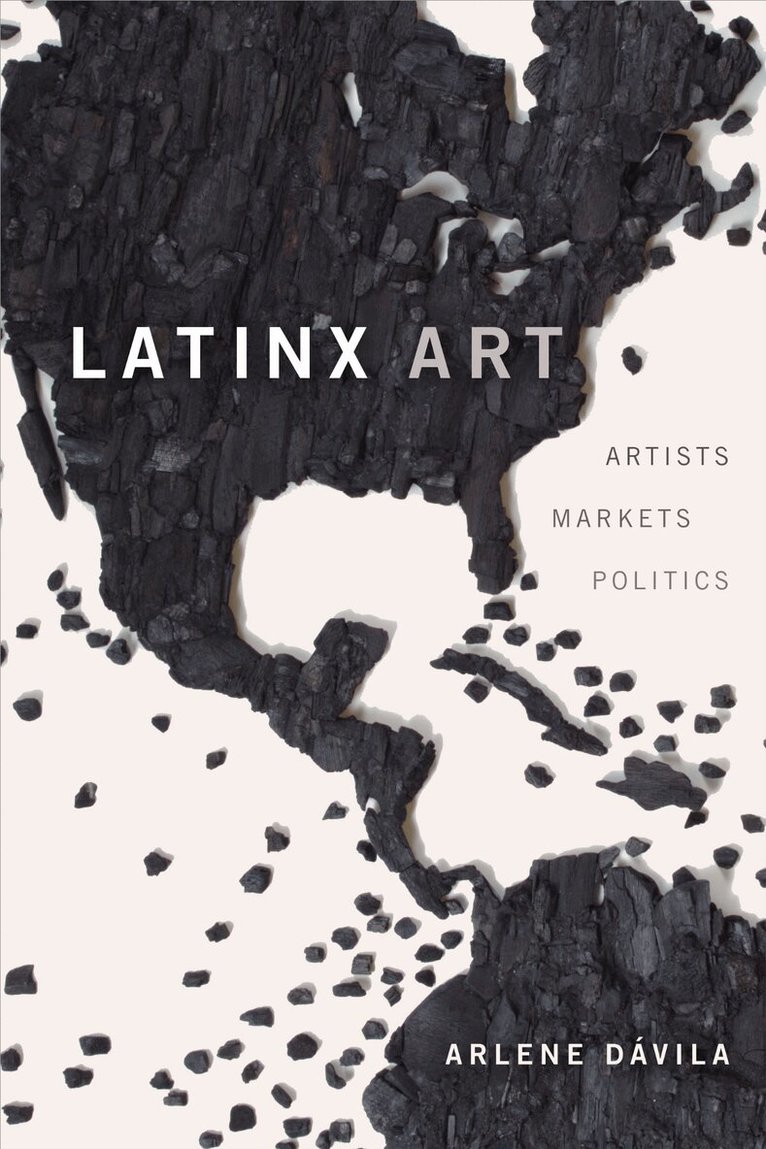
    Latinx Art

    Artists, Markets, and Politics

    AvArlene Dávila

    Inbunden, Engelska, 2020

    1 180 kr

    Beställningsvara. Skickas inom 10-15 vardagar. Fri frakt över 249 kr.

    Fler format och utgåvor

    E-bok

    438 kr

    Häftad

    293 kr

    Beskrivning

    In Latinx Art Arlene DÁvila draws on numerous interviews with artists, dealers, and curators to explore the problem of visualizing Latinx art and artists. Providing an inside and critical look of the global contemporary art market, DÁvila's book is at once an introduction to contemporary Latinx art and a call to decolonize the art worlds and practices that erase and whitewash Latinx artists. DÁvila shows the importance of race, class, and nationalism in shaping contemporary art markets while providing a path for scrutinizing art and culture institutions and for diversifying the art world.

    Produktinformation

    • Utgivningsdatum:2020-08-14
    • Mått:152 x 229 x 16 mm
    • Vikt:522 g
    • Format:Inbunden
    • Språk:Engelska
    • Antal sidor:264
    • Förlag:Duke University Press
    • ISBN:9781478008569

    Utforska kategorier

    • Socialhistoria och kulturhistoria inom Historia och arkeologi
    • Konsthistoria inom Kultur
    • Konstteori inom Kultur

    Mer om författaren

    Arlene DÁvila is Professor of Anthropology and American Studies at New York University and the author of several books, including El Mall: The Spatial and Class Politics of Shopping Malls in Latin America, Culture Works: Space, Value, and Mobility across the Neoliberal Americas, and Latino Spin: Public Image and the Whitewashing of Race.

    Recensioner i media

    “In this current moment of national rupture surrounding the Latino immigrant it is ironic that the new focus on Latinx artists and communities should come to the forefront as a powerful cultural movement. Arlene DÁvila’s new work on Latinx art is a timely examination of the complex issues of cultural definition, art markets, race and representation, and geopolitical reference points. In the embattled world of diverse art and artists DÁvila's book provides a map of clarity.” - Amalia Mesa-Bains, MacArthur fellow and coauthor of (Homegrown: Engaged Cultural Criticism) “Kudos to Arlene DÁvila, founding director of the Latinx Project at New York University, and the only person who could have written this groundbreaking new book! First, identifying Latinx, perhaps most importantly, as a political constituency and as a market for art historical appreciation and consumption, DÁvila makes the case for a singular recognition and consideration of a massive (and rapidly growing) part of American culture. While highlighting intersectionality in her exploration of Latinx identity, she is an astute documentarian of shared experiences in the American landscape. Yet, this book is a must-have primer for those concerned with trends in international contemporary art.” - Franklin Sirmans, Director, Pérez Art Museum Miami "An indispensable text that considers the plights of Latinx artists through the lens of race and class disparities in both North and South America. . . . DÁvila’s text is a vital resource on Latinx art, complete with a supplemented 'non-comprehensive list of artists everyone should know' and recommendations of Latinx Instagram accounts to follow." - Valentina Di Liscia (Hyperallergic) "The marketing of modern and contemporary art from Latin America is one of the success stories of the globalist decades, giving a once-niche interest a presence in big North American museums. Exactly the opposite is true of Latinx art, loosely defined as work made by artists of Latin American birth or descent who live primarily in the United States. That lack of institutional support is dictated by the politics of class, economics and race, the cultural anthropologist Arlene DÁvila argues in this important broadside of a book." - Holland Cotter (New York Times) "An outstanding contribution to the field of Latinx art, this book addresses the defining traits of the art category and its place in the contemporary art world. . . .  The wide range of Latinx art experts she interviews, from artists, curators, writers, critics and gallerists, draw the contours of a remarkably vibrant cultural field that is still undervalued. Her analysis not only dissects the conditions of Latinx artistic invisibility; it also proposes a path of action to overcome them and to create a more equitable art system." - Taína Caragol (Smithsonian Magazine) "With deep research and details about the ways in which the market continues to overlook and undervalue the work of Latinx artists, Arlene DÁvila’s Latinx Art is one of this year’s most important contributions to the art world as a whole. . . . That this book exists is itself an important milestone in the struggle for equity in the art world." - Maximilíano Durón (ARTnews) "Arlene DÁvila advances a groundbreaking analysis of Latinx art in the way she centers on matters of race, class, and nationality as primordial to understanding this category. . . . As a scholar independent of the art world’s social circuit, DÁvila describes in great detail the ingrained power dynamics that deny institutional access to Latinx artists. In doing so, she delivers an unprecedented service to the field, considering the silencing force exerted by hierarchical structures that traverse the art world, and the artists’ reliance on good relations with gatekeepers in order to have any shot at exhibition and market spaces." - Taína Caragol (Latin American and Latinx Visual Culture) “Latinx Art is appropriate for new and nonacademic audiences, because DÁvila is one of the most accessible scholarly authors. . . . A must-read for Latinx studies students and scholars and beyond.” - Karen Mary Davalos (Latino Studies)

    Innehållsförteckning

    • Acknowledgments & Reader Instructions  viiIntroduction. Making Latinx Art  11. What Is Latinx Art? Lessons from Chicanx and Diasporican Artists  232. Exhibiting Latinx Art: On Critics, Curators, and Going "Beyond the Formula"  483. Nationalism and the Currency of Categories  794. On Markets and the Need for Cheerleaders  1045. Whitewashing at Work, and Some Ways Out  138Conclusion: At the Vanguard of Arts and Museum Activism in the Twenty-First Century  168Appendix A: Noncomprehensive List of Artists Everyone Should Know  177Appendix B: Additional Resources  185Notes  189References  203Index  223