• Fri frakt över 249 kr
  • •
  • Snabba leveranser
  • •
  • Billiga böcker
Kundservice

Du är på sajten för privatpersoner.

Företag, bibliotek eller offentlig verksamhet?

Du handlar på classic.bokus.com, där alla dina funktioner finns intakta.
Till classic.bokus.com
Bokus logotyp. Gå till startsidan.
  • Erbjudanden
  • Student
  • Topplistor
  • Barn & ungdom
  • Bokus Play
  • E-böcker
  • Ljudböcker
  • Pocketböcker
  • Spel & pussel

10% rabatt på allt med kod NYSTART10 →

Sidfot

Mina sidor

    Hjälp

    • Kundservice
    • Vanliga frågor och svar
    • Frakt och leverans
    • Retur vid ångerrätt
    • Reklamera vara
    • Betalning
    • Köpvillkor
    • Allmänna villkor
    • Information om webbplatsens tillgänglighet

    Om Bokus

    • Om oss
    • Pressrum
    • För studenter
    • För företag
    • För bibliotek och offentlig verksamhet
    • För leverantörer
    • Hållbarhet

    Populärt

    • Aktuella erbjudanden
    • Presentkort
    • Studentlitteratur
    • Nya böcker
    • Topplistor
    • Signerade böcker
    • Engelska böcker

    Inspiration

    • Boktips
    • BookTok
    • Populära bokserier
    • Barnbokskaraktärer
    • Populära författare
    Logotyp för Bokus
    Följ oss på Facebook (extern länk)Följ oss på Instagram (extern länk)Följ oss på YouTube (extern länk)Följ oss på TikTok (extern länk)
    bokus @ CookiesAnpassa cookiesIntegritetspolicyKöpvillkor
    Till Citymail hemsida (extern länk)Till Budbee hemsida (extern länk)Till Postnord hemsida (extern länk)Till Schenker hemsida (extern länk)Till Early Bird hemsida (extern länk)Till Walleys hemsida (extern länk)
    1. Samhälle och politik
    2. Samhälle och kultur

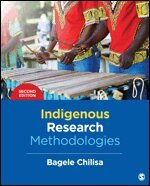
    Indigenous Research Methodologies

    AvBagele Chilisa

    Häftad, Engelska, 2020

    842 kr

    Beställningsvara. Skickas inom 5-8 vardagar. Fri frakt över 249 kr.

    Fler format och utgåvor

    E-bok

    646 kr

    Beskrivning

    Author Bagele Chilisa has revised and updated her groundbreaking textbook to give a new generation of scholars a crucial foundation in indigenous methods, methodologies, and epistemologies. Addressing the increasing emphasis in the classroom and in the field to sensitize researchers and students to diverse perspectives--especially those of women, minority groups, former colonized societies, indigenous people, historically oppressed communities, and people with disabilities--the second edition of Indigenous Research Methodologies situates research in a larger, historical, cultural, and global context to make visible the specific methodologies that are commensurate with the transformative paradigm of social science research.

    Chapters cover the history of research methods, ethical conduct, colonial and postcolonial epistemologies, relational epistemologies, emergent and indigenous methodologies, Afrocentric research, feminist research, narrative frameworks, interviewing, and participatory methods. New to the second edition are three new chapters covering evaluation, mixed methods, and mixed methods evaluation. These chapters focusing on decolonizing, indigenizing, and integrating these methods and applications to enhance participation of indigenous peoples as knowers and foster collaborative relationships.

    Additional information on indigenous quantitative research reflects new developments in the field. New activities and web resources offer more depth and new ways for students to extend their knowledge. This textbook includes features such as key points, learning objectives, student exercises, chapter summaries, and suggested readings, making it an ideal textbook for graduate-level courses.


    Produktinformation

    • Utgivningsdatum:2020-01-29
    • Mått:187 x 231 x 18 mm
    • Vikt:680 g
    • Format:Häftad
    • Språk:Engelska
    • Antal sidor:392
    • Upplaga:2
    • Förlag:SAGE Publications
    • ISBN:9781483333472

    Utforska kategorier

    • Samhälle och kultur inom Samhälle och politik
    • Examination och betygsättning inom Psykologi och pedagogik
    • Sociologi inom Samhälle och politik

    Mer om författaren

    Bagele Chilisa holds a Masters of Arts degree in Research Methodology. The degree covers Research Design, Statistics and Measurement from the University of Pittsburgh. She earned her PhD in Policy, Planning and Evaluation, also from the University of Pittsburgh. She is currently an Associate Professor at the University of Botswana. In the past 16 years years, she has taught the following courses to graduate and undergraduate students: Research Methods; Educational Evaluation; Constructing Questionnaires and Conducting Surveys; Project Design and Evaluation; Policy Planning and Evaluation. She is one of the founding members of the Botswana, Lesotho, Swaziland and Namibia Research Association and served as President of the Botswana Educational Research Association from 2000 to 2002. She is also editor of the Botswana Educational Research Journal, board member of the University of Botswana Centre for Scientific Research and Indigenous Knowledge and Innovations and the University of Botswana Research Ethics Committee.

    Recensioner i media

    I used this book with a small group of students in an Independent Study and found it well written and informative. The students found it engaging.

    Innehållsförteckning

    • PrefaceAcknowledgmentsAbout the AuthorChapter 1 • Situating Knowledge SystemsOverviewLearning ObjectivesBefore You StartIntroductionTerminology in Postcolonial Indigenous Research MethodologiesDecolonization of Western Research MethodologiesSummaryChapter 2 • Research ParadigmsOverviewLearning ObjectivesBefore You StartContested Knowledge: Indigenous Perspectives or Paradigm?A Postcolonial Indigenous Research ParadigmAssumptions About the Nature of Reality, Knowledge, and ValuesMethodologyEuro-Western Research ParadigmsSummaryChapter 3 • Discovery and Recovery: Reading and Conducting Research ResponsiblyOverviewLearning ObjectivesBefore You StartIntroductionPostcolonial and Indigenous TheoriesResearching Back: Methodological ImperialismPostcolonial Theory and LanguageCritical Race TheoriesSummaryChapter 4 • Whose Reality Counts? Research Methods in QuestionOverviewLearning ObjectivesBefore You StartColonizer/Colonized Dichotomies and the Ideology of the OtherDismissing Indigenous Ways of KnowingResearch Ethics and the Legitimacy of KnowledgeSummaryChapter 5 • Postcolonial Indigenous Research ParadigmsOverviewLearning ObjectivesBefore You StartIndigenous Knowledge and ResearchIndigenizing Research MethodologiesPostcolonial Indigenous Research ParadigmsRelational Ontology in Context: Perspectives From AfricaRelational Ontology: Perspectives From Scholars in Canada and AustraliaRelational EpistemologiesRelational AxiologyRelational Axiology: Perspectives From North America and CanadaSummaryChapter 6 • Decolonizing EvaluationOverviewLearning ObjectivesBefore You StartWhy EvaluationEvaluation Discourse in a Global ContextBlind Reliance on Eurocentric ToolsThe Shift in Evaluation PracticeThe Made in Africa Evaluation Perspective: A Paradigmatic LensDecolonization IntentIndigenous Multicultural ValidityConducting an Indigenous EvaluationSummaryChapter 7 • Decolonizing Mixed Methods ResearchOverviewLearning ObjectivesBefore You StartToward the Meaning of MMRMixed Methods Designs and RationalesIndigenous Mixed Methods ApproachesSummaryChapter 8 • Indigenous Mixed Methods in Program EvaluationOverviewLearning ObjectivesBefore You StartThe Indigenous Paradigmatic LensEmbedding the Study in Global KnowledgeSummaryChapter 9 • Theorizing on Social Science Research Methods: Indigenous PerspectivesOverviewLearning ObjectivesBefore You StartIntroductionMethods Based on EthnophilosophyStorytelling MethodsIn What Language Is the Story Told?SummaryChapter 10 • Culturally Responsive Indigenous Research MethodologiesOverviewLearning ObjectivesBefore You StartRegional, National, and Local Specific MethodologiesParadigm, Methodology, and MethodsValidity and Reliability: An OverviewRigor in Qualitative ResearchCredibilityValidity: A Postcolonial Indigenous FrameworkAccountability, Respectful Representation, Reciprocity, and Rights and ResponsibilitiesKaupapa Maori Research MethodologyEthical Issues in the Creative Relationship FrameworkCyclical Postcolonial Indigenous Research Methodologies: The Medicine WheelPacific Research MethodologiesThe Afrocentric ParadigmEthics That Underscore the Importance of Agreement and Consensus, Dialogue, and ParticularitySummaryChapter 11 • Decolonizing the Interview MethodOverviewLearning ObjectivesBefore You StartThe Conventional Interview Method: An OverviewPostcolonial Indigenous Interview MethodsIndigenous Focus Group InterviewsSymbols in Postcolonial Indigenous Interview MethodsConducting a Postcolonial Indigenous InterviewSummaryChapter 12 • Participatory Research MethodsOverviewLearning ObjectivesBefore You StartAction Research: An OverviewParticipatory Rural AppraisalOther MethodsThe Participatory Action Research ProcessSummaryChapter 13 • Postcolonial Indigenous Feminist Research MethodologiesOverviewLearning ObjectivesBefore You StartIntroductionPostcolonial Indigenous Feminist Theory and Research MethodologiesWestern FeminismsAfrican Feminisms and Black FeminismsIndigenous Feminist Participatory Methods in PracticeSummaryChapter 14 • Building Partnerships and Integrating Knowledge SystemsOverviewLearning ObjectivesBefore You StartPostcolonial Indigenous and Social Justice Working RelationshipsCross-Cultural Partnership Research and Collaboration Between Academics and DonorsPlanning Research From a Postcolonial Indigenous Research PerspectiveSummaryReferencesIndex