E-bok, Engelska, 2018
Data-Driven Project Manager
713 kr
Läs direkt i Bokus Reader – eller ladda ned till din enhet
Beskrivning
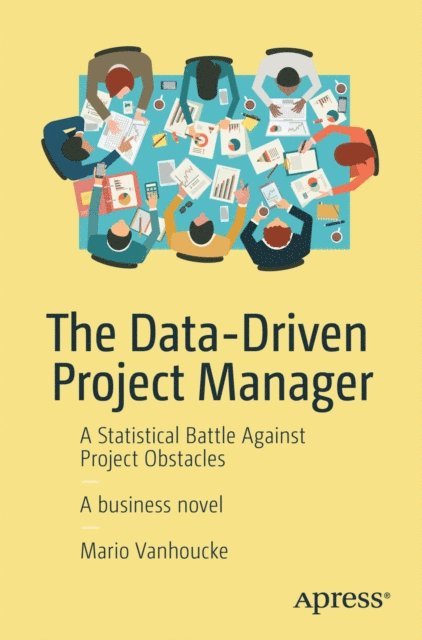
Discover solutions to common obstacles faced by project managers. Written as a business novel, the book is highly interactive, allowing readers to participate and consider options at each stage of a project. The book is based on years of experience, both through the author''s research projects as well as his teaching lectures at business schools.
The book tells the story of Emily Reed and her colleagues who are in charge of the management of a new tennis stadium project. The CEO of the company, Jacob Mitchell, is planning to install a new data-driven project management methodology as a decision support tool for all upcoming projects. He challenges Emily and her team to start a journey in exploring project data to fight against unexpected project obstacles.
Data-driven project management is known in the academic literature as “dynamic scheduling” or “integrated project management and control.” It is a project management methodology to plan, monitor, and control projects in progress in order to deliver them on time and within budget to the client. Its main focus is on the integration of three crucial aspects, as follows:
- Baseline Scheduling: Plan the project activities to create a project timetable with time and budget restrictions. Determine start and finish times of each project activity within the activity network and resource constraints. Know the expected timing of the work to be done as well as an expected impact on the project’s time and budget objectives.
- Schedule Risk Analysis: Analyze the risk of the baseline schedule and its impact on the project’s time and budget. Use Monte Carlo simulations to assess the risk of the baseline schedule and to forecast the impact of time and budget deviations on the project objectives.
- Project Control: Measure and analyze the project’s performance data and take actions to bring the project ontrack. Monitor deviations from the expected project progress and control performance in order to facilitate the decision-making process in case corrective actions are needed to bring projects back on track. Both traditional Earned Value Management (EVM) and the novel Earned Schedule (ES) methods are used.
What You''ll Learn
- Implement a data-driven project management methodology (also known as "dynamic scheduling") which allows project managers to plan, monitor, and control projects while delivering them on time and within budget
- Study different project management tools and techniques, such as PERT/CPM, schedule risk analysis (SRA), resource buffering, and earned value management (EVM)
- Understand the three aspects of dynamic scheduling: baseline scheduling, schedule risk analysis, and project control
Who This Book Is For
Project managers looking to learn data-driven project management (or "dynamic scheduling") via a novel, demonstrating real-time simulations of how project managers can solve common project obstacles
Produktinformation
- Utgivningsdatum: 2018-03-27
- Språk: Engelska
- Filformat: EPUB
- Kopieringsskydd: LCP
- ISBN: 9781484234983
- Förlag: Apress
Betyg & recensioner
0 recensioner
Inga recensioner tillgängliga.