• Fri frakt över 249 kr
  • •
  • Snabba leveranser
  • •
  • Billiga böcker
Kundservice

Du är på sajten för privatpersoner.

Företag, bibliotek eller offentlig verksamhet?

Du handlar på classic.bokus.com, där alla dina funktioner finns intakta.
Till classic.bokus.com
Bokus logotyp. Gå till startsidan.
  • Erbjudanden
  • Student
  • Topplistor
  • Barn & ungdom
  • Bokus Play
  • E-böcker
  • Ljudböcker
  • Pocketböcker
  • Spel och pussel

5% studentrabatt – använd koden KURSBOK27 →

Sidfot

Mina sidor

    Hjälp

    • Kundservice
    • Vanliga frågor och svar
    • Frakt och leverans
    • Retur vid ångerrätt
    • Reklamera vara
    • Betalning
    • Köpvillkor
    • Allmänna villkor
    • Information om webbplatsens tillgänglighet

    Om Bokus

    • Om oss
    • Pressrum
    • För studenter
    • För företag
    • För bibliotek och offentlig verksamhet
    • För leverantörer
    • Hållbarhet

    Populärt

    • Aktuella erbjudanden
    • Presentkort
    • Studentlitteratur
    • Nya böcker
    • Topplistor
    • Signerade böcker
    • Engelska böcker

    Inspiration

    • Boktips
    • BookTok
    • Barnbokskaraktärer
    • Populära författare
    Logotyp för Bokus
    Följ oss på Facebook (extern länk)Följ oss på Instagram (extern länk)Följ oss på YouTube (extern länk)Följ oss på TikTok (extern länk)
    bokus @ CookiesAnpassa cookiesIntegritetspolicyKöpvillkor
    Till Citymail hemsida (extern länk)Till Budbee hemsida (extern länk)Till Postnord hemsida (extern länk)Till Schenker hemsida (extern länk)Till Early Bird hemsida (extern länk)Till Walleys hemsida (extern länk)
    1. Samhälle och politik
    2. Social välfärd och brottslighet
    3. Brottslighet och kriminologi

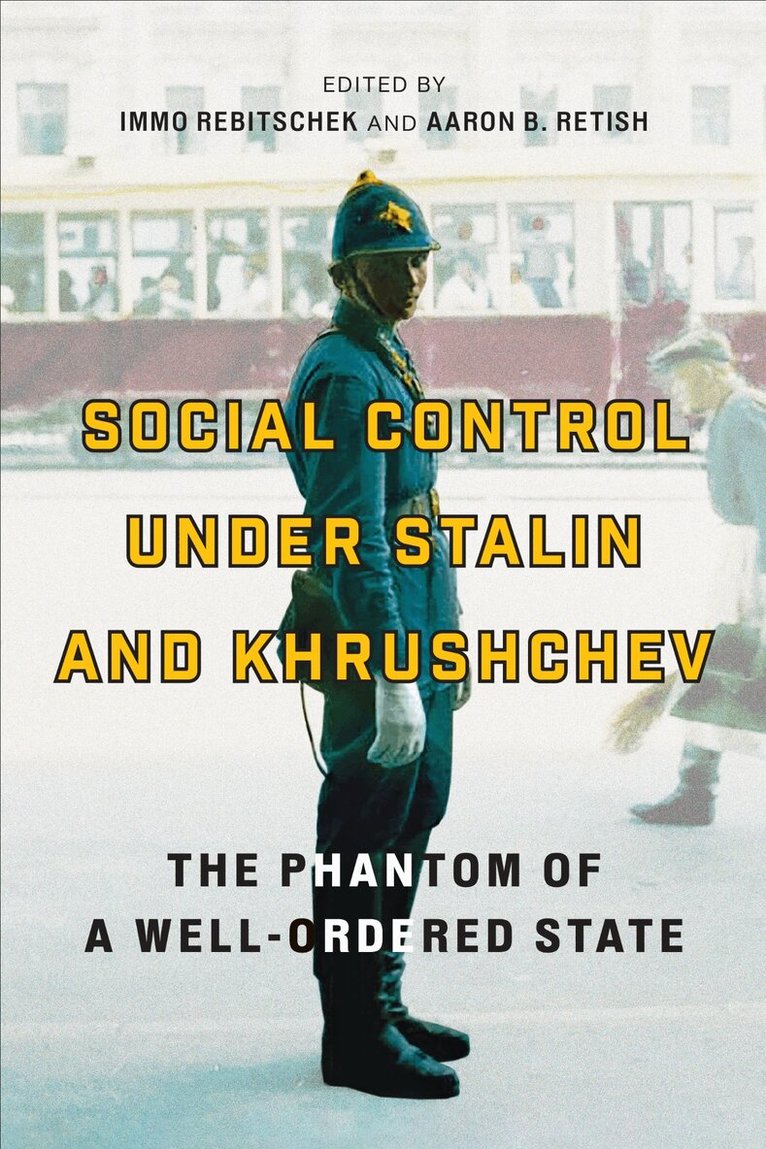
    Social Control Under Stalin and Khrushchev

    The Phantom of a Well-Ordered State

    AvImmo Rebitschek,Aaron B. Retish

    E-bok
    Engelska, 2023

    975 kr

    Läs direkt i Bokus Reader – eller ladda ned till din enhet

    Beskrivning

    How did the Soviet Union control the behaviour of its people? How did the people themselves engage with the official rules and the threat of violence in their lives?

    In this book, the contributors examine how social control developed under Stalin and Khrushchev. Drawing on deep archival research from across the former Soviet Union, they analyse the wide network of state institutions that were used for regulating individual behaviour and how Soviet citizens interacted with them. Together they show that social control in the Soviet Union was not entirely about the monolithic state imposing its vision with violent force. Instead, a wide range of institutions such as the police, the justice system, and party-sponsored structures in factories and farms tried to enforce control.

    The book highlights how the state leadership itself adjusted its policing strategies and moved away from mass repression towards legal pressure for policing society. Ultimately, Social Control under Stalin and Khrushchev explores how the Soviet state controlled the behaviour of its citizens and how the people relied on these structures.

    Produktinformation

    • Utgivningsdatum:2023-08-31
    • Språk:Engelska
    • Antal sidor:368
    • Filformat:EPUB
    • Kopieringsskydd:LCP
    • ISBN:9781487544317
    • Förlag:University of Toronto Press

    Utforska kategorier

    • Brottslighet och kriminologi inom Samhälle och politik
    • Allmän historia och världshistoria inom Historia och arkeologi
    • Europas historia inom Historia och arkeologi

    Mer om författaren

    Immo Rebitschek is a research associate and an assistant professor of Russian history at the University of Jena.Aaron B. Retish is a professor of Russian history at Wayne State University.

    Recensioner i media

    "Individual essays present well-researched and careful analysis for scholars interested in legal and police systems; taken in its entirety, this collection provides a nuanced depiction of the goals and methods of the Soviet project." - Deborah A. Field, University of Michigan (The Russian Review)

    Innehållsförteckning

    • List of Tables and Figures Abbreviations Introduction Immo Rebitschek and Aaron B. RetishPart I. Negotiating Terror and Social Discipline in the 1930s Controlling the Soviet Family through Alimony: Righteous Women, Starving Children, and Bad Fathers, 1925–39Aaron B. RetishNashi/ne Nashi, Individual Smallholders, Social Control, and the State in Ziuzdinskii District, Kirov Region, 1932–9Samantha LombSocial Control in the Workplace: Labour Discipline and Workers’ Rights under StalinMaria Starun"Such was the Music, Such was the Dance": Understanding the Internal and External Motivations of a Stalinist PerpetratorTimothy K. BlauveltPart II. Forging Society in War and PeaceSoviet "Hard Labour," Population Management, and Social Control in the Postwar GulagAlan BarenbergThe Protection of Socialist Property and the Voices of "Thieves"Juliette Cadiot"They are afraid": Medical Surveillance in Soviet Russia, 1940–54Amanda McNairPart III. Post Stalin: Trajectories of Social Control From the Street to the Court (and Back): Juvenile Delinquency in the 1950sImmo RebitschekAfter the XX Congress: Liberalization and the Problem of Social Order Yoram GorlizkiFrom Mass Terror to Mass Social Control: The Soviet Secret Police’s New Roles and Functions in the Early Post-Stalin EraEvgenia LezinaSocial Control in Post-Stalinist Courts: Housing Disputes and Citizen Demand of Legality Dina MoyalStalin’s SocialismsDavid ShearerList of Contributors