• Fri frakt över 249 kr
  • •
  • Snabba leveranser
  • •
  • Billiga böcker
Kundservice

Du är på sajten för privatpersoner.

Företag, bibliotek eller offentlig verksamhet?

Du handlar på classic.bokus.com, där alla dina funktioner finns intakta.
Till classic.bokus.com
Bokus logotyp. Gå till startsidan.
  • Erbjudanden
  • Nyheter
  • Student
  • Topplistor
  • Barn & ungdom
  • Bokus Play
  • E-böcker
  • Pocketböcker
  • Spel & pussel

10% rabatt på allt med kod: NYSTART10 →

Sidfot

Mina sidor

    Hjälp

    • Kundservice
    • Vanliga frågor och svar
    • Frakt och leverans
    • Retur vid ångerrätt
    • Reklamera vara
    • Betalning
    • Köpvillkor
    • Allmänna villkor
    • Information om webbplatsens tillgänglighet

    Om Bokus

    • Om oss
    • Pressrum
    • För studenter
    • För företag
    • För bibliotek och offentlig verksamhet
    • För leverantörer
    • Hållbarhet

    Populärt

    • Aktuella erbjudanden
    • Presentkort
    • Studentlitteratur
    • Nya böcker
    • Topplistor
    • Signerade böcker
    • Engelska böcker

    Inspiration

    • Boktips
    • BookTok
    • Populära bokserier
    • Barnbokskaraktärer
    • Populära författare
    Logotyp för Bokus
    Följ oss på Facebook (extern länk)Följ oss på Instagram (extern länk)Följ oss på YouTube (extern länk)Följ oss på TikTok (extern länk)
    bokus @ CookiesAnpassa cookiesIntegritetspolicyKöpvillkor
    Till Citymail hemsida (extern länk)Till Budbee hemsida (extern länk)Till Postnord hemsida (extern länk)Till Schenker hemsida (extern länk)Till Early Bird hemsida (extern länk)Till Walleys hemsida (extern länk)
    1. Medicin
    2. Medicin: allmänt
    3. Samhällsmedicin och preventiv medicin
    4. Folkhälsa och hälsopedagogik

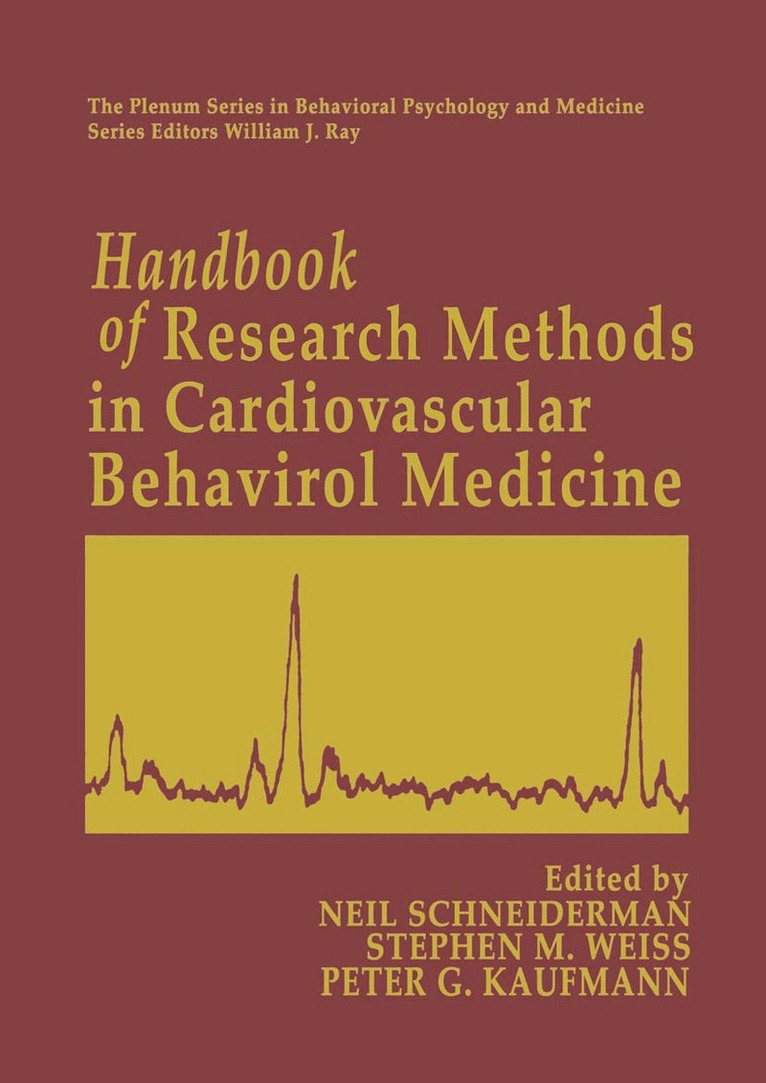
    Handbook of Research Methods in Cardiovascular Behavioral Medicine

    AvNeil Schneiderman,Stephen M. Weiss

    Häftad, Engelska, 2013

    Del i serien Springer Series in Behavioral Psychophysiology and Medicine

    3 675 kr

    Beställningsvara. Skickas inom 10-15 vardagar. Fri frakt över 249 kr.

    Beskrivning

    Cardiovascular disease continues to be the number ioral medicine" was developed and shaped into the one source of morbidity and mortality in our coun- following definition: try. Despite a 35% reduction since 1964, these Behavioral medicine is the interdisciplinary field con- diseases, particularly coronary heart disease cerned with the development and integration of behav- (CHD), claim nearly 1,000,000 lives each year in ioral and biomedical science knowledge and techniques the United States (Havlik & Feinleib, 1979). relevant to the understanding of health and illness and The Framingham study, among others, has iden- the application of this knowledge and these techniques to prevention, diagnosis, treatment and rehabilitation. tified three major risk factors implicated in the de- (Schwartz & Weiss, 1978) velopment of CHD: smoking, elevated serum cho- lesterol, and high blood pressure (Castelli et at., This concept of "biobehavioral" collaboration 1986).Given that these factors account for less challenged scientists and clinicians of many disci- than 50% of the variance associated with CHD plines to consider how they might more effectively (Jenkins, 1976), it has become obvious that addi- develop diagnostic, treatment, and prevention tional risk factors must be identified if further pro- strategies by merging their perspectives to address gress is to be made in disease prevention and simultaneously, among others, behavioral, psy- control.

    Produktinformation

    • Utgivningsdatum:2013-06-15
    • Mått:210 x 297 x 40 mm
    • Vikt:1 874 g
    • Format:Häftad
    • Språk:Engelska
    • Serie:Springer Series in Behavioral Psychophysiology and Medicine
    • Antal sidor:717
    • Förlag:Springer-Verlag New York Inc.
    • ISBN:9781489909084

    Utforska kategorier

    • Folkhälsa och hälsopedagogik inom Medicin
    • Hjärt- och kärlsjukdomar inom Medicin

    Innehållsförteckning

    • I. Cardiovascular Measurement in the Laboratory.- 1 Structure and Function of the Cardiovascular System.- 2 Noninvasive Measurement of Cardiac Functions.- 3 The Experimental Study of Behaviorally Induced Arrhythmias.- 4 The Measurement of Blood Pressure.- 5 Measurement of Blood Flow and Venous Distensibility.- 6 Autonomic Function Testing.- 7 Microneurographic Measurement of Sympathetic Nerve Activity in Humans.- 8 Measurement of Volume Regulation: Renal Function.- II. Measurement Issues in Physiology-Biochemistry.- 9 Electrolytes.- 10 Methods for Study of Carbohydrate Metabolism.- 11 Catecholamine Measurement in Behavioral Research.- 12 Adrenocortical and Gonadal Steroids in Behavioral Cardiovascular Medicine.- 13 Measurement and Function of Neuropeptides: Focus on Corticotropin-Releasing Factor and Arginine Vasopressin.- 14 Receptors.- 15 The Renin—Angiotensin—Aldosterone System and Atrial Natriuretic Factor.- III. Ambulatory Monitoring.- 16 Ambulatory Monitoring: Applications and Limitations.- 17 Ambulatory Electrocardiographic Monitoring: Methods and Applications.- 18 Research Techniques for Ambulatory Blood Pressure Monitoring.- 19 Methods for Ambulatory Monitoring of Blood and Urine.- 20 Diaries in Ambulatory Monitoring.- 21 Data Analysis of Ambulatory Blood Pressure Readings: Before p Values.- IV. Laboratory Tasks, Procedures, and Nonpsychometric Subject Variables.- 22 Psychophysiologic Strategies in Laboratory Research.- 23 Psychophysiologic Reactivity as a Dimension of Individual Differences.- 24 The Social Context of Stress and Behavioral Medicine Research: Instructions, Experimenter Effects, and Social Interactions.- 25 Physical Stressors and Pharmacologic Manipulations: Neurohumoral and Hemodynamic Responses in Hypertension.- 26 Hemodynamic Assessmentand Pharmacologic Probes as Tools to Analyze Cardiovascular Reactivity.- 27 Constitutional Factors Relating to Differences in Cardiovascular Response.- 28 Ethnic Differences in Resting and Stress-Induced Cardiovascular and Humoral Activity: An Overview.- 29 Cardiovascular and Neuroendocrine Responses to Challenge in Males and Females.- V. Psychometric Assessment.- 30 An Overview of Issues in Psychometric Assessment.- 31 Personality Dimensions in Reactivity and Cardiovascular Disease.- 32 Stress and Social Support: Assessment Issues.- 33 Assessing Subjects’ Construal of the Laboratory Situation.- 34 Observational Methods for Assessing Psychological State.- 35 Definition and Assessment of Coronary-Prone Behavior.- VI. Research Designs and Statistical Concerns.- 36 Research Designs in Behavioral Cardiovascular Research.- 37 The Analysis of Continuous Data.- 38 Power Calculations for Statistical Design.- 39 Experimental Studies in the Field: Some Pragmatic Considerations.- 40 Metaanalysis of Related Research.- 41 Pooling of Data from Independent Studies.- 42 Clinical Trials.