• Fri frakt över 249 kr
  • •
  • Snabba leveranser
  • •
  • Billiga böcker
Kundservice

Du är på sajten för privatpersoner.

Företag, bibliotek eller offentlig verksamhet?

Du handlar på classic.bokus.com, där alla dina funktioner finns intakta.
Till classic.bokus.com
Bokus logotyp. Gå till startsidan.
  • Erbjudanden
  • Nyheter
  • Student
  • Topplistor
  • Barn & ungdom
  • Bokus Play
  • E-böcker
  • Pocketböcker
  • Spel & pussel

10% rabatt på allt med kod: NYSTART10 →

Sidfot

Mina sidor

    Hjälp

    • Kundservice
    • Vanliga frågor och svar
    • Frakt och leverans
    • Retur vid ångerrätt
    • Reklamera vara
    • Betalning
    • Köpvillkor
    • Allmänna villkor
    • Information om webbplatsens tillgänglighet

    Om Bokus

    • Om oss
    • Pressrum
    • För studenter
    • För företag
    • För bibliotek och offentlig verksamhet
    • För leverantörer
    • Hållbarhet

    Populärt

    • Aktuella erbjudanden
    • Presentkort
    • Studentlitteratur
    • Nya böcker
    • Topplistor
    • Signerade böcker
    • Engelska böcker

    Inspiration

    • Boktips
    • BookTok
    • Populära bokserier
    • Barnbokskaraktärer
    • Populära författare
    Logotyp för Bokus
    Följ oss på Facebook (extern länk)Följ oss på Instagram (extern länk)Följ oss på YouTube (extern länk)Följ oss på TikTok (extern länk)
    bokus @ CookiesAnpassa cookiesIntegritetspolicyKöpvillkor
    Till Citymail hemsida (extern länk)Till Budbee hemsida (extern länk)Till Postnord hemsida (extern länk)Till Schenker hemsida (extern länk)Till Early Bird hemsida (extern länk)Till Walleys hemsida (extern länk)
    1. Medicin
    2. Medicin: icke kliniska discipliner
    3. Fysiologi

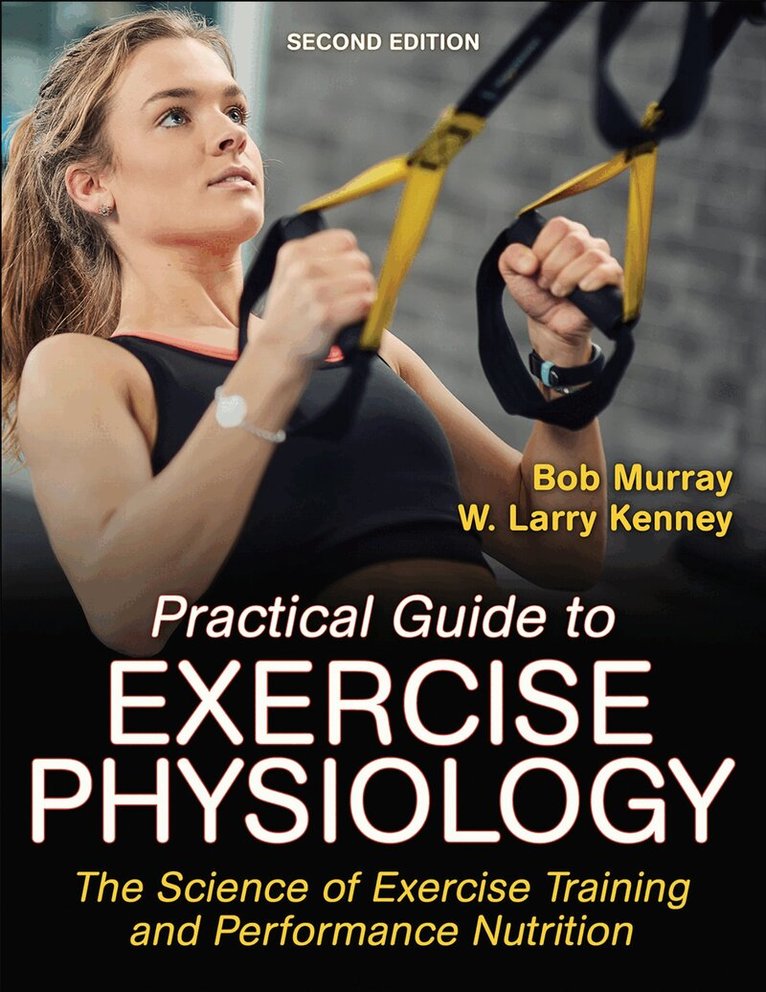
    Practical Guide to Exercise Physiology

    The Science of Exercise Training and Performance Nutrition

    AvRobert Murray,W. Larry Kenney

    Häftad, Engelska, 2020

    782 kr

    Beställningsvara. Skickas inom 5-8 vardagar. Fri frakt över 249 kr.

    Fler format och utgåvor

    Häftad

    909 kr

    Beskrivning

    Science comes to life with Practical Guide to Exercise Physiology, Second Edition. Taking an application-based approach, supported by vivid medical illustrations, this book provides students and health and fitness professionals with a simple and straightforward way to learn the fundamentals of human physiology, metabolism, and nutrition.Intricate physiological processes responsible for how the body responds and adapts to physical activity are described in an accessible manner so that readers can easily select appropriate training programs and explain them to others. Practical Guide to Exercise Physiology, Second Edition, is complemented by medical artwork that puts these complex systems into a digestible visual context. These systems are then applied to real-world practice and training principles that are beneficial to specific body systems to achieve the desired results.Part I of Practical Guide to Exercise Physiology, Second Edition, reviews human physiology fundamentals, including muscles and muscle adaptation, bioenergetics, and the cardiorespiratory system. Part II applies these scientific concepts to training programs designed for specific fitness goals. These goals include weight loss and improvements in strength and muscle mass, speed and power, and aerobic endurance. Part III of the text outlines special considerations for training with pregnant women and children as well as older adults. This part also includes exercise adjustments for changes in temperature and altitude.The second edition of Practical Guide to Exercise Physiology features new content on trending fitness concepts such as HIIT, periodization, and detraining. The text also provides several useful tools for practical application: Fun facts and sidebars examine current topics and engage readers with additional content about the human body’s response to training.At the end of each chapter, summary statements and review questions highlight essential information.Performance Nutrition Spotlights offer advice and tips on using nutrition to support adaptations and improve performance.The Index of Common Questions From Clients section collects the most common inquiries from clients and points to the corresponding chapter where each of those topics is covered, helping readers to quickly access the information.Practical Guide to Exercise Physiology, Second Edition, contains all the information students and fitness professionals need to understand the connection between physiology and exercise. Readers will gain confidence in designing exercise programs for various populations and in their ability to explain to clients how each exercise and movement will help them achieve their goals.Earn continuing education credits/units! A continuing education exam that uses this book is also available. It may be purchased separately or as part of a package that includes both the book and exam.

    Produktinformation

    • Utgivningsdatum:2020-09-22
    • Mått:216 x 279 x 15 mm
    • Vikt:816 g
    • Format:Häftad
    • Språk:Engelska
    • Antal sidor:248
    • Upplaga:2
    • Förlag:Human Kinetics Publishers
    • ISBN:9781492599050

    Utforska kategorier

    • Fysiologi inom Medicin
    • Referensverk och tvärvetenskap inom Samhälle och politik
    • Relationer inom Hälsa och familj

    Mer om författaren

    Bob Murray, PhD, FACSM, was a cofounder of the Gatorade Sports Science Institute (GSSI) and served as its director from 1985 to 2008. Murray oversaw a broad program of GSSI- and university-based research in exercise science and sport nutrition that set industry standards and consumer expectations for science-based product efficacy.A native of Pittsburgh, Murray earned his BS and MEd degrees in physical education at Slippery Rock University. He was an assistant professor of physical education and head swimming coach at Oswego State University from 1974 to 1977 before earning his PhD in exercise physiology from Ohio State University. He was an assistant and associate professor of physical education at Boise State University from 1980 to 1985 before relocating to Chicago to begin work with Gatorade. In 2008, Murray founded Sports Science Insights LLC, a consulting group that helps clients with projects in exercise science and sports nutrition. An author of numerous publications in scientific texts and journals, and an invited speaker at professional meetings worldwide, Murray is a fellow of the American College of Sports Medicine and an honorary member of the Academy of Nutrition and Dietetics. Bob and his wife Linda live in Crystal Lake, Illinois.W. Larry Kenney, PhD, FACSM, FAPS, is the Marie Underhill Noll Chair in Human Performance and a professor of physiology and kinesiology at Pennsylvania State University. Dr. Kenney was awarded the prestigious Faculty Scholar Medal by Penn State for his research contributions. He has published more than 220 journal articles and dozens of book chapters on the topic of human responses to exercise, heat and cold stress, and dehydration as well as the biophysics of heat exchange between humans and the environment. He was continuously funded by National Institutes of Health (NIH) from 1986 through 2015, one of the longest-running R01 grants. Over the years, he has mentored 38 MS or PhD students along with 8 postdoctoral fellows and numerous undergraduate scholars.  Dr. Kenney is the primary author of Physiology of Sport and Exercise, a best-selling textbook in exercise physiology, now in its seventh edition; it has now been translated into 12 languages. He served as president of the American College of Sports Medicine from 2003 to 2004 and received the Citation Award from that organization in 2008. He is also a fellow of the American Physiological Society and was presented with the Adolph Distinguished Lectureship Award by that organization in 2017. He is the former chair of the Gatorade Sports Science Institute and serves on many scientific advisory panels, including Nike’s Science Advisory Board.

    Innehållsförteckning

    • Part I. Warming Up: Physiology 101Chapter 1. Muscles Move UsHow Do Muscles Work?How Do Muscles Adapt to Training?How Do Muscle Cells Get Bigger and Stronger?Chapter 2. Food Really Is FuelFrom Food to EnergyHow Do Nutrients Fuel Muscle?What About Vitamins and Minerals?Water Is a Nutrient, TooChapter 3. Muscles Need OxygenHow Does Oxygen Get to Muscles?How Does Oxygen Use Relate to Metabolic Rate?How Does Training Help the Body Use More Oxygen?Oxygen Delivery and Performance EnhancementChapter 4. Fatigue: What Is It Good For?What Causes Fatigue?What’s the Difference Between Fatigue and Overtraining?What Role Does Fatigue Play in Adaptations to Training?Part II. The Science of Training Program DesignChapter 5. Principles of Designing Training ProgramsWhat Are the Basics of Program Design?What Makes an Effective Training Program?Training TermsChapter 6. Training to Improve Strength and Muscle MassHow Do Strength and Mass Increase?What’s the Best Way to Gain Strength and Mass?What’s the Role of Nutrition?Detraining and RetrainingChapter 7. Training for Body Weight ControlWeight Loss Is All About Energy BalanceWhy Do Some People Have Difficulty Losing Weight?What’s the Best Way to Lose Fat but Protect Muscle Mass?Chapter 8. Training for Speed and PowerWhat Are Speed and Power?What Adaptations Are Needed to Improve Speed and Power?What Kinds of Training Improve Speed and Power?What Does a Speed and Power Training Session Look Like?Chapter 9. Training for Aerobic EnduranceWhat Are the Main Adaptations to Aerobic Training?What’s the Best Way to Improve Aerobic Endurance?Should Endurance Athletes Engage in Strength Training?Why Is Endurance Capacity Important for Sprinters and Team-Sport Athletes?Part III. Special ConsiderationsChapter 10. Heat, Cold, and AltitudeExercise in the Heat Impairs PerformanceCold Stress Chills PerformanceExercise at AltitudeChapter 11. Training Children and Pregnant WomenDo Children Respond Differently to Exercise Training?Can Children Improve Strength With Training?Should Women Exercise During Pregnancy?Chapter 12. Training Older AdultsWhat Changes With Aging?How Can Exercise Training Benefit Older Adults?What Considerations Should Be Part of Training for Older Adults?Index of Common Questions From Clients