- Nyhet
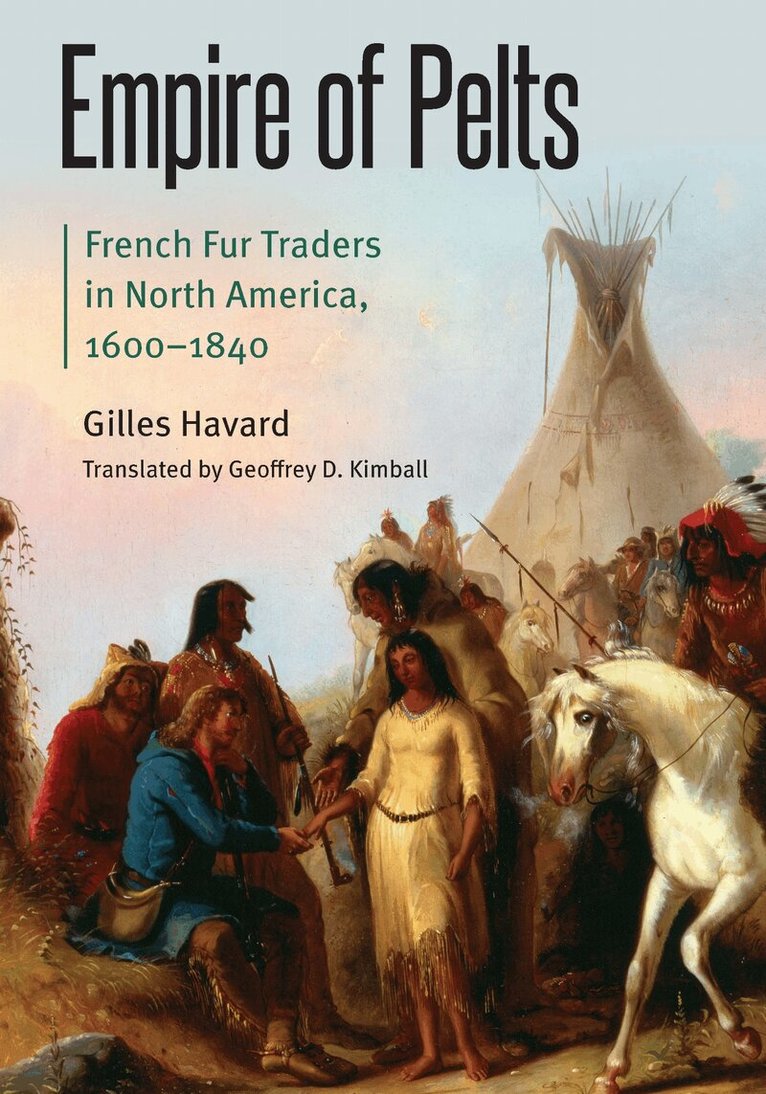
Empire of Pelts
French Fur Traders in North America, 1600–1840
1 773 kr
Beställningsvara. Skickas inom 3-6 vardagar. Fri frakt över 249 kr.
Beskrivning
Produktinformation
- Utgivningsdatum:2026-11-01
- Mått:178 x 254 x undefined mm
- Format:Inbunden
- Språk:Engelska
- Serie:Borderlands and Transcultural Studies
- Antal sidor:974
- Förlag:University of Nebraska Press
- ISBN:9781496217103
- Översättare:Geoffrey D. Kimball, Geoffrey Kimball
Utforska kategorier
Mer om författaren
Gilles Havard is research director at the CNRS (National Centre for Scientific Research in Paris). He is the author of The Great Peace of Montreal of 1701 and numerous award-winning history books in French, including a book about the Natchez. Geoffrey D. Kimball is the author of Natchez Analytical Dictionary (Nebraska, 2025), compiler of Yukhíti Kóy: A Reference Grammar of the Atakapa Language (Nebraska, 2022), and translator of Koasati Traditional Narratives (Nebraska, 2010).
Recensioner i media
"Havard shows what a great historian can do with this vast, profuse, and ambivalent topic. . . . Evident throughout is Havard's scholarly versatility; his use, that is, of the methods and insights of different disciplines and fields of study like social, political, and business history, anthropology, folklore, and linguistic analysis. . . . Havard's learning is multi-faceted and his techniques varied; his scholarly rigor is entirely consistent. It's not just his mastery of a huge body of primary sources, but his judicious and transparent use of them to support his claims. . . . Havard's succession of precise, smart, and varied interpretations add up to form a remarkably comprehensive view of fur traders and the essentially dissonant enterprise they were engaged in. The book's achievement is evident."—Paul Mapp, Books and Ideas.net"Provides researchers with a comprehensive synthesis of North American 'coureurs de bois' and represents an impressive body of scholarship. . . . The abundant richness of this research work is reflected in the exploitation of a vast and diversified documentary corpus through the meticulous examination of archival documents, memoirs, journals, diaries, travel narratives that complement and sometimes challenge or contradict the already existing secondary sources."—Journal of Early American History"[Empire of Pelts] tells a dramatic history of otherness, cross-cultural struggle, violence, hate, diplomacy, accommodation, geopolitical contestation, and war with verve and keen eye for detail. . . . [This is an] ambitious, expansive, nuanced, and mature work, and it should have a galvanizing and enduring impact on North American historical scholarship."—Pekka Hämäläinen, author of Indigenous Continent: The Epic Contest for North America
Innehållsförteckning
- List of IllustrationsTranslator’s NoteForeword to the English language EditionAcknowledgementsIntroductionFirst Part: FUR-TRADING MOBILITY AND COLONIAL SOCIETIES1 The Time of Go-Betweens (1600-1650)The maritime origins of the fur tradeGo-betweens and winterers (1610‑1632)Coureurs de bois?Falling socially, or rising socially? (1633-1649)Who can trade?2 Birth of a Mobility (1650-1672)Trade becomes democratizedSupervising mobilitySpatial mobility, social mobility and national ambiguity: Des Groseilliers and RadissonThe beginnings of the Montreal fairThe ambiguities of the rush to the WestThe issue of marriage: social tensions and masculinity3 The Construction of a Vagabond (1672‑1681)A new social categoryPolice State and UtopiaIn the “depths of the woods”Homo libertinusVagabondage and the war on idlenessBanditry4 Illegal Activities Justice, between apathy and bullying (1672-1674)Clan Wars, Act Two (1675-1681)The promotion of fairsA composite minorityLinguistic knowledge5 Legal Framework and Frauds (1681‑1715)The course des bois legalized (1681-1696)Forms and issues of regulationFraudsIllicit MobilityThe course is proscribed (1696)The course tolerated?6 A Culture of Travel Takes RootThe voyageur“Two kinds of coureurs de bois”Women without their husbands: a culture of absenceDisruptive movement7 Colonial Anxieties. The Ways of IdlenessA “kingdom of youth”? The weight of the single lifeForgetting the LandNobility, idleness and social mobilityA society of spending“Sauvage:”, a mirror of a politeness under construction8 Useful Vagabonds? The Course des Bois and Reasons of StateIs the course a profession? Terminological fluctuationsBetween social fatalism and political utilitarianismVagabonds and servants: the cases of Michel Bisaillon and Étienne Veniard de BourgmontHow to wage war in America? The coureur de bois as a warriorThe contribution of the coureurs de bois to military expeditions: hope and disillusionment9 Birth of a Regional EthnotypeDoes the Canadian run in the woods? How a social category is made ethnicWhat is a Canadian?10 Myths and Realities of Fur Trade Mobility in English AmericaSome “English coureurs”The Puritan does not run into the woodsEnglish criteria for expansionThe elusive bushloper11 Slaves and Deerskins: Trade in South CarolinaThe rise of the Indian tradeThe peddlers of the savannasThe meeting of slave societiesRace for profit and intracolonial rivalriesThe regulation of 1707The impunity of traders12 The Regulation of Travel (1715-1760)In Canada: licenses and monopoliesLouisiana: Merchant-state and monopoliesThe restructuring of the Carolinian trade13 When Mobility Becomes Commonplace. The Place of the Voyageurs in Colonial SocietiesCanadian voyageursFrom the oar to the sickle: the pluriactivity of Canadian voyageursThe voyageurs of the Illinois CountryThe fur traders of Lower LouisianaThe hunters of the MississippiThe Indian traders of Carolina and GeorgiaLinguistic Competence and Social Mobility14 Travel CustomsThe empire of the canoeExpansion: the technical and logistical consequences of the commercial boomPirogues and barges of the Mississippi basinBritish caravansFrench Trading Posts and StorehousesThe British caravanseraisThe cabanages of the MississippiFrom seasonal mobility to migration15 Jurisdictional Friction and Shady CommerceIn the Pays d’en haut: respect for licenses and monopoliesThe quarrel over the Missouri RiverCarolinian FraudsMultiple loyalties and trans-imperial solidarity16 Creoleness and MÉtissage The course des bois and Canadian identity: a persistent clichÉThe Illinois Country, a lair of Canadian vagabonds?The gravediggers of New France?Creoleness and war: The Canadian in the Louisiana rearview mirrorAbsentee fathers?Crystallization of the lexicon of mixed-race identityFluctuating identities17 When the Winterers Become Freemen (1760-1821)The reconstitution of the Montreal networkNorthmen and Pork eatersProletarianizationThe collection of furs: running the drouine“Free:” end of contract or desertionAn independence that causes angerNew family loyalties, or the choice of the Indian country18 Louisiana Fur Traders and Hunters (1764‑1804)Spanish Louisiana and the fight against vagrancyBear, deer and buffalo huntersA new cosmopolitan village: St. LouisThe actors of the trade in St. LouisBefore the Mountain Men: hunting continuities19 Voyageurs of the Upper Missouri and Mountain Hunters (1804-1840)How the mountain hunting culture was bornThe voyageurs of the upper MissouriThe ephemeral experience of mountain hunters (1825 to around 1840)NomadsConnected fur trade worlds20 The Culture of Travel: Reputation and Collective IdentityWintering in the Pays d’en haut: a test of virilityMasculinity and otherness: a novice’s perspectiveA common identity?Improvidence: myth or reality?“The reputation of being a good rower”: The culture of travel in St. LouisThe prestige of the Mountaineers Second Part: FUR-TRADING MOBILITY AND NATIVE AMERICAN SOCIETIES21 The Exchange in QuestionThe myth of the Indian merchantRecalcitrant partners: war, masculinity, and buffalo culture:The ethos of predationIn the shadow of war: pillageViolence and violationOn the proper use of rum and alliancesThe case of the hunters22 The Indian Trade: How Goods CirculatePorosities: market, gift and creditAdoption, hospitality and feastsKnowing how to giveRitual CompetitionThe uncertainty of social relationsBargaining: forms and hazards of the exchange23 The Challenge of LanguageReluctant teachersBabel in AmericaTrade jargonsCommunicating by signs24 Spiritual Mediations: Baptisms, Offerings and JugglingsTransplanted ChristiansBaptismsAt the border between cultures: offeringsSocieties of spectacle: shaking tents and other juggling25 Bodily EducationIndigenous remediesIn the hands of healersCulinary frontiersHunting, fishing, and bartering…in order to eatShortagesBig eatersDrinking and smokingThe calumet: a complex etiquetteCultural Crossings: Voyageur’s Clothing26 Strong Men: Virile PosturesPhysical heroism: boasting and virilityIndependence and virility: freemenImitating or defying the IndianWarlike exploits?TattooingDown with body hair!Becoming a magicianBecoming a healerInterpreters: double men?27 Oral Cultures: Language and TalesFrench linguistic capitalThe language of French-speaking voyageursA world of storytellers: oral materialThe meeting of mythologies28 Otherness and Kinship: Indigenous PerspectivesApotheosis: a trick of the eye?“Other than human?”An evolving status?Rituals of adoptionThe power of namingMarginal relatives?29 A New Emotional RegimeSeductionsContemplation, hunting, and a sense of abundanceFreedom and sovereigntyA relaxed body?A culture of the eyeIdleness, games, and entertainmentThe power of dreamsTranquility?30 Masculine ConquestsA same-sex environmentPlaygrounds, or the right of virile expressionSexual outrages, theft of women, and indigenous retaliationThe trope of the nymph31 Sexual HospitalityPermissive societies?The ceremonial dimension of sexuality“Almost their sole motivation for their journey”An etiquette to respectA transfer of spiritual powerHired wives and concubines“Masters of their own bodies”The colonial fantasy of the prostituteWomen-subjects?32 The Bride PriceOrdinary unions“In the Fashion of the Country”What is a marriage?Slave womenSerial monogamyDouble standards and polygamy33 Feminine HypergamyOn the usefulness of Indian womenOffers of marriageThe discourse on women as slavesNon-submissive Country wivesA form of hypergamyA self-interested woman? The constraints of marriageTaboos I: The temptation of autonomy or the double lawTaboos II: Measuring one's words and actions34 The MÉtis QuestionA cultural form of filiationA minority becomes visibleMore involved white fathers?The maternal factor35 The Ethnic Question: the Bois BrulÉsThe emergence of freemen: equestrian culture and community dynamicsThe Battle of La GrenouillÈre (1816): a hardening of identity?The Missouri River “mÉtis”The collective identity of the “Free People” of the Red River (1820s-1830s)ConclusionEpilogue: The InheritancesNotes Sources and BibliographyIndex
Du kanske också är intresserad av
- Signerad!
- Nyhet
- -12%
- Nyhet
- Nyhet
- Signerad!
- -30%
- -15%
Domino : Dåren, domaren och den välkammade mannen från pirayaministeriet
Håkan Nesser
Inbunden, 2026
220 kr259 kr