• Fri frakt över 249 kr
  • •
  • Snabba leveranser
  • •
  • Billiga böcker
Kundservice

Du är på sajten för privatpersoner.

Företag, bibliotek eller offentlig verksamhet?

Du handlar på classic.bokus.com, där alla dina funktioner finns intakta.
Till classic.bokus.com
Bokus logotyp. Gå till startsidan.
  • Erbjudanden
  • Nyheter
  • Student
  • Topplistor
  • Barn & ungdom
  • Bokus Play
  • E-böcker
  • Pocketböcker
  • Spel & pussel

10% studentrabatt med kod TERM26

Sidfot

Mina sidor

    Hjälp

    • Kundservice
    • Vanliga frågor och svar
    • Frakt och leverans
    • Retur vid ångerrätt
    • Reklamera vara
    • Betalning
    • Köpvillkor
    • Allmänna villkor
    • Information om webbplatsens tillgänglighet

    Om Bokus

    • Om oss
    • Pressrum
    • För studenter
    • För företag
    • För bibliotek och offentlig verksamhet
    • För leverantörer
    • Hållbarhet

    Populärt

    • Aktuella erbjudanden
    • Presentkort
    • Studentlitteratur
    • Nya böcker
    • Topplistor
    • Signerade böcker
    • Engelska böcker

    Inspiration

    • Boktips
    • BookTok
    • Populära bokserier
    • Barnbokskaraktärer
    • Populära författare
    Logotyp för Bokus
    Följ oss på Facebook (extern länk)Följ oss på Instagram (extern länk)Följ oss på YouTube (extern länk)Följ oss på TikTok (extern länk)
    bokus @ CookiesAnpassa cookiesIntegritetspolicyKöpvillkor
    Till Citymail hemsida (extern länk)Till Budbee hemsida (extern länk)Till Postnord hemsida (extern länk)Till Schenker hemsida (extern länk)Till Early Bird hemsida (extern länk)Till Walleys hemsida (extern länk)
    1. Samhälle och politik
    2. Politik och statsskick
    3. Centralt styre och förvaltning

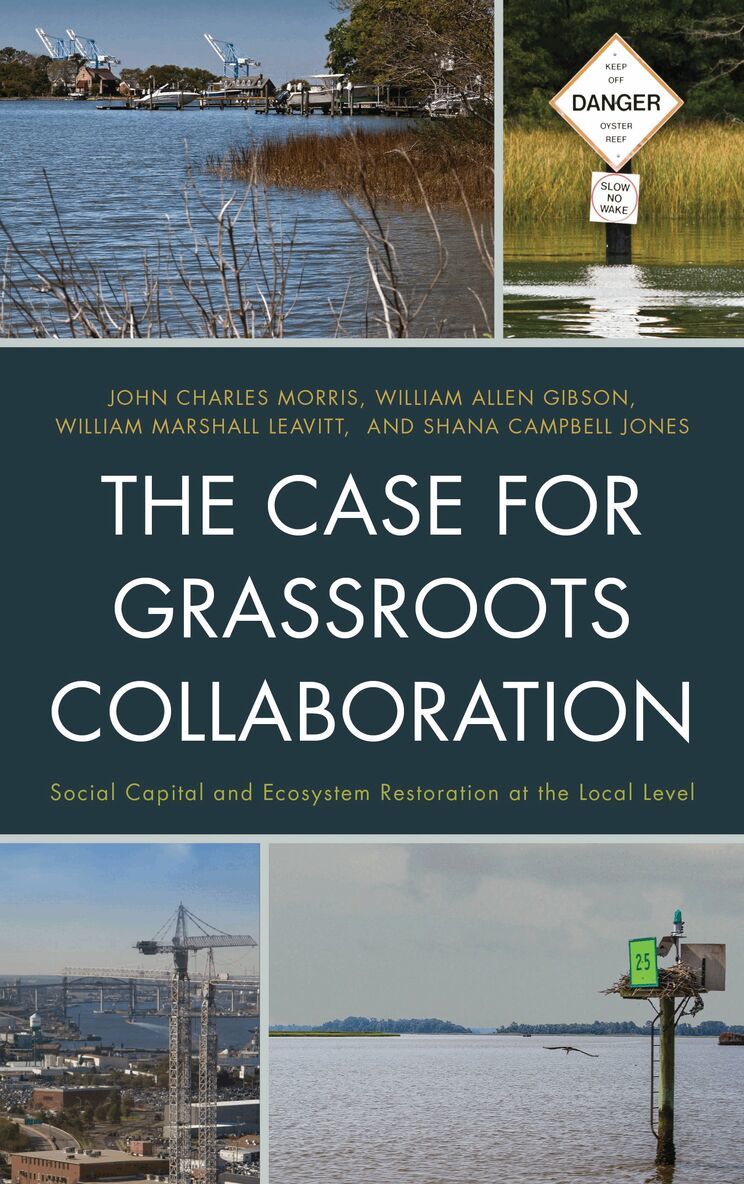
    Case for Grassroots Collaboration

    Social Capital and Ecosystem Restoration at the Local Level

    AvJohn C. Morris,William Allen Gibson

    Häftad, Engelska, 2015

    632 kr

    Beställningsvara. Skickas inom 10-15 vardagar. Fri frakt över 249 kr.

    Beskrivning

    The nation’s approach to managing environmental policy and protecting natural resources has shifted from the national government’s top down, command and control, regulatory approach, used almost exclusively in the 1970s, to collaborative, multi-sector approaches used in recent decades to manage problems that are generally too complex, too expensive,, and too politically divisive for one agency to manage or resolve on its own. Governments have organized multi-sector collaborations as a way to achieve better results for the past two decades. We know much about why collaboration occurs. We know a good deal about how collaborative processes work. Collaborations organized, led, and managed by grassroots organizations are rarer, though becoming more common. We do not as yet have a clear understanding of how they might differ from government led collaborations.Hampton Roads, Virginia, located at the southern end of the Chesapeake Bay, offers an unusual opportunity to study and draw comparative lessons from three grassroots environmental collaborations to restore three rivers in the watershed, in terms of how they build, organize and distribute social capital, deepen democratic values, and succeed in meeting ecosystem restoration goals and benchmarks. This is relevant for the entire Chesapeake Bay watershed, but is also relevant for understanding grassroots collaborative options for managing, protecting, and restoring watersheds throughout the U.S. It may also provide useful information for developing grassroots collaborations in other policy sectors.The premise underlying this work is that to continue making progress toward achieving substantive environmental outcomes in a world where the problems are complex, expensive, and politically divisive, more non-state stakeholders must be actively involved in defining the problems and developing solutions. This will require more multi-sector collaborations of the type that governments have increasingly relied on for the past two decades. Our approach examines one subset of environmental collaboration, those driven and managed by grassroots organizations that were established to address specific environmental problems and provide implementable solutions to those problems, so that we may draw lessons that inform other grassroots collaborative efforts.

    Produktinformation

    • Utgivningsdatum:2015-03-24
    • Mått:151 x 230 x 22 mm
    • Vikt:431 g
    • Format:Häftad
    • Språk:Engelska
    • Antal sidor:284
    • Förlag:Bloomsbury Publishing Plc
    • ISBN:9781498515337

    Utforska kategorier

    • Centralt styre och förvaltning inom Samhälle och politik
    • Miljövetenskap och miljöpolitik inom Naturvetenskap och teknik

    Mer om författaren

    Dr. John Charles Morris is professor of public administration and Ph.D. graduate program director in the department of urban studies and public administration at Old Dominion University in Norfolk, Virginia. Dr. William Allen Gibson is professor of political science and chair of the department of political science at Virginia Wesleyan College, Virginia Beach, Virginia, where he teaches environmental policy and public administration.Dr. William Marshall Leavitt is associate professor and MPA director at Old Dominion University. Shana Campbell Jones, J.D., is an environmental lawyer and directs the Virginia Coastal Policy Clinic at William & Mary Law School.

    Recensioner i media

    The idea of participatory democracy and citizen involvement in agency decision making is not new. This is especially true for works on participatory decision making in environmental policy and watershed management. Unfortunately, what sounds like a great idea on the surface rarely works in practice as competing interests often get in the way of compromise and collaboration. This is where The Case for Grassroots Collaboration can prove to be a useful addition to the literature. The authors provide three case studies of situations where the approach did work--the Elizabeth River watershed, the Lynnhaven River watershed, and the Nansemond River watershed. . . .The authors synthesize the factors that led to success in these cases in order to provide a template for future use. This is what is necessary if citizens and policy makers are to bridge the gap between a promising theory and a generally elusive practice and make more widespread use of grassroots participation. For this reason, the work is recommended. Summing Up: Recommended. Lower-division undergraduate collections and above.

    Innehållsförteckning

    • List of FiguresList of AbbreviationsForewordAcknowledgmentsIntroductionChapter 1: Grassroots Collaborations to Solve Environmental ProblemsChapter 2: A Framework for Collaboration: Building Social Capital, Improving Environmental Outcomes, and Maximizing Democratic ValuesChapter 3: The Chesapeake Bay: Local Efforts, Regional ConnectionsChapter 4: Restoring Princess Elizabeth’s RiverChapter 5: The Return of the Oyster to the Lynnhaven RiverChapter 6: The Nansemond: A Tale of Two RiversChapter 7: Conclusion: One Watershed at a TimeAppendix: List of IntervieweesReference ListAbout the AuthorsIndex