• Fri frakt över 249 kr
  • •
  • Snabba leveranser
  • •
  • Billiga böcker
Kundservice

Du är på sajten för privatpersoner.

Företag, bibliotek eller offentlig verksamhet?

Du handlar på classic.bokus.com, där alla dina funktioner finns intakta.
Till classic.bokus.com
Bokus logotyp. Gå till startsidan.
  • Erbjudanden
  • Nyheter
  • Student
  • Topplistor
  • Barn & ungdom
  • Bokus Play
  • E-böcker
  • Pocketböcker
  • Spel & pussel

10% rabatt på allt med kod: NYSTART10 →

Sidfot

Mina sidor

    Hjälp

    • Kundservice
    • Vanliga frågor och svar
    • Frakt och leverans
    • Retur vid ångerrätt
    • Reklamera vara
    • Betalning
    • Köpvillkor
    • Allmänna villkor
    • Information om webbplatsens tillgänglighet

    Om Bokus

    • Om oss
    • Pressrum
    • För studenter
    • För företag
    • För bibliotek och offentlig verksamhet
    • För leverantörer
    • Hållbarhet

    Populärt

    • Aktuella erbjudanden
    • Presentkort
    • Studentlitteratur
    • Nya böcker
    • Topplistor
    • Signerade böcker
    • Engelska böcker

    Inspiration

    • Boktips
    • BookTok
    • Populära bokserier
    • Barnbokskaraktärer
    • Populära författare
    Logotyp för Bokus
    Följ oss på Facebook (extern länk)Följ oss på Instagram (extern länk)Följ oss på YouTube (extern länk)Följ oss på TikTok (extern länk)
    bokus @ CookiesAnpassa cookiesIntegritetspolicyKöpvillkor
    Till Citymail hemsida (extern länk)Till Budbee hemsida (extern länk)Till Postnord hemsida (extern länk)Till Schenker hemsida (extern länk)Till Early Bird hemsida (extern länk)Till Walleys hemsida (extern länk)
    1. Samhälle och politik
    2. Samhälle och kultur
    3. Sociala och etiska frågor

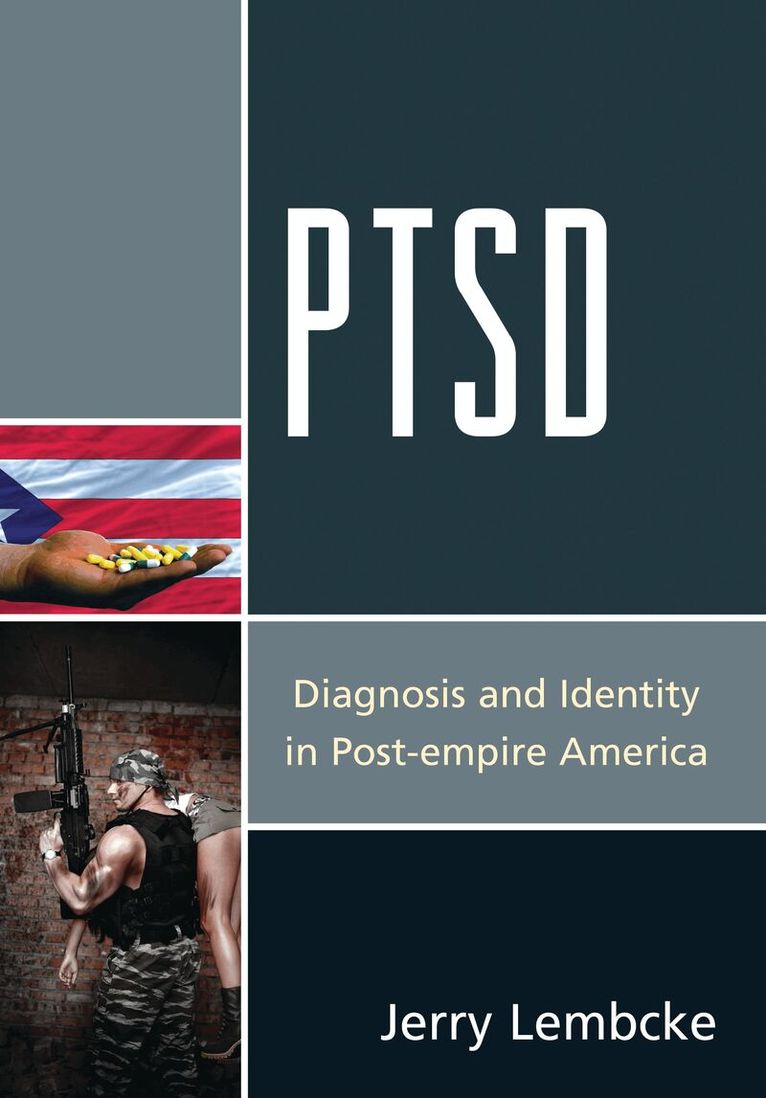
    PTSD

    Diagnosis and Identity in Post-empire America

    AvJerry Lembcke

    Häftad, Engelska, 2015

    Del i serien Lexington Books

    681 kr

    Beställningsvara. Skickas inom 10-15 vardagar. Fri frakt över 249 kr.

    Beskrivning

    Stories of soldiers suffering from Post-Traumatic Stress Disorder dominate news coverage of the return from wars in the Middle East. On the surface, the stories call our attention to psychic trauma and the need for mental health services for veterans; scratch that surface and we see that PTSD has morphed from a diagnostic category into a cultural trope with broad societal implications. In PTSD: Diagnosis and Identity in Post-empire America, Jerry Lembcke exposes those implications. Lembcke reprises PTSD’s formulation following the war in Vietnam, examining how its medical discourse provided a psychological alternative to the political interpretations of veterans’ opposition to the war— psychiatrists said veteran dissent was cathartic, a form of acting-out. Lembcke drills deeply into the modern history of war-trauma treatment, picking up the threads left by nineteenth-century work on men and hysteria, and following them into the treatment of “shell shock” in World War I. With great originality, Lembcke also shows how art and the media led the “science” of war trauma, and then how the followers of Sigmund Freud showed that shell-shock symptoms were as likely to be expressions of fears and conflicts internal to the patients as the effects of exploding shells. The line drawn by the Freudian critique of the medical/neurological model would resurface in debates leading to PTSD’s inclusion in the DSM in 1980 and on-going deliberations over the definition and meaning of Traumatic Brain Injury. In core chapters, Lembcke shows the influence of film, theater, television, and news coverage on public and professional thinking about war trauma. The inglorious nature of recent wars, from Vietnam through Iraq and Afghanistan, leaves Americans searching for meaning in those conflicts and finding it in loss and sacrifice. Lembcke warns that the image of damaged war veterans is working metaphorically in these dangerous times to construct a national self-image of defeat and damage that needs to be avenged. It is a dangerous end-of-empire narrative that needs to be engaged, he says, lest its dangers reach fruition in more war. The insights found in this book make it an invaluable resource for scholars of sociology, medical sociology, psychology, military studies, gender studies, and history of psychiatry, and a riveting read for anyone interested in the subjects it treats.

    Produktinformation

    • Utgivningsdatum:2015-04-21
    • Mått:151 x 226 x 17 mm
    • Vikt:349 g
    • Format:Häftad
    • Språk:Engelska
    • Serie:Lexington Books
    • Antal sidor:232
    • Förlag:Bloomsbury Publishing Plc
    • ISBN:9781498520898

    Utforska kategorier

    • Sociala och etiska frågor inom Samhälle och politik
    • Våld och övergrepp inom Samhälle och politik
    • Biologisk psykologi och neuropsykologi inom Psykologi och pedagogik

    Mer om författaren

    Jerry Lembcke is associate professor emeritus of sociology at Holy Cross College in Worcester, Massachusetts. His authored books include: The Splitting Image: Myth, Memory, and the Legacy of Vietnam, and Hanoi Jane: War, Sex and Fantasies of Betrayal.

    Recensioner i media

    Arguing that 'the reality of PTSD is far greater than that given it by medical sciences,' Lembcke sets about separating the diagnostic wheat from the cultural, economic, and political chaff. He illustrates the influence of film, theater, television, and news coverage on the tangled story of war trauma. Headlining the compelling victim-veteran role that US society expects of returning combat veterans, Lembcke covers a variety of interesting sociological topics–for example, 'wannabe vets' and how PTSD is used as an alibi for homicide, failed marriages, and other personal problems. The author challenges the status quo by chronicling the social construction of PTSD and traumatic brain injury–that is, circumstances in which empirical reality or critical thinking is often not the umpire. What sets this book apart is the author's take on how media representations have hijacked the diagnosis of war trauma. Summing Up: Recommended. Graduate students, faculty, clinicians, and patients.

    Innehållsförteckning

    • Chapter 1: Wound on the Battle Front, Alibi on the Home Front: Post Traumatic Stress Disorder in Medical and Legal Guise.Chapter 2: Post Traumatic Stress Disorder: The Coming Home Story for a New Generation of Veterans. Chapter 3: What Did You do in the War? Combat in the American ImaginationChapter 4: The Legacy of Salpetrière: Art in the Science of War TraumaChapter 5: Flashbacks: War Trauma Refashioned for PTSDChapter 6: Traumatic Brain Injury: Making a “Signature Wound”Chapter 7: Mr. Rushmore: Ready for War’s New Face?Chapter 8: Embrace the Horror