• Fri frakt över 249 kr
  • •
  • Snabba leveranser
  • •
  • Billiga böcker
Kundservice

Du är på sajten för privatpersoner.

Företag, bibliotek eller offentlig verksamhet?

Du handlar på classic.bokus.com, där alla dina funktioner finns intakta.
Till classic.bokus.com
Bokus logotyp. Gå till startsidan.
  • Erbjudanden
  • Nyheter
  • Student
  • Topplistor
  • Barn & ungdom
  • Bokus Play
  • E-böcker
  • Pocketböcker
  • Spel & pussel

10% rabatt på allt med kod: NYSTART10 →

Sidfot

Mina sidor

    Hjälp

    • Kundservice
    • Vanliga frågor och svar
    • Frakt och leverans
    • Retur vid ångerrätt
    • Reklamera vara
    • Betalning
    • Köpvillkor
    • Allmänna villkor
    • Information om webbplatsens tillgänglighet

    Om Bokus

    • Om oss
    • Pressrum
    • För studenter
    • För företag
    • För bibliotek och offentlig verksamhet
    • För leverantörer
    • Hållbarhet

    Populärt

    • Aktuella erbjudanden
    • Presentkort
    • Studentlitteratur
    • Nya böcker
    • Topplistor
    • Signerade böcker
    • Engelska böcker

    Inspiration

    • Boktips
    • BookTok
    • Populära bokserier
    • Barnbokskaraktärer
    • Populära författare
    Logotyp för Bokus
    Följ oss på Facebook (extern länk)Följ oss på Instagram (extern länk)Följ oss på YouTube (extern länk)Följ oss på TikTok (extern länk)
    bokus @ CookiesAnpassa cookiesIntegritetspolicyKöpvillkor
    Till Citymail hemsida (extern länk)Till Budbee hemsida (extern länk)Till Postnord hemsida (extern länk)Till Schenker hemsida (extern länk)Till Early Bird hemsida (extern länk)Till Walleys hemsida (extern länk)
    1. Samhälle och politik
    2. Samhälle och kultur
    3. Kultur och medier
    4. Kulturvetenskap

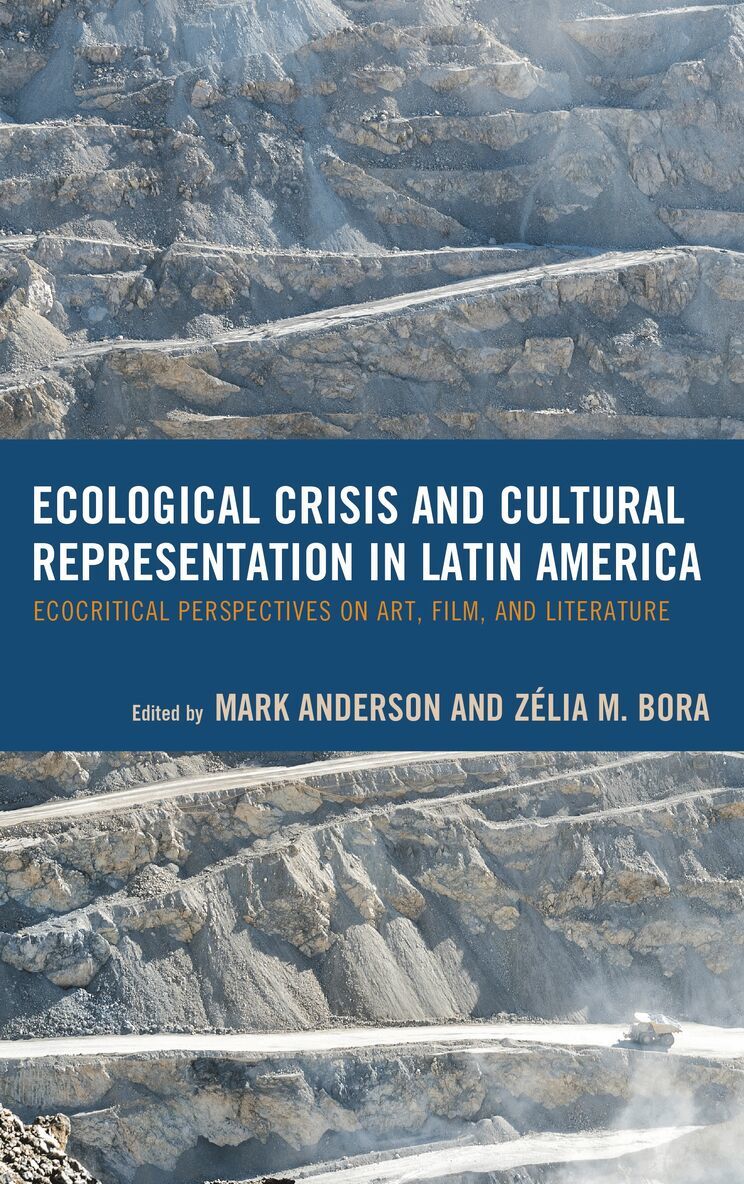
    Ecological Crisis and Cultural Representation in Latin America

    Ecocritical Perspectives on Art, Film, and Literature

    AvMark Anderson,Zélia M. Bora

    Inbunden, Engelska, 2016

    Del i serien Ecocritical Theory and Practice

    1 763 kr

    Beställningsvara. Skickas inom 10-15 vardagar. Fri frakt över 249 kr.

    Beskrivning

    Worldwide environmental crisis has become increasingly visible over the last few decades as the full scope of anthropogenic climate change manifests itself and large-scale natural resource extraction has expanded into formerly remote areas that seemed beyond the reach of industrialization. Scientists and popular culture alike have turned to the term "Anthropocene" to capture the global scale of environmental and even geological transformations that humans have carried out over the last two centuries. The chapters in Ecological Crisis and Cultural Representation in Latin America examine the dynamics and interplay between local cultures and the expansion of global capitalism in Latin America, emphasizing the role of art in bearing witness to and generating awareness of environmental and social crises, but also its possibilities for formulating solutions. They take particular care to draw out the ways in which local environmental crises in Latin American nations are witnessed and imagined as part of a global system, focusing on the problems of time, scale, and complexity as key terms in conceiving the dimensions of crisis. At the same time, they question the notion of the Anthropocene as a species-wide "human" historical project, making visible the coloniality of natural resource extraction in Latin America and its dire effects for local people, cultures, and environments. Taking an ecocritical approach to Latin American cultural production including literature, film, performance, and digital artwork, the chapters in this volume develop a notion of ecological crisis that captures not only its documentary sense in the representation of environmental destruction (the degradation of the oikos), but also the crisis in the modern worldview (logos) that the acknowledgment of crisis provokes. In this sense, crisis is also the promise of a turning point, of the possibilities for change. Latin American representations of ecological crisis thus create the conditions for projects that decolonize environments, developing new, sustainable ways of conceiving of and relating to our world or returning to old ones.

    Produktinformation

    • Utgivningsdatum:2016-10-04
    • Mått:162 x 236 x 28 mm
    • Vikt:653 g
    • Format:Inbunden
    • Språk:Engelska
    • Serie:Ecocritical Theory and Practice
    • Antal sidor:362
    • Förlag:Bloomsbury Publishing Plc
    • ISBN:9781498530958

    Utforska kategorier

    • Kulturvetenskap inom Samhälle och politik
    • Litteraturvetenskap inom Skönlitteratur
    • Djurböcker inom Djur och Natur

    Mer om författaren

    Mark Anderson is associate professor of Latin American literatures and cultures at the University of GeorgiaZélia M. Bora is professor of Brazilian and comparative literature at the Universidade Federal de Paraiba

    Recensioner i media

    The editors deserve to be commended for producing this excellent contribution to the field of ecocriticism. Readers of this book will find themselves learning about diverse regional environmental approaches to the common ecological crisis.

    Innehållsförteckning

    • Introduction: The Dimensions of Crisis - Mark AndersonSection I: Declarations of Crisis1. Latin America in the World-Ecology: Origins and Crisis - Sharae Deckard2. Mythologies of Gold in Chocó - Juanita C. Aristizábal 3. Anthropomorphism and Arboricide: The Life and Death of Trees in the American Tropics - Lesley Wylie4. The Brevity of the Planet: Environmental Loss in Recent Poetry by Contemporary Amazonian Writers - Jeremy LarochelleSection II: Representational Crises5. "The Monstrous Head" and "The Mouth of Hell": The Gothic Ecologies of the Mexican Miracle - Kerstin Oloff6. The Grounds of Crisis and the Geopolitics of Depth: Mexico City in the Anthropocene - Mark Anderson7. A Crisis in Environmental Representation: In-Depth Reporting in a Brazilian Magazine - Simão Farias Almeida8. The Languages of Ecological Crisis in Brazilian Documentary and Fiction - Zélia M. Bora9. Ecozones of the North and the South: Models of Development, Extractive Practices, and Tensions in Freedom