• Fri frakt över 249 kr
  • •
  • Snabba leveranser
  • •
  • Billiga böcker
Kundservice

Du är på sajten för privatpersoner.

Företag, bibliotek eller offentlig verksamhet?

Du handlar på classic.bokus.com, där alla dina funktioner finns intakta.
Till classic.bokus.com
Bokus logotyp. Gå till startsidan.
  • Erbjudanden
  • Nyheter
  • Student
  • Topplistor
  • Barn & ungdom
  • Bokus Play
  • E-böcker
  • Pocketböcker
  • Spel & pussel

Må bättre, för mindre! Upp till 50% rabatt på hälsoböcker

Sidfot

Mina sidor

    Hjälp

    • Kundservice
    • Vanliga frågor och svar
    • Frakt och leverans
    • Retur vid ångerrätt
    • Reklamera vara
    • Betalning
    • Köpvillkor
    • Allmänna villkor
    • Information om webbplatsens tillgänglighet

    Om Bokus

    • Om oss
    • Pressrum
    • För studenter
    • För företag
    • För bibliotek och offentlig verksamhet
    • För leverantörer
    • Hållbarhet

    Populärt

    • Aktuella erbjudanden
    • Presentkort
    • Studentlitteratur
    • Nya böcker
    • Topplistor
    • Signerade böcker
    • Engelska böcker

    Inspiration

    • Boktips
    • BookTok
    • Populära bokserier
    • Barnbokskaraktärer
    • Populära författare
    Logotyp för Bokus
    Följ oss på Facebook (extern länk)Följ oss på Instagram (extern länk)Följ oss på YouTube (extern länk)Följ oss på TikTok (extern länk)
    bokus @ CookiesAnpassa cookiesIntegritetspolicyKöpvillkor
    Till Citymail hemsida (extern länk)Till Budbee hemsida (extern länk)Till Postnord hemsida (extern länk)Till Schenker hemsida (extern länk)Till Early Bird hemsida (extern länk)Till Walleys hemsida (extern länk)
    1. Samhälle och politik
    2. Samhälle och kultur
    3. Kultur och medier
    4. Medievetenskap

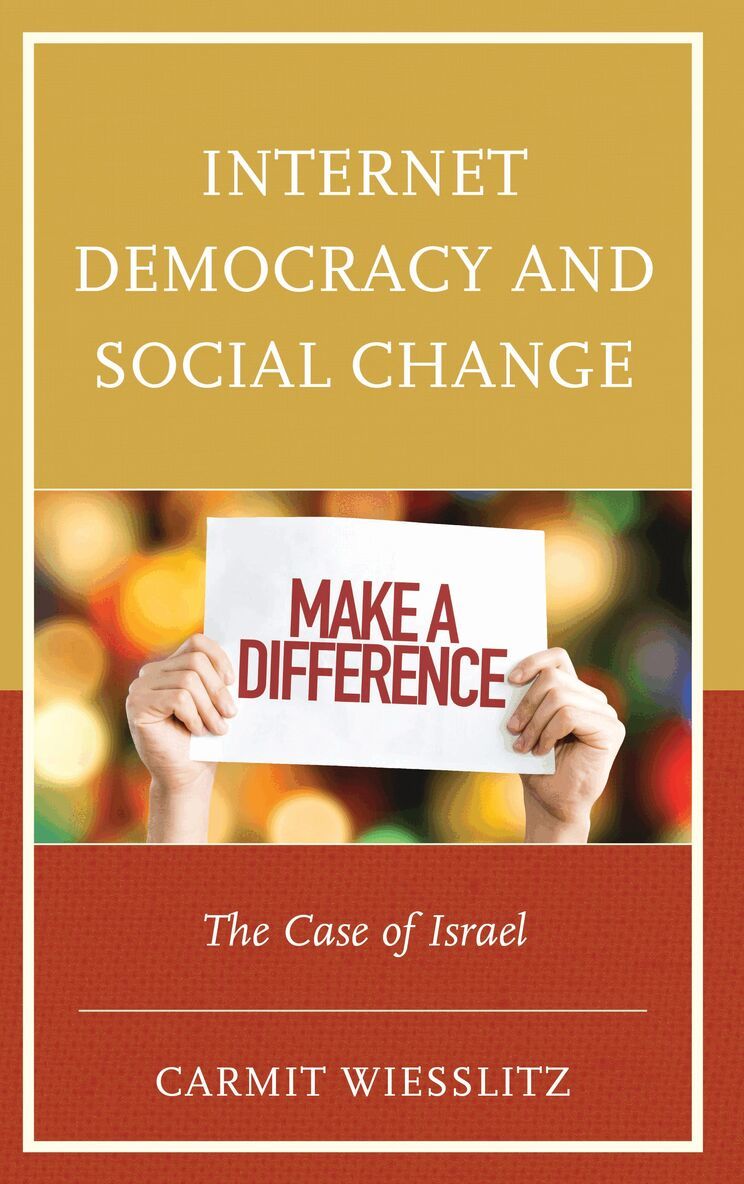
    Internet Democracy and Social Change

    The Case of Israel

    AvCarmit Wiesslitz

    Inbunden, Engelska, 2019

    1 186 kr

    Beställningsvara. Skickas inom 10-15 vardagar. Fri frakt över 249 kr.

    Beskrivning

    What role does the Internet play in the activities of organizations for social change? This book examines to what extent the democratic potential ascribed to the Internet is realized in practice, and how civil society organizations exploit the unique features of the Internet to attain their goals. This is the story of the organization members’ outlooks and impressions of digital platforms’ role as tools for social change; a story that debunks a common myth about the Internet and collective action. In a time when social media are credited with immense power in generating social change, this book serves as an important reminder that reality for activists and social change organizations is more complicated. Thus, the book sheds light on the back stage of social change organizations’ operations as they struggle to gain visibility in the infinite sea of civil groups competing for attention in the online public sphere. While many studies focus on the performative dimension of collective action (such as protests), this book highlights the challenges of these organizations’ mundane routines. Using a unique analytical perspective based on a structural-organizational approach, and a longitudinal study that utilizes a decade worth of data related to the specific case of Israel and its highly conflicted and turbulent society, the book makes a significant contribution to study of new media and to theories of Internet, democracy, and social change.

    Produktinformation

    • Utgivningsdatum:2019-04-19
    • Mått:160 x 231 x 20 mm
    • Vikt:458 g
    • Format:Inbunden
    • Språk:Engelska
    • Antal sidor:182
    • Förlag:Bloomsbury Publishing Plc
    • ISBN:9781498539784

    Utforska kategorier

    • Medievetenskap inom Samhälle och politik

    Mer om författaren

    Carmit Wiesslitz, PhD,is lecturer in the Department of Politics & Communications at Hadassah Academic College, Israel.

    Recensioner i media

    In her ethnographic study of civil society organizations’ Internet use in Israel, Dr. Wiesslitz cools down the media hype about the revolutionary power of new communication technologies. Instead of making social movements more democratic in their operations, or leveling the playing field with the agenda-setting power of traditional news outlets, the game-changing capabilities of new media communications are subdued by the organizations’ own features: for poor-resourced, horizontal radical movements, the Internet is vital; for more established, hierarchical groups, the Internet is just another tool for image-management.Israel often makes the headlines because of sectarian conflict and the occupation of the Palestinian territories; it is refreshing to read a study that cares about the country’s often-overlooked civil society organizations. This book is innovative on several fronts. Internet use is observed in the context of the social movements’ other activities, rendering findings that, far from fetishing technology, show that a simple e-mail list can mobilize more supporters than a Facebook group. Civil society organizations are researched holistically and systemically, in relation to other agents in the public sphere such as Government and the media, going beyond the usual limitation of looking at groups by their particular area of advocacy (environment, civil rights, women’s issues, etc.). It offers a unique comparative look between the present social web-dominated Internet and the pre-social media Internet of the early 2000s, discovering that, still, the legacy media keep much of their intermediary role in the public debate, being the target of much of civil organizations’ actions, who adapt their rhetoric and mobilizing strategies to the journalistic logic.

    Innehållsförteckning

    • IntroductionChapter 1: The Internet as an Alternative to Traditional Mainstream MediaChapter 2: The Internet as a means of public outreachChapter 3: Mobilizing the people: Online organizing and recruitmentChapter 4: Online discussions: Is the Internet a deliberative and democratic platform for debate?ConclusionReferencesAppendix AAppendix B