• Fri frakt över 249 kr
  • •
  • Snabba leveranser
  • •
  • Billiga böcker
Kundservice

Du är på sajten för privatpersoner.

Företag, bibliotek eller offentlig verksamhet?

Du handlar på classic.bokus.com, där alla dina funktioner finns intakta.
Till classic.bokus.com
Bokus logotyp. Gå till startsidan.
  • Erbjudanden
  • Nyheter
  • Student
  • Topplistor
  • Barn & ungdom
  • Bokus Play
  • E-böcker
  • Pocketböcker
  • Spel & pussel

10% rabatt på allt med kod NYSTART10 →

Sidfot

Mina sidor

    Hjälp

    • Kundservice
    • Vanliga frågor och svar
    • Frakt och leverans
    • Retur vid ångerrätt
    • Reklamera vara
    • Betalning
    • Köpvillkor
    • Allmänna villkor
    • Information om webbplatsens tillgänglighet

    Om Bokus

    • Om oss
    • Pressrum
    • För studenter
    • För företag
    • För bibliotek och offentlig verksamhet
    • För leverantörer
    • Hållbarhet

    Populärt

    • Aktuella erbjudanden
    • Presentkort
    • Studentlitteratur
    • Nya böcker
    • Topplistor
    • Signerade böcker
    • Engelska böcker

    Inspiration

    • Boktips
    • BookTok
    • Populära bokserier
    • Barnbokskaraktärer
    • Populära författare
    Logotyp för Bokus
    Följ oss på Facebook (extern länk)Följ oss på Instagram (extern länk)Följ oss på YouTube (extern länk)Följ oss på TikTok (extern länk)
    bokus @ CookiesAnpassa cookiesIntegritetspolicyKöpvillkor
    Till Citymail hemsida (extern länk)Till Budbee hemsida (extern länk)Till Postnord hemsida (extern länk)Till Schenker hemsida (extern länk)Till Early Bird hemsida (extern länk)Till Walleys hemsida (extern länk)
    1. Filosofi och religion
    2. Filosofi
    3. Filosofiska discipliner

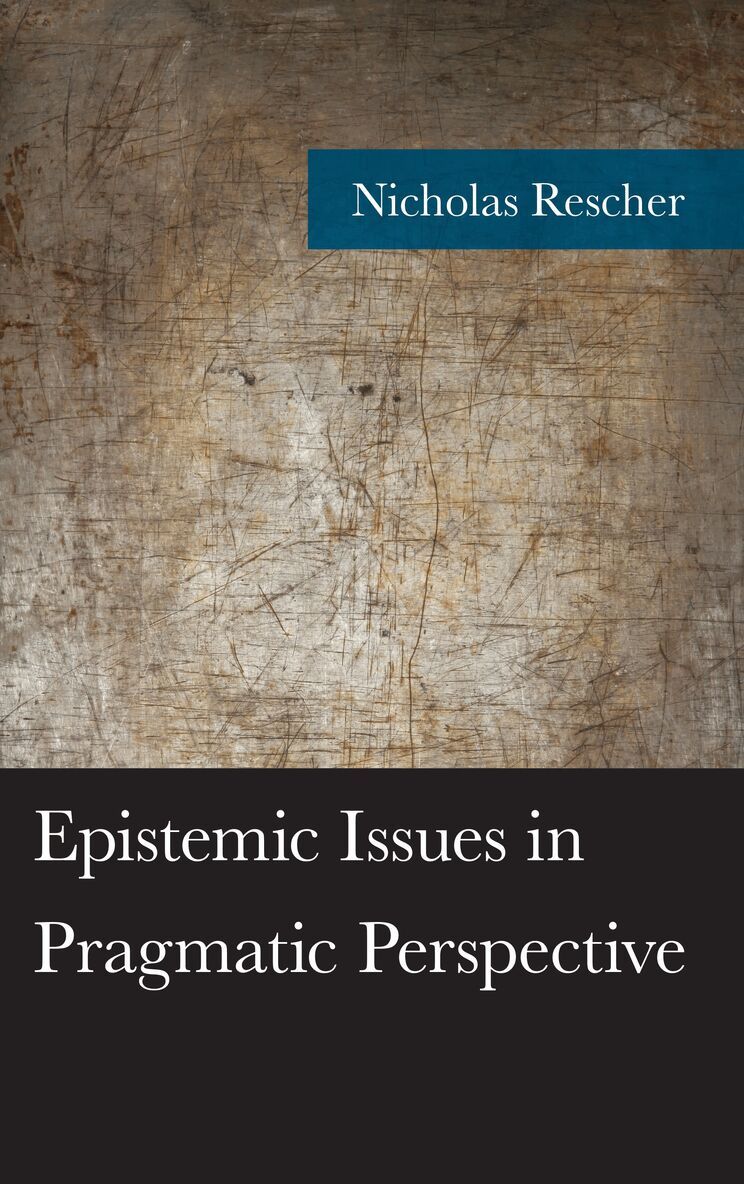
    Epistemic Issues in Pragmatic Perspective

    AvNicholas Rescher

    Inbunden, Engelska, 2017

    Del i serien American Philosophy Series

    1 535 kr

    Beställningsvara. Skickas inom 10-15 vardagar. Fri frakt över 249 kr.

    Beskrivning

    This book presents a nonstandard approach to epistemology. Where standard epistemology generally focuses on the certain knowledge the Greeks called epistêmê, the present focus is on some less assured modes of information. Its deliberations will focus on such cognitively suboptimal processes as conjecture, guesswork, and plausible supposition. This shift of focus has implications for virtually every sector of information management, and the book’s instigations presented here will explore some of them. Throughout the rule of pragmatic considerations stand in the foreground.As the book’s deliberations set out in detail, the nature of our knowledge of reality is inherently conditioned by the fact of its beings the product of what is, at best and at most, a matter of rational guesswork. And so as regards our knowledge, we had best adopt the pragmatic optimism of expecting—and hoping—that our best is good enough.

    Produktinformation

    • Utgivningsdatum:2017-12-06
    • Mått:161 x 235 x 22 mm
    • Vikt:481 g
    • Format:Inbunden
    • Språk:Engelska
    • Serie:American Philosophy Series
    • Antal sidor:240
    • Förlag:Bloomsbury Publishing Plc
    • ISBN:9781498563536

    Utforska kategorier

    • Filosofiska discipliner inom Filosofi och religion

    Mer om författaren

    Nicholas Rescher is distinguished university professor of philosophy at University of Pittsburgh.

    Recensioner i media

    Rescher has a wonderful talent for moving from common sense observations to profound philosophical conclusions in just a few clearly reasoned steps. Here that talent is in full display with an analysis of the various pragmatic mechanisms of rational guesswork, plausible conjecture, analogical reasoning, extrapolation, and inference by explanation that really make up what we rely on as ‘knowledge,’ both scientifically and in our everyday lives.

    Innehållsförteckning

    • PREFACEINTRODUCTIONChapter 1:Sensible ConjectureChapter 2:Imprecision Chapter 3:Truth-Contextuality and PlausibilityChapter 4:Managing Imperfect InformationChapter 5:Common SenseChapter 6:Terminating Explanatory RegressChapter 7:Quantitative EpistemologyChapter 8:On Kinds of ThingsChapter 9:Prediction and KnowabilityChapter 10:Cognitive FashionsChapter 11:Problems of Absolute TruthChapter 12:Unethical Beliefs, Reprehensible OpinionsChapter 13: Culpable IgnoranceChapter 14:Epistemic TriageChapter 15: Inconceivable PossibilitiesChapter 16: Optimalism in Explaining the Nature of Things Chapter 17: Conclusion