• Fri frakt över 249 kr
  • •
  • Snabba leveranser
  • •
  • Billiga böcker
Kundservice

Du är på sajten för privatpersoner.

Företag, bibliotek eller offentlig verksamhet?

Du handlar på classic.bokus.com, där alla dina funktioner finns intakta.
Till classic.bokus.com
Bokus logotyp. Gå till startsidan.
  • Erbjudanden
  • Nyheter
  • Student
  • Topplistor
  • Barn & ungdom
  • Bokus Play
  • E-böcker
  • Pocketböcker
  • Spel & pussel

10% rabatt på allt med kod NYSTART10 →

Sidfot

Mina sidor

    Hjälp

    • Kundservice
    • Vanliga frågor och svar
    • Frakt och leverans
    • Retur vid ångerrätt
    • Reklamera vara
    • Betalning
    • Köpvillkor
    • Allmänna villkor
    • Information om webbplatsens tillgänglighet

    Om Bokus

    • Om oss
    • Pressrum
    • För studenter
    • För företag
    • För bibliotek och offentlig verksamhet
    • För leverantörer
    • Hållbarhet

    Populärt

    • Aktuella erbjudanden
    • Presentkort
    • Studentlitteratur
    • Nya böcker
    • Topplistor
    • Signerade böcker
    • Engelska böcker

    Inspiration

    • Boktips
    • BookTok
    • Populära bokserier
    • Barnbokskaraktärer
    • Populära författare
    Logotyp för Bokus
    Följ oss på Facebook (extern länk)Följ oss på Instagram (extern länk)Följ oss på YouTube (extern länk)Följ oss på TikTok (extern länk)
    bokus @ CookiesAnpassa cookiesIntegritetspolicyKöpvillkor
    Till Citymail hemsida (extern länk)Till Budbee hemsida (extern länk)Till Postnord hemsida (extern länk)Till Schenker hemsida (extern länk)Till Early Bird hemsida (extern länk)Till Walleys hemsida (extern länk)
    1. Språk och ordböcker
    2. Språkvetenskap och lingvistik

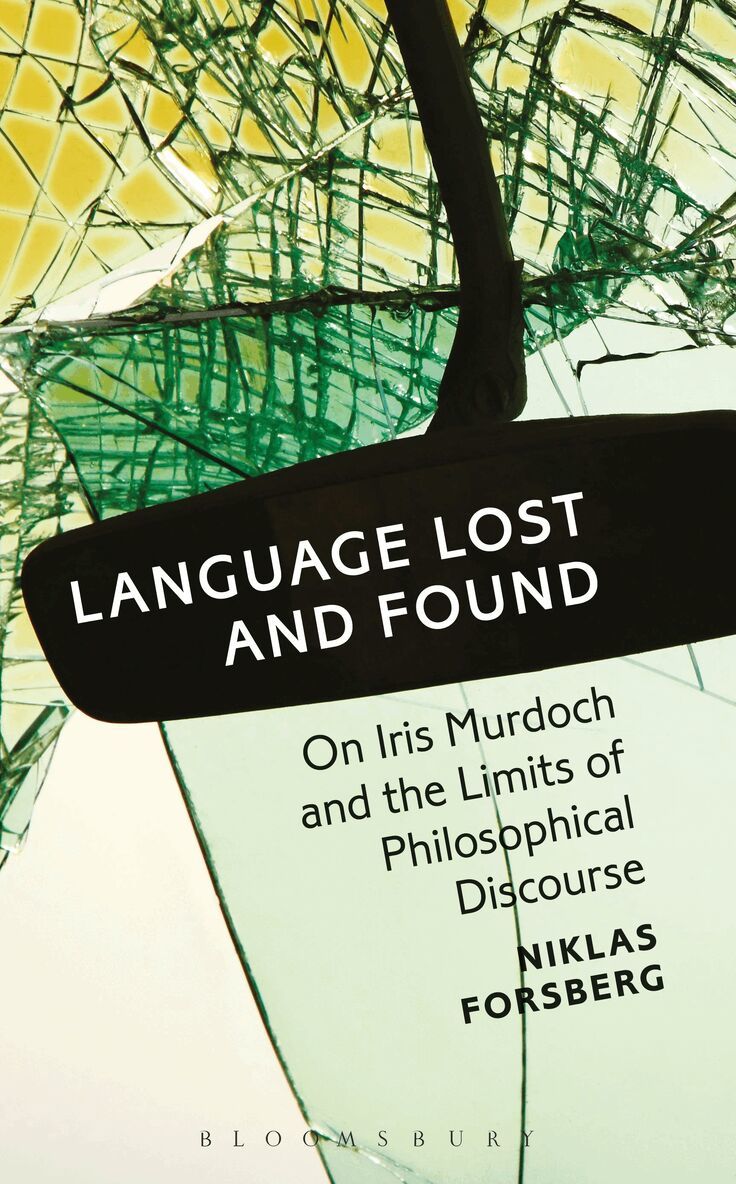
    Language Lost and Found

    On Iris Murdoch and the Limits of Philosophical Discourse

    AvNiklas Forsberg

    Häftad, Engelska, 2015

    631 kr

    Beställningsvara. Skickas inom 10-15 vardagar. Fri frakt över 249 kr.

    Fler format och utgåvor

    Inbunden

    2 244 kr

    E-bok

    677 kr

    E-bok

    679 kr

    Beskrivning

    Language Lost and Found takes as its starting-point Iris Murdoch's claim that "we have suffered a general loss of concepts." By means of a thorough reading of Iris Murdoch's philosophy in the light of this difficulty, it offers a detailed examination of the problem of linguistic community and the roots of the thought that some philosophical problems arise due to our having lost the sense of our own language. But it is also a call for a radical reconsideration of how philosophy and literature relate to each other on a general level and in Murdoch's authorship in particular.

    Produktinformation

    • Utgivningsdatum:2015-03-26
    • Mått:147 x 224 x 13 mm
    • Vikt:375 g
    • Format:Häftad
    • Språk:Engelska
    • Antal sidor:256
    • Förlag:Bloomsbury Publishing Plc
    • ISBN:9781501306815

    Utforska kategorier

    • Språkvetenskap och lingvistik inom Språk och ordböcker
    • Filosofiska discipliner inom Filosofi och religion
    • Litteraturvetenskap inom Skönlitteratur

    Mer om författaren

    Niklas Forsberg is Lecturer in the Department of Philosophy at Uppsala University, Sweden. He has previously written on Wittgenstein, Cavell, Murdoch, Austin and Derrida.

    Recensioner i media

    This fascinating book offers a valuable explication of Murdoch's relentless attempts to reveal what is missing in contemporary moral philosophy and culture. Greatly influenced by Kierkgaard, Wittgenstein, and Simone Weil, the complexity and messiness of ordinary life, and with one's deepest commitments-many of which cannot be accessed, or altered by means of arguments intended to defend philosophical "positions." Forsberg (Univ. of Uppsala, Sweden) makes excellent use of the work of Stanley Cavell, Cora Diamond, and Stephen Mulhall, who show how one might avoid the tendency of philosophers toward "deflection" from the "difficulties of reality." These are difficulties that people have when language fails in the face of experiences that refuse reduction to the abstraction of the clearly defined concepts sought after in philosophy--what Murdoch called its "dryness." Novelists like what it is like to struggle with the deeply confusing, distressing issues of the present without stepping aside from the emotional intensity of the encounters. Summing Up: Recommended. Upper-division undergraduates and above.--

    Innehållsförteckning

    • Acknowledgments ixIntroduction 1Chapter 1Apparent Paradoxes1.1 The Received View and its Complications 241.2 Approaching “The Black Prince” 361.3 Localizing Murdoch 521.4 A Fatty Pâté and a Plateful of Cherries: On Nussbaum (on Literature) 641.5. The Commonplaceness of the Approach 751.6 Preparatory Summary: The Appearance of Paradox 90Chapter 2How to Make a Mirror2.1 Murdoch on Art and Literature and Love 942.2 What is a Mirror? 1282.3 Wittgenstein and the Difficulty of Acknowledging Illusions of Sense 1352.4 Kierkegaard and Grammatical Illusions 1442.5 Mirroring Illusions: The Thought of the Indirect Communication 1522.6 Inheriting Wittgenstein (and Kierkegaard) 161Chapter 3Sensing a Sense Lost3.1 Loss of Concepts, Loss of Questions 1913.2 Contrasting Pictures of the Human 2153.3 Vision over Choice 2303.4 Making Pictures (Perfectionism and Vision) 235Chapter 4Reading The Black Prince4.1 “Murdoch’s Most Self-Consciously Platonic Kierkegaardian Love Story” 2574.2 In the Context of Bradley Pearson’s Form of Life 2694.3 Passing Verdict: Who did it? 3024.4 In Disagreement with Oneself: A Failure to Mean 310Chapter 5What is it Like to Be a Corpse? 5.1 Introduction: Running Out of Arguments? 3185.2 Costello’s Speechlessness and Diamond’s Concerns 3215.3 The Exemplary Bat 3345.4 Understanding Deflection 3435.5 Concluding Remarks 355Chapter 6Smashing Mirrors, Collecting the Pieces, Returning Our Words6.1 The Concept of a Concept and the Loss of Concepts 3586.2 Smashing Mirrors, Returning to the Ordinary 3716.3 Literature, Distance and the Return of Our Words 376Bibliography 389