• Fri frakt över 249 kr
  • •
  • Snabba leveranser
  • •
  • Billiga böcker
Kundservice

Du är på sajten för privatpersoner.

Företag, bibliotek eller offentlig verksamhet?

Du handlar på classic.bokus.com, där alla dina funktioner finns intakta.
Till classic.bokus.com
Bokus logotyp. Gå till startsidan.
  • Erbjudanden
  • Nyheter
  • Student
  • Topplistor
  • Barn & ungdom
  • Bokus Play
  • E-böcker
  • Pocketböcker
  • Spel & pussel

10% studentrabatt med kod TERM26

Sidfot

Mina sidor

    Hjälp

    • Kundservice
    • Vanliga frågor och svar
    • Frakt och leverans
    • Retur vid ångerrätt
    • Reklamera vara
    • Betalning
    • Köpvillkor
    • Allmänna villkor
    • Information om webbplatsens tillgänglighet

    Om Bokus

    • Om oss
    • Pressrum
    • För studenter
    • För företag
    • För bibliotek och offentlig verksamhet
    • För leverantörer
    • Hållbarhet

    Populärt

    • Aktuella erbjudanden
    • Presentkort
    • Studentlitteratur
    • Nya böcker
    • Topplistor
    • Signerade böcker
    • Engelska böcker

    Inspiration

    • Boktips
    • BookTok
    • Populära bokserier
    • Barnbokskaraktärer
    • Populära författare
    Logotyp för Bokus
    Följ oss på Facebook (extern länk)Följ oss på Instagram (extern länk)Följ oss på YouTube (extern länk)Följ oss på TikTok (extern länk)
    bokus @ CookiesAnpassa cookiesIntegritetspolicyKöpvillkor
    Till Citymail hemsida (extern länk)Till Budbee hemsida (extern länk)Till Postnord hemsida (extern länk)Till Schenker hemsida (extern länk)Till Early Bird hemsida (extern länk)Till Walleys hemsida (extern länk)
    1. Kultur
    2. Scenkonst och film
    3. Film

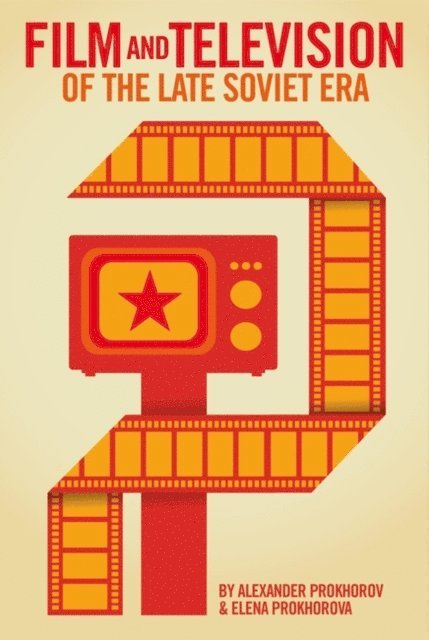
    Film and Television Genres of the Late Soviet Era

    AvAlexander Prokhorov,Elena Prokhorova

    E-bok
    PDF, Engelska, 2016

    481 kr

    Läs direkt i Bokus Reader – eller ladda ned till din enhet (PDF kräver ofta zoom och scroll på små skärmar).

    Fler format och utgåvor

    Häftad

    449 kr

    Inbunden

    2 218 kr

    E-bok

    481 kr

    Beskrivning

    Most histories of Soviet cinema portray the 1970s as a period of stagnation with the gradual decline of the film industry. This book, however, examines Soviet film and television of the era as mature industries articulating diverse cultural values via new genre models. During the 1970s, Soviet cinema and television developed a parallel system of genres where television texts celebrated conservative consensus while films manifested symptoms of ideological and social crises. The book examines the genres of state-sponsored epic films, police procedural, comedy and melodrama, and outlines how television gradually emerged as the major form of Russo-Soviet popular culture. Through close analysis of well-known film classics of the period as well as less familiar films and television series, this groundbreaking work helps to deconstruct the myth of this era as a time of cultural and economic stagnation and also helps us to understand the persistence of this myth in the collective memory of Putin-era Russia. This monograph is the first book-length English-language study of film and television genres of the late Soviet era.

    Produktinformation

    • Utgivningsdatum:2016-12-01
    • Språk:Engelska
    • Antal sidor:240
    • Filformat:PDF
    • Kopieringsskydd:LCP
    • ISBN:9781501324086
    • Förlag:Bloomsbury Publishing PLC (Digital)

    Utforska kategorier

    • Film inom Kultur

    Mer om författaren

    Alexander Prokhorov is Associate Professor of Russian and Film Studies at the College of William and Mary, USA. He is the author of Inherited Discourse: Paradigms of Stalinist Culture in Literature and Cinema of the Thaw (2007).Elena Prokhorova is Associate Professor of Russian and Film Studies at the College of William and Mary, USA. Her articles have appeared in Slavic Review, Slavic and East European Journal, Kinokultura, and edited volumes.

    Recensioner i media

    Alexander Prokhorov and Elena Prokhorova have written an excellent, highly informative, analytically deep, and lucid book that will impact the field with exponentially increasing force. They have laid the foundation for a new conceptualization of late Soviet cinema, TV, and culture in general. Their definitions and descriptions of late Soviet cinematic and TV genres offer an arsenal of tools that can be applied to other works, spheres, and periods of Russian cinema and culture in general.

    Innehållsförteckning

    • Table of Contents:AcknowledgementsIntroduction0.1. Approaches to Film and Television Genres0.2. Why Television?0.3. The Difficult Fate of Genre Studies in the USSR and Russia0.4. Overview of Chapters: from Socialist Realism to Film Genres Chapter 1. Epic Film as a Tool of Hard and Soft Power during the Cold War.1.1. Syntax and Semantics of the Genre1.2. War and Peace: Art Cinema on State Service1.3. Liberation: War Spectacle and the Politics of Memory1.4. Postscriptum: The Revival of Prestige Productions under Putin Chapter 2. The Socialist Television Police Procedural of the 1970s and 80s: Teaching Soviet Citizens How to Behave.2.1. Syntax and Semantics of the Genre2.2. The Investigation Is Conducted by Experts: The Soviet Police Procedural Is Born2.3. The Meeting Place Cannot Be Changed: The Romantics of Criminal Underworld2.4. Postscriptum: Streetwise Cops Meet the Russian Mafia Chapter 3. Late-Soviet Comedy: Between Rebellion and the Status Quo.3.1. Syntax and Semantics of the Genre3.2. El'dar Riazanov: The Trappings and Traps of Private Life3.3. Mark Zakharov's Television Films: Between the Romance and the Sitcom3.4. Postscriptum: The Living and the (Un)Dead Chapter 4. Reinventing Desire: Late-socialist Melodrama4.1. Syntax and Semantics of the Genre4.2. Television Melodrama4.3. Cinematic Masculinities4.4. Late-Soviet Woman's Film4.5. Postscriptum: Televised Passions ConclusionBibliographyFilmographyIndex