• Fri frakt över 249 kr
  • •
  • Snabba leveranser
  • •
  • Billiga böcker
Kundservice

Du är på sajten för privatpersoner.

Företag, bibliotek eller offentlig verksamhet?

Du handlar på classic.bokus.com, där alla dina funktioner finns intakta.
Till classic.bokus.com
Bokus logotyp. Gå till startsidan.
  • Erbjudanden
  • Nyheter
  • Student
  • Topplistor
  • Barn & ungdom
  • Bokus Play
  • E-böcker
  • Pocketböcker
  • Spel & pussel

10% rabatt på allt med kod: NYSTART10 →

Sidfot

Mina sidor

    Hjälp

    • Kundservice
    • Vanliga frågor och svar
    • Frakt och leverans
    • Retur vid ångerrätt
    • Reklamera vara
    • Betalning
    • Köpvillkor
    • Allmänna villkor
    • Information om webbplatsens tillgänglighet

    Om Bokus

    • Om oss
    • Pressrum
    • För studenter
    • För företag
    • För bibliotek och offentlig verksamhet
    • För leverantörer
    • Hållbarhet

    Populärt

    • Aktuella erbjudanden
    • Presentkort
    • Studentlitteratur
    • Nya böcker
    • Topplistor
    • Signerade böcker
    • Engelska böcker

    Inspiration

    • Boktips
    • BookTok
    • Populära bokserier
    • Barnbokskaraktärer
    • Populära författare
    Logotyp för Bokus
    Följ oss på Facebook (extern länk)Följ oss på Instagram (extern länk)Följ oss på YouTube (extern länk)Följ oss på TikTok (extern länk)
    bokus @ CookiesAnpassa cookiesIntegritetspolicyKöpvillkor
    Till Citymail hemsida (extern länk)Till Budbee hemsida (extern länk)Till Postnord hemsida (extern länk)Till Schenker hemsida (extern länk)Till Early Bird hemsida (extern länk)Till Walleys hemsida (extern länk)
    1. Kultur
    2. Konstböcker
    3. Konsthistoria

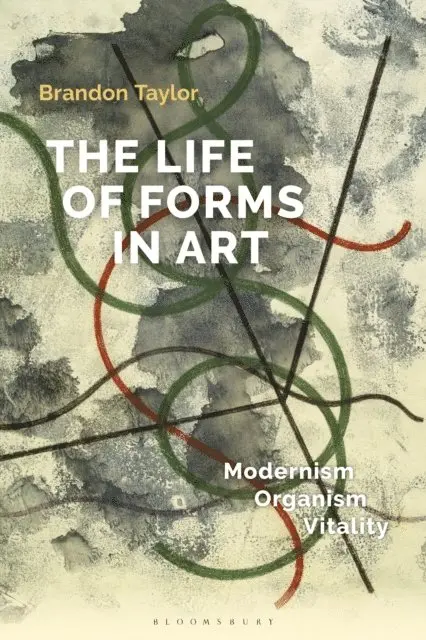
    Life of Forms in Art

    Modernism, Organism, Vitality

    AvBrandon Taylor

    Häftad, Engelska, 2020

    464 kr

    Beställningsvara. Skickas inom 10-15 vardagar. Fri frakt över 249 kr.

    Fler format och utgåvor

    E-bok

    499 kr

    E-bok

    481 kr

    Beskrivning

    What is form in modern art? How could a work of art achieve its organic life in a world increasingly dominated by mechanism, by new technology? In this new book, Brandon Taylor proposes that biology and the life sciences themselves supplied many of the analogies and metaphors by which modern artists were guided. For the creative giants of the period - Picasso, Miró, Kandinsky, Strzeminski, Dalí, Arp, Motherwell and Pollock, as well as less-known figures such as Taeuber, Erni and Kobro - questions of 'living' form loomed large in studio conversation, in the press, and in the writings of the artists themselves. In a book rich in new research and fresh thinking, a well-known art historian proposes six modalities of organic and vital life that pervade the radical experiments of modern art: the organic, the biomorphic, the ambiguous, the monstrous, the dialectical, and the liquid.
    Produktinformation

    • Utgivningsdatum:2020-10-29
    • Mått:150 x 229 x 15 mm
    • Vikt:440 g
    • Format:Häftad
    • Språk:Engelska
    • Antal sidor:272
    • Förlag:Bloomsbury Publishing PLC
    • ISBN:9781501356018

    Utforska kategorier

    • Konsthistoria inom Kultur
    • Konstteori inom Kultur
    • Naturvetenskap:allmänt inom Naturvetenskap och teknik

    Mer om författaren

    Brandon Taylor is Professor Emeritus in History of Art at the University of Southampton, England, and Visiting Tutor in History and Theory of Art at the Ruskin School of Art, University of Oxford. His research interests include modern and contemporary art, artists' writings, the history of art institutions, and East European art. His most recent books include Collage: The Making of Modern Art (Thames and Hudson, London 2004), After Constructivism (Yale University Press 2014), and St Ives and British Modernism (Pallant House Gallery, Chichester 2015). He exhibits occasionally as a painter.

    Recensioner i media

    Taylor’s unbounded curiosity and eye for detail make for a fascinatingly complex narrative.

    Innehållsförteckning

    • List of platesList of figuresPrelude: On Life and Form1. Organicity2. Biomorphism3. Ambiguity4. Monstrosity5. Dialectics6. LiquifactionCodaAcknowledgementsNotesIndex