• Fri frakt över 249 kr
  • •
  • Snabba leveranser
  • •
  • Billiga böcker
Kundservice

Du är på sajten för privatpersoner.

Företag, bibliotek eller offentlig verksamhet?

Du handlar på classic.bokus.com, där alla dina funktioner finns intakta.
Till classic.bokus.com
Bokus logotyp. Gå till startsidan.
  • Erbjudanden
  • Nyheter
  • Student
  • Topplistor
  • Barn & ungdom
  • Bokus Play
  • E-böcker
  • Pocketböcker
  • Spel & pussel

10% rabatt på allt med kod NYSTART10 →

Sidfot

Mina sidor

    Hjälp

    • Kundservice
    • Vanliga frågor och svar
    • Frakt och leverans
    • Retur vid ångerrätt
    • Reklamera vara
    • Betalning
    • Köpvillkor
    • Allmänna villkor
    • Information om webbplatsens tillgänglighet

    Om Bokus

    • Om oss
    • Pressrum
    • För studenter
    • För företag
    • För bibliotek och offentlig verksamhet
    • För leverantörer
    • Hållbarhet

    Populärt

    • Aktuella erbjudanden
    • Presentkort
    • Studentlitteratur
    • Nya böcker
    • Topplistor
    • Signerade böcker
    • Engelska böcker

    Inspiration

    • Boktips
    • BookTok
    • Populära bokserier
    • Barnbokskaraktärer
    • Populära författare
    Logotyp för Bokus
    Följ oss på Facebook (extern länk)Följ oss på Instagram (extern länk)Följ oss på YouTube (extern länk)Följ oss på TikTok (extern länk)
    bokus @ CookiesAnpassa cookiesIntegritetspolicyKöpvillkor
    Till Citymail hemsida (extern länk)Till Budbee hemsida (extern länk)Till Postnord hemsida (extern länk)Till Schenker hemsida (extern länk)Till Early Bird hemsida (extern länk)Till Walleys hemsida (extern länk)
    1. Kultur
    2. Scenkonst och film
    3. Film

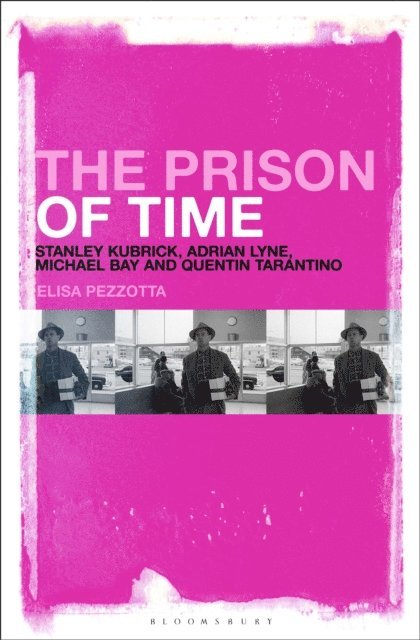
    Prison of Time

    Stanley Kubrick, Adrian Lyne, Michael Bay and Quentin Tarantino

    AvElisa Pezzotta

    E-bok
    Engelska, 2022

    481 kr

    Läs direkt i Bokus Reader – eller ladda ned till din enhet

    Fler format och utgåvor

    Häftad

    450 kr

    E-bok

    481 kr

    Inbunden

    1 482 kr

    Beskrivning

    We are imprisoned in circadian rhythms, as well as in our life reviews that follow chronological and causal links. For the majority of us our lives are vectors directed toward aims that we strive to reach and delimited by our birth and death. Nevertheless, we can still experience fleeting moments during which we forget the past and the future, as well as the very flow of time. During these intense emotions, we burst out laughing or crying, or we scream with pleasure, or we are mesmerized by a work of art or just by eyes staring at us. Similarly, when we watch a film, the screening time has a well defined beginning and end, and screening and diegetic time and their relations, together with narrative and stylistic techniques, determine a time within the time of our life with its own rules and exceptions. Through the close analysis of Stanley Kubrick's, Adrian Lyne's, Michael Bay's and Quentin Tarantino's oeuvres, this book discusses the overall 'dominating' time of their films and the moments during which this 'ruling' time is disrupted and we momentarily forget the run toward the diegetic future – suspense – or the past – curiosity and surprise. It is in these very moments, as well as in our own lives, that the prison of time, through which the film is constructed and that is constructed by the film itself, crumbles displaying our role as spectators, our deepest relations with the film.

    Produktinformation

    • Utgivningsdatum:2022-08-25
    • Språk:Engelska
    • Antal sidor:272
    • Filformat:EPUB
    • Kopieringsskydd:LCP
    • ISBN:9781501380594
    • Förlag:Bloomsbury Publishing PLC (Digital)

    Utforska kategorier

    • Film inom Kultur

    Mer om författaren

    Elisa Pezzotta is Cultrice della Materia of Cinema at the University of Bergamo, Italy. She has participated at and co-organized several international conferences. She is the author of Stanley Kubrick: Adapting the Sublime, and of articles published on Cinergie, Elephant & Castle, Adaptation, Offscreen, Journal of Adaptation in Film & Performance, and Wide Screen. She co-edited special issues on Cinergie, Historical Journal of Film, Radio and Television, and Elephant & Castle. Her main interests are Kubrick Studies, Adaptation Studies and time in films.

    Recensioner i media

    A captivating journey into the ways in which contemporary cinema constructs a sense of rhythm that encourages spectators to free themselves from the prison of time in everyday life. Not the measurable time of the clock, nor just the time constructed by the narrative, but the value of a temporality lived in terms of emotional intensity. A rethinking of both the classic narratological and cognitivist approaches – an alternative yet integrative perspective to the much-debated theories on complex storytelling and impossible puzzle films.

    Innehållsförteckning

    • IntroductionChapter 1: Of Times – Temporalities1.1 Fabula, Sujet, Story and Plot1.2 The Order of the Film and Chronological Order of Diegetic Events1.3 The Duration of Represented and Representational Time 1.4 Temporalities Chapter 2: Stanley Kubrick's Temporal Revolution2.1 The Emergence of Rhythm in Photographs and Photo-Essays2.2 Experimenting with Narrative Schemas and Style in Shorts2.3 Staging Time: Fear and Desire (1953) 2.4 Between Classical and Art-cinema Narration2.4.1 The Order of Represented and Representational Time: Killer's Kiss (1955) and The Killing (1956)2.4.2 Different Diegetic Times: Paths of Glory (1957) and a Virtuoso Style, Spartacus (1960) and Massive Configurations 2.4.3 Interruptions in Diegetic Time: Lolita (1962) and Dr. Strangelove or: How I Learned to Stop Worrying and Love the Bomb (1964) 2.5 Art-cinema narration. Beyond classical diegetic time 2.5.1 Slowness2.5.2 Musical moments2.6 Conclusion Chapter 3: The Play of Suspense and Eroticism in Adrian Lyne 3.1 Foxes (1980) and Flashdance (1983)3.2 From Staged Musical Performances to Staged Erotic Performances: Nine ½ Weeks (1986), Fatal Attraction (1987), Indecent Proposal (1993) and Unfaithful (2002)3.3 Lolita (1997): Another Adaptation, Not a Remake3.4 Jacob's Ladder: A Change in Lyne's Temporalities 3.5 Conclusion Chapter 4: Temporalities: The Ghostly Conductor of Michel Bay's Films4.1 Empathy between Spectators' and Characters' Experience of Time4.2 Alternation of Action Scenes or Staged Action Performances and Comedy Sequences4.3 Simultaneity through Cross-cuttings 4.4 Countdowns4.5 Expanding Diegetic Time through Sequels and Flashbacks 4.6 Temporalities Comes to the Fore 4.7 Conclusion Chapter 5: Quentin Tarantino: Master of Temporalities5.1 Narrative Schemas5.1.1 Playing with Narrative Schemas. Jumbled and Repeated Event Plots: Reservoir Dogs (1992), Pulp Fiction (1994), Jackie Brown (1997), Kill Bill: Vol. 1 (2003) and Vol. 2 (2004)5.1.2 Towards Classical Temporalities: Death Proof (2007), Inglourious Basterds (2009), Django Unchained (2012), The Hateful Eight (2015) and Once Upon a Time… in Hollywood (2019) 5.1.3 Conclusions about Narrative Schemas5.2 New Slowness5.3 Conclusion ConclusionBibliographyIndex