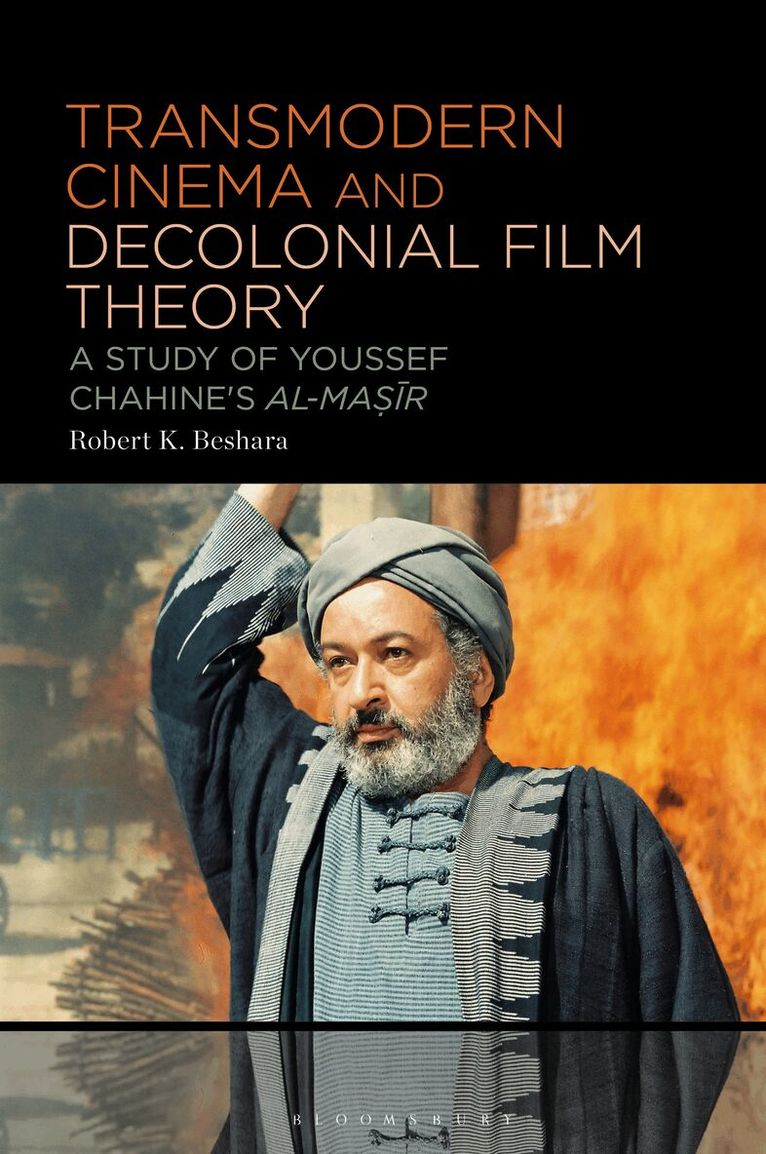
Inbunden, Engelska, 2024
Transmodern Cinema and Decolonial Film Theory
A Study of Youssef Chahine's al-Masir
1384 kr
Beställningsvara. Skickas inom 10-15 vardagar. Fri frakt över 249 kr.
Beskrivning
Produktinformation
- Utgivningsdatum: 2024-05-02
- Mått: 158 x 230 x 16 mm
- Vikt: 420 g
- Format: Inbunden
- Språk: Engelska
- Antal sidor: 192
- Förlag: Bloomsbury Publishing Plc
- ISBN: 9781501385117
Utforska kategorier
Mer om författaren
Robert K. Beshara is Associate Professor of Psychology & Humanities at Northern New Mexico College, USA. He is the author of Decolonial Psychoanalysis: Towards Critical Islamophobia Studies (2019) and Freud and Said: Contrapuntal Psychoanalysis as Liberation Praxis (2021). He is also the editor of A Critical Introduction to Psychology (2019) and Critical Psychology Praxis: Psychosocial Non-Alignment to Modernity/Coloniality (2021), as well as the translator of Mourad Wahba's (1995) Fundamentalism and Secularization (Bloomsbury, 2022). Beshara is the founder of the Critical Psychology website: www.criticalpsychology.org.
Recensioner i media
Robert K. Beshara’s compelling endeavor to “sketch the contours” of decolonial film theory is both captivating and profound. Through skillfully unpacking key concepts of postcolonial theory, modernity, coloniality, and decoloniality, his film theory is positioned as a radical aesthetic project navigating the delicate balance between the negation of oppression and the affirmation of liberation. Beshara enacts this through the thought-provoking selection of Egyptian cinematic icon Youssef Chahine and his 1997 film, al-Masir, portraying philosopher Ibn Rushd. The resulting book impressively renders a constellation of transhistorical and transmodern historiographies, ideas, and creative methodologies, offering an invaluable perspective for contemporary practices of critical scholars, artists, and activists.
Betyg & recensioner
0 recensioner
Inga recensioner tillgängliga.