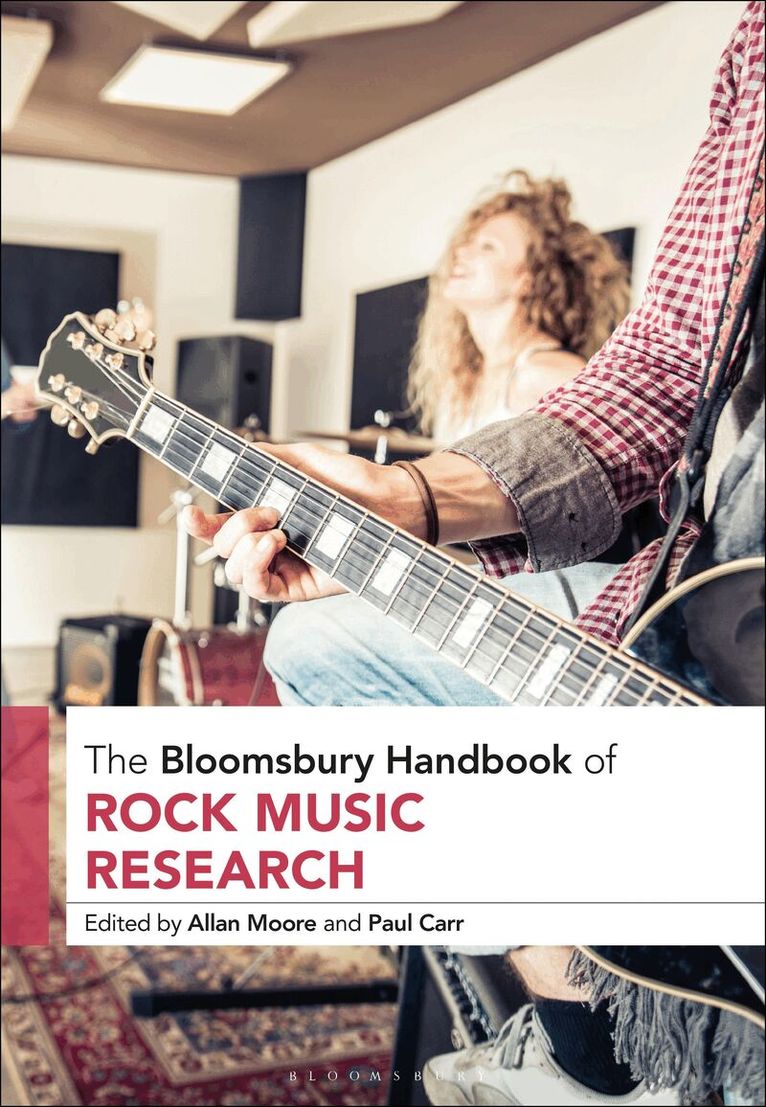
Bloomsbury Handbook of Rock Music Research
623 kr
Beställningsvara. Skickas inom 10-15 vardagar. Fri frakt över 249 kr.
Du är på sajten för privatpersoner.
623 kr
Beställningsvara. Skickas inom 10-15 vardagar. Fri frakt över 249 kr.
Allan Moore is Professor Emeritus of Popular Music and and former Head of the Department of Music and Sound Recording at the University of Surrey, UK. He is series editor of the Ashgate Library of Essays in Popular Music, and author and editor of several books including Song Means (2012), Rock: The Primary Text, Third Edition (2018) and Jethro Tull's Aqualung (2004, part of Bloomsbury's 33 1/3 series).Paul Carr is Professor in Popular Music Analysis at the University of South Wales, UK. His research interests focus on the areas of musicology, widening access, the live music industry and pedagogical frameworks for music related education. He is also an experienced performing musician, having toured and recorded with artists as diverse as The James Taylor Quartet and ex Miles Davis saxophonist Bob Berg. He is the editor of Frank Zappa and the And (2013) and author of Sting (2017).
What is rock? If there is such a thing, is it now dead? If so, why should we care? This book assembles a range of accomplished scholars from across disciplines that offer an impressive insight into the ways in which we might care, detailing how rock has been manifested and understood, attesting to the fact that its academic study, at least, is very much alive. In her chapter, Katherine Reed asks "where are we now?", with answers provided across this volume accounting for how rock has been created, recorded, mediated, taught, managed, performed, filmed, photographed, dramatised and historicised. Amongst other things, the question of “what is rock?” is examined in terms of its global reach and an often problematic relationship with issues of gender, race or ethnicity, which illuminate its contested meanings and practices. Here, then, is a repertoire of ideas and tools that will be of use to established scholars while accessible to a wider readership. Readers, like this one, will find much with which to work or productively disagree, suggesting that this is far from an attempt at a definitive repository of knowledge but one seeking to prompt further thinking and research about the cultural importance of its object. Is rock dead then? Well, as this book reminds us, it is more complicated than that.
Du är på sajten för privatpersoner.
623 kr
Beställningsvara. Skickas inom 10-15 vardagar. Fri frakt över 249 kr.
Allan Moore is Professor Emeritus of Popular Music and and former Head of the Department of Music and Sound Recording at the University of Surrey, UK. He is series editor of the Ashgate Library of Essays in Popular Music, and author and editor of several books including Song Means (2012), Rock: The Primary Text, Third Edition (2018) and Jethro Tull's Aqualung (2004, part of Bloomsbury's 33 1/3 series).Paul Carr is Professor in Popular Music Analysis at the University of South Wales, UK. His research interests focus on the areas of musicology, widening access, the live music industry and pedagogical frameworks for music related education. He is also an experienced performing musician, having toured and recorded with artists as diverse as The James Taylor Quartet and ex Miles Davis saxophonist Bob Berg. He is the editor of Frank Zappa and the And (2013) and author of Sting (2017).
What is rock? If there is such a thing, is it now dead? If so, why should we care? This book assembles a range of accomplished scholars from across disciplines that offer an impressive insight into the ways in which we might care, detailing how rock has been manifested and understood, attesting to the fact that its academic study, at least, is very much alive. In her chapter, Katherine Reed asks "where are we now?", with answers provided across this volume accounting for how rock has been created, recorded, mediated, taught, managed, performed, filmed, photographed, dramatised and historicised. Amongst other things, the question of “what is rock?” is examined in terms of its global reach and an often problematic relationship with issues of gender, race or ethnicity, which illuminate its contested meanings and practices. Here, then, is a repertoire of ideas and tools that will be of use to established scholars while accessible to a wider readership. Readers, like this one, will find much with which to work or productively disagree, suggesting that this is far from an attempt at a definitive repository of knowledge but one seeking to prompt further thinking and research about the cultural importance of its object. Is rock dead then? Well, as this book reminds us, it is more complicated than that.