• Fri frakt över 249 kr
  • •
  • Snabba leveranser
  • •
  • Billiga böcker
Kundservice

Du är på sajten för privatpersoner.

Företag, bibliotek eller offentlig verksamhet?

Du handlar på classic.bokus.com, där alla dina funktioner finns intakta.
Till classic.bokus.com
Bokus logotyp. Gå till startsidan.
  • Erbjudanden
  • Student
  • Topplistor
  • Barn & ungdom
  • Bokus Play
  • Bokus Play
  • E-böcker
  • Ljudböcker
  • Pocketböcker
  • Spel & pussel

10% rabatt på allt med kod NYSTART10 →

Sidfot

Mina sidor

    Hjälp

    • Kundservice
    • Vanliga frågor och svar
    • Frakt och leverans
    • Retur vid ångerrätt
    • Reklamera vara
    • Betalning
    • Köpvillkor
    • Allmänna villkor
    • Information om webbplatsens tillgänglighet

    Om Bokus

    • Om oss
    • Pressrum
    • För studenter
    • För företag
    • För bibliotek och offentlig verksamhet
    • För leverantörer
    • Hållbarhet

    Populärt

    • Aktuella erbjudanden
    • Presentkort
    • Studentlitteratur
    • Nya böcker
    • Topplistor
    • Signerade böcker
    • Engelska böcker

    Inspiration

    • Boktips
    • BookTok
    • Populära bokserier
    • Barnbokskaraktärer
    • Populära författare
    Logotyp för Bokus
    Följ oss på Facebook (extern länk)Följ oss på Instagram (extern länk)Följ oss på YouTube (extern länk)Följ oss på TikTok (extern länk)
    bokus @ CookiesAnpassa cookiesIntegritetspolicyKöpvillkor
    Till Citymail hemsida (extern länk)Till Budbee hemsida (extern länk)Till Postnord hemsida (extern länk)Till Schenker hemsida (extern länk)Till Early Bird hemsida (extern länk)Till Walleys hemsida (extern länk)
    1. Kultur
    2. Scenkonst och film
    3. Film

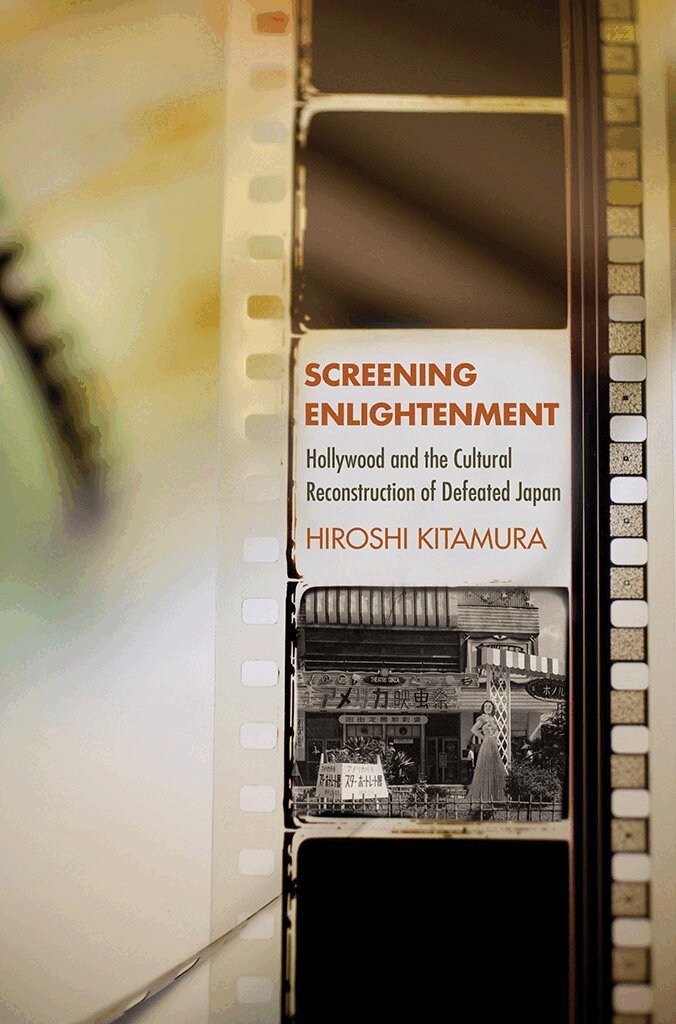
    Screening Enlightenment

    Hollywood and the Cultural Reconstruction of Defeated Japan

    AvHiroshi Kitamura

    Häftad, Engelska, 2017

    Del i serien United States in the World

    316 kr

    Beställningsvara. Skickas inom 10-15 vardagar. Fri frakt över 249 kr.

    Fler format och utgåvor

    Inbunden

    1 714 kr

    Beskrivning

    During the six-and-a-half-year occupation of Japan (1945–1952), U.S. film studios—in close coordination with Douglas MacArthur's Supreme Command for the Allied Powers—launched an ambitious campaign to extend their power and influence in a historically rich but challenging film market. In this far-reaching "enlightenment campaign," Hollywood studios disseminated more than six hundred films to theaters, earned significant profits, and showcased the American way of life as a political, social, and cultural model for the war-shattered Japanese population. In Screening Enlightenment, Hiroshi Kitamura shows how this expansive attempt at cultural globalization helped transform Japan into one of Hollywood's key markets. He also demonstrates the prominent role American cinema played in the "reeducation" and "reorientation" of the Japanese on behalf of the U.S. government.According to Kitamura, Hollywood achieved widespread results by turning to the support of U.S. government and military authorities, which offered privileged deals to American movies while rigorously controlling Japanese and other cinematic products. The presentation of American ideas and values as an emblem of culture, democracy, and sophistication also allowed the U.S. film industry to expand. However, the studios' efforts would not have been nearly as extensive without the Japanese intermediaries and consumers who interestingly served as the program's best publicists. Drawing on a wide range of sources, from studio memos and official documents of the occupation to publicity materials and Japanese fan magazines, Kitamura shows how many Japanese supported Hollywood and became active agents of Americanization. A truly interdisciplinary book that combines U.S. diplomatic and cultural history, film and media studies, and modern Japanese history, Screening Enlightenment offers new insights into the origins of this unique political and cultural transpacific relationship.

    Produktinformation

    • Utgivningsdatum:2017-03-31
    • Mått:152 x 229 x 19 mm
    • Vikt:454 g
    • Format:Häftad
    • Språk:Engelska
    • Serie:United States in the World
    • Antal sidor:280
    • Förlag:Cornell University Press
    • ISBN:9781501713620
    • Utmärkelser:Winner, 16th Shimizu Hiroshi Award (Japanese Assoc

    Utforska kategorier

    • Film inom Kultur

    Mer om författaren

    Hiroshi Kitamura is Associate Professor of History at the College of William and Mary.

    Recensioner i media

    American moviemakers had to tread carefully with the American military and governmental occupation authorities if they were to expect to be able to penetrate the newly opened market for their films in postwar Japan. In sum, filmmakers were secondary players in a game of very serious hardball. Kitamura provides vivid glimpses into what qualities in specific American movies appealed to Japanese critics and audiences. He describes how, as the Japanese spirit revived, lively movie discussion groups sprang up in Japan. Recommended.(Choice) Hiroshi Kitamura has written an excellent overview of the role played by Hollywood films in shaping the cultural reconstruction of Japan during the American occupation. His book reflects wide reading in Japanese sources, the research of film scholars, and current scholarship of American occupation policy.... This fine book will be of value not only to diplomatic and military historians but also to persons interested in the American occupation of Germany, as so many parallels are implicit in it.- David Culbert (Journal of American History) In addition to his significant contribution to diplomatic history and U.S. relations with Japan, Kitamura adds to our understanding of Japanese history in the critical period after the war.... What he details so carefully through his examination of the Central Motion Picture Exchange (CMPE) and the Eiga no tomo, among other organizations and entities, is how Japanese came to embrace the carefully scripted and edited manner in which American films were reintroduced to Japan during the occupation.- T. Christopher Jespersen (H-Diplo Roundtable Review) Kitamura shows that Hollywood and SCAP [the occupying authorities led by General Douglas MacArthur] were at loggerheads almost as often as they were in harmony.... SCAP censorship caused problems for American films as various as Frank Capra's political fable, Mr. Smith Goes to Washington, unseen in Japan during the Occupation due to its portrayal of corruption in US politics, to the Tyrone Power swashbuckler, The Mark of Zorro, which in an era when samurai films were practically banned, was criticized for its portrayal of swordplay as a 'fine and fashionable art of killing.'... His book sheds new light on a neglected aspect of Occupation history.- Alexander Jacoby (Times Literary Supplement) Kitamura's book is a new contribution to the field of cinema in occupied Japan in covering such diverse groups as the American film distributor, the Central Motion Picture Exchange (CMPE); Japanese exhibitors and movie theaters; 'cultural elites' including critics, journalists, and scholars; and moviegoers. Attention to all these groups allows readers to see the complicated dynamics in which Hollywood films become the icon of democracy and modernity in occupied Japan.... It can be highly recommended to all scholars and students of the US occupation of Japan, film history, and Japanese cultural and intellectual history.- Yuka Tsuchiya (Social Science Japan Journal) Kitamura's thoroughly researched and immensely readable book mainly combines approaches of historical research and film studies. It is based on an admirable range of both US and Japanese source materials and consists of a concise methodological preface and eight thematically arranged chapters.... The fact that Screening Enlightenment undoubtedly will inspire such future studies that further examine the fascinating issues it raises, may very well be one of its most important merits.- Harald Salomon (Pacific Affairs)

    Innehållsförteckning

    • 1. Thwarted Ambitions: Hollywood and Japan before the Second World War2. Renewed Intimacies: Hollywood, War, and Occupation3. Contested Terrains: Occupation Censorship and Japanese Cinema4. Corporatist Tensions: Hollywood versus the Occupation5. Fountains of Culture: Hollywood's Marketing in Defeated Japan6. Presenting Culture: The Exhibition of American Movies7. Seeking Enlightenment: The Culture Elites and American Movies8. Choosing America: Eiga no tomo and the Making of a New Fan CultureConclusionAppendix: First Forty-Five Films Selected for Distribution in Japan after the WarNotesBibliographyAcknowledgmentsIndexIndex of Films