• Fri frakt över 249 kr
  • •
  • Snabba leveranser
  • •
  • Billiga böcker
Kundservice

Du är på sajten för privatpersoner.

Företag, bibliotek eller offentlig verksamhet?

Du handlar på classic.bokus.com, där alla dina funktioner finns intakta.
Till classic.bokus.com
Bokus logotyp. Gå till startsidan.
  • Erbjudanden
  • Nyheter
  • Student
  • Topplistor
  • Barn & ungdom
  • Bokus Play
  • E-böcker
  • Pocketböcker
  • Spel & pussel

10% rabatt på allt med kod: NYSTART10 →

Sidfot

Mina sidor

    Hjälp

    • Kundservice
    • Vanliga frågor och svar
    • Frakt och leverans
    • Retur vid ångerrätt
    • Reklamera vara
    • Betalning
    • Köpvillkor
    • Allmänna villkor
    • Information om webbplatsens tillgänglighet

    Om Bokus

    • Om oss
    • Pressrum
    • För studenter
    • För företag
    • För bibliotek och offentlig verksamhet
    • För leverantörer
    • Hållbarhet

    Populärt

    • Aktuella erbjudanden
    • Presentkort
    • Studentlitteratur
    • Nya böcker
    • Topplistor
    • Signerade böcker
    • Engelska böcker

    Inspiration

    • Boktips
    • BookTok
    • Populära bokserier
    • Barnbokskaraktärer
    • Populära författare
    Logotyp för Bokus
    Följ oss på Facebook (extern länk)Följ oss på Instagram (extern länk)Följ oss på YouTube (extern länk)Följ oss på TikTok (extern länk)
    bokus @ CookiesAnpassa cookiesIntegritetspolicyKöpvillkor
    Till Citymail hemsida (extern länk)Till Budbee hemsida (extern länk)Till Postnord hemsida (extern länk)Till Schenker hemsida (extern länk)Till Early Bird hemsida (extern länk)Till Walleys hemsida (extern länk)
    1. Medicin
    2. Medicin: allmänt
    3. Medicinhistoria

    Morbid Undercurrents

    Medical Subcultures in Postrevolutionary France

    AvSean M. Quinlan

    Inbunden, Engelska, 2021

    1 641 kr

    Beställningsvara. Skickas inom 5-8 vardagar. Fri frakt över 249 kr.

    Fler format och utgåvor

    Häftad

    379 kr

    Beskrivning

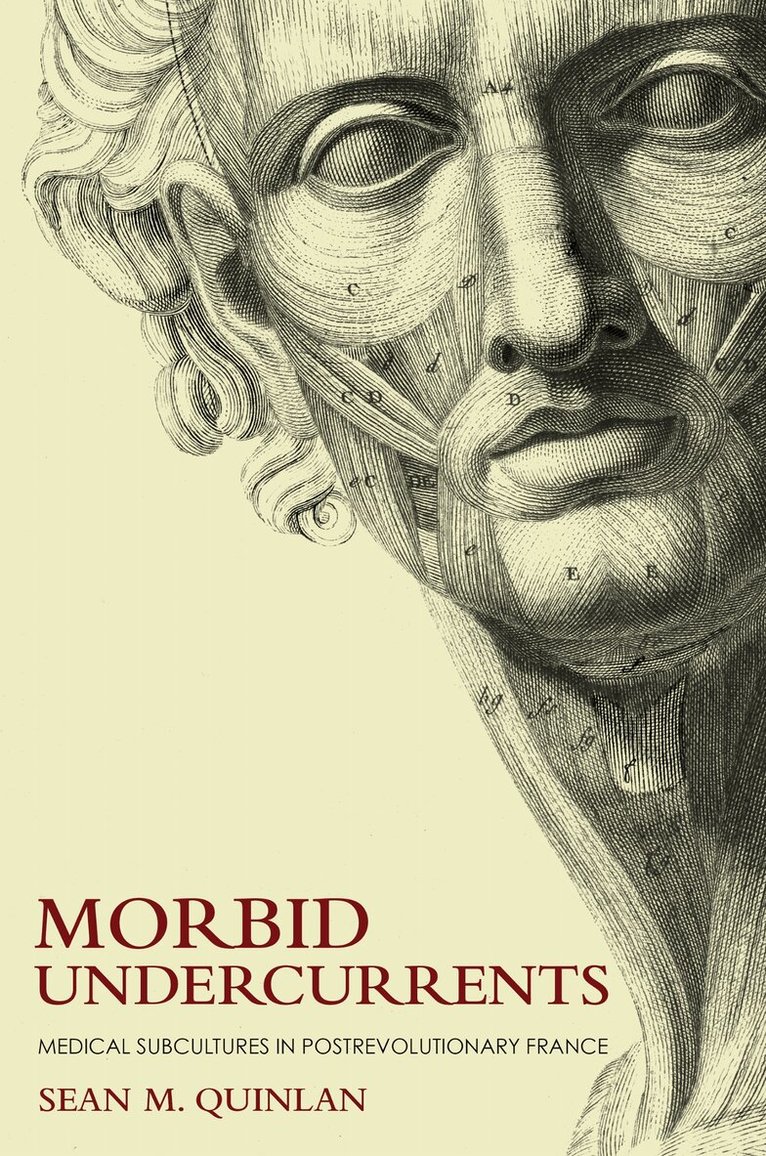
    In Morbid Undercurrents, Sean M. Quinlan follows how medical ideas, stemming from the so-called birth of the clinic, zigzagged across the intellectual landscape of the French Revolution and its aftermath. It was a remarkable "hotspot" in the historical timeline, when doctors and scientists pioneered a staggering number of fields—from forensic investigation to evolutionary biology—and their innovations captivated the public imagination. During the 1790s and beyond, medicine left the somber halls of universities, hospitals, and learned societies and became profoundly politicized, inspiring a whole panoply of different—often bizarre and shocking—subcultures. Quinlan reconstructs the ethos of the time and its labyrinthine underworld, traversing the intersection between medicine and pornography in the works of the Marquis de Sade, efforts to create a "natural history of women," the proliferation of sex manuals and books on family hygiene, anatomical projects to sculpt antique bodies, the rage for physiognomic self-help books that taught readers to identify social and political "types" in post-revolutionary Paris, the use of physiological medicine as a literary genre, and the "mesmerist renaissance" with its charged debates over animal magnetism and somnambulism. In creating this reconstruction, Quinlan argues that the place and authority of medicine evolved, at least in part, out of an attempt to redress the acute sense of dislocation produced by the Revolution. Morbid Undercurrents exposes how medicine then became a subversive, radical, and ideologically charged force in French society.

    Produktinformation

    • Utgivningsdatum:2021-09-15
    • Mått:152 x 229 x 28 mm
    • Vikt:907 g
    • Format:Inbunden
    • Språk:Engelska
    • Antal sidor:336
    • Förlag:Cornell University Press
    • ISBN:9781501758331

    Utforska kategorier

    • Medicinhistoria inom Medicin
    • Europas historia inom Historia och arkeologi

    Mer om författaren

    Sean M. Quinlan is Professor of History and Dean, College of Letters, Arts, and Social Sciences, at the University of Idaho. He is author of The Great Nation in Decline.

    Recensioner i media

    Quinlan's illuminating and thoroughly researched study makes a comprehensive case for the ways in which political upheaval not only galvanised connections between the 'two cultures' of science and the arts at the beginning of the long nineteenth century in France, but how the work of some lesser-known physician-writers, inspired by rather unconventional medical ideas, had a significant ideological impact on attempts to reimagine the body and self in a rapidly changing society.(Modern and Contemporary France) Medical historians and revolutionary historians will find Morbid Undercurrents entertaining, informative and useful. They will also admire Quinlan for his ambition in tackling such a wide-ranging history.(HISTORY: Reviews of New Books) A richly researched and long-considered book; in its careful contextualizing, nontechnical language, and pedagogic tone, Morbid Undercurrents will lend itself well to course reading assignments for those teaching history of science and medicine.(Isis: A Journal of the History of Science Society) This study is a compelling cultural history of weird science that could only have thrived, as Quinlan notes, 'in the cultural anarchy and porous medical world of the post-revolutionary period.'(Social History of Medicine) This book provides an entertaining and wide-ranging account of its subject.(H-France) Sean Quinlan's new monograph aims to shed light on aspects of nineteenth-century French medicine that are sometimes overlooked in accounts of the major transformations which that field underwent in the tumultuous aftermath of the French Revolution. Morbid Undercurrents reflects its author's deep commitment to making sense of the many and varied medical genres and subcultures that proliferated in postrevolutionary France.(Journal of Modern History)

    Innehållsförteckning

    • Introduction: Morbid Undercurrents— Medicine and Culture after the Revolution1. Settings: The Cultural World of Medical Practice, ca. 1750–18002. Medicine in the Boudoir: The Marquis de Sade and Medical Understandingafter the Reign of Terror3. Writing Sexual Difference: The Natural History of Women and Gendered Visions, ca. 18004. Seeing and Knowing: Readers and Physiognomic Science5. Sex and the Citizen: Reproductive Manuals and Fashionable Readers under the Napoleonic State6. Sculpting Ideal Bodies: Medicine, Aesthetics, and Desire in the Artist's Studio7. The Mesmerist Renaissance: Medical Undercurrents and Testing the Limits of Scientific Authority8. Physiology as Literary Genre: Passions, Taste, and Social Agendas under the Restoration and July MonarchyEpilogue: Medicine, Writing, and Subculture after the Revolution