• Fri frakt över 249 kr
  • •
  • Snabba leveranser
  • •
  • Billiga böcker
Kundservice

Du är på sajten för privatpersoner.

Företag, bibliotek eller offentlig verksamhet?

Du handlar på classic.bokus.com, där alla dina funktioner finns intakta.
Till classic.bokus.com
Bokus logotyp. Gå till startsidan.
  • Erbjudanden
  • Nyheter
  • Student
  • Topplistor
  • Barn & ungdom
  • Bokus Play
  • E-böcker
  • Pocketböcker
  • Spel & pussel

10% rabatt på allt med kod: NYSTART10 →

Sidfot

Mina sidor

    Hjälp

    • Kundservice
    • Vanliga frågor och svar
    • Frakt och leverans
    • Retur vid ångerrätt
    • Reklamera vara
    • Betalning
    • Köpvillkor
    • Allmänna villkor
    • Information om webbplatsens tillgänglighet

    Om Bokus

    • Om oss
    • Pressrum
    • För studenter
    • För företag
    • För bibliotek och offentlig verksamhet
    • För leverantörer
    • Hållbarhet

    Populärt

    • Aktuella erbjudanden
    • Presentkort
    • Studentlitteratur
    • Nya böcker
    • Topplistor
    • Signerade böcker
    • Engelska böcker

    Inspiration

    • Boktips
    • BookTok
    • Populära bokserier
    • Barnbokskaraktärer
    • Populära författare
    Logotyp för Bokus
    Följ oss på Facebook (extern länk)Följ oss på Instagram (extern länk)Följ oss på YouTube (extern länk)Följ oss på TikTok (extern länk)
    bokus @ CookiesAnpassa cookiesIntegritetspolicyKöpvillkor
    Till Citymail hemsida (extern länk)Till Budbee hemsida (extern länk)Till Postnord hemsida (extern länk)Till Schenker hemsida (extern länk)Till Early Bird hemsida (extern länk)Till Walleys hemsida (extern länk)
    1. Samhälle och politik
    2. Samhälle och kultur
    3. Sociala grupper och identitet

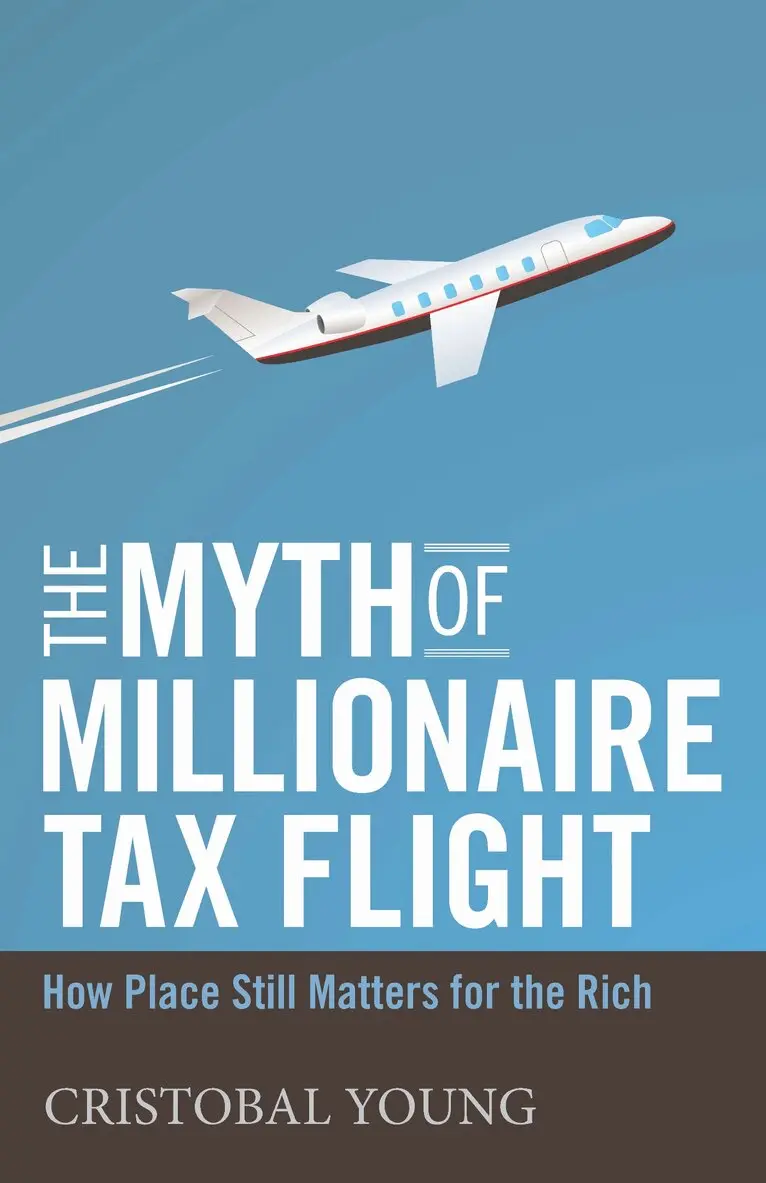
    Myth of Millionaire Tax Flight

    How Place Still Matters for the Rich

    AvCristobal Young

    E-bok
    Engelska, 2017

    Del i serien Studies in Social Inequality

    276 kr

    Läs direkt i Bokus Reader – eller ladda ned till din enhet

    Fler format och utgåvor

    Inbunden

    1 047 kr

    Beskrivning

    In this age of globalization, many countries and U.S. states are worried about the tax flight of the rich. As income inequality grows and U.S. states consider raising taxes on their wealthiest residents, there is a palpable concern that these high rollers will board their private jets and fly away, taking their wealth with them. Many assume that the importance of location to a person's success is at an all-time low. Cristobal Young, however, makes the surprising argument that location is very important to the world's richest people. Frequently, he says, place has a great deal to do with how they make their millions. In The Myth of Millionaire Tax Flight, Young examines a trove of data on millionaires and billionaires—confidential tax returns, Forbes lists, and census records—and distills down surprising insights. While economic elites have the resources and capacity to flee high-tax places, their actual migration is surprisingly limited. For the rich, ongoing economic potential is tied to the place where they become successful—often where they are powerful insiders—and that success ultimately diminishes both the incentive and desire to migrate. This important book debunks a powerful idea that has driven fiscal policy for years, and in doing so it clears the way for a new era. Millionaire taxes, Young argues, could give states the funds to pay for infrastructure, education, and other social programs to attract a group of people who are much more mobile—the younger generation.

    Produktinformation

    • Utgivningsdatum:2017-10-31
    • Språk:Engelska
    • Antal sidor:160
    • Filformat:EPUB
    • Kopieringsskydd:LCP
    • ISBN:9781503603813
    • Förlag:Stanford University Press
    • Serie:Studies in Social Inequality

    Utforska kategorier

    • Sociala grupper och identitet inom Samhälle och politik
    • Sociologi inom Samhälle och politik
    • Finansiering inom Ekonomi och Ledarskap

    Mer om författaren

    Cristobal Young is Assistant Professor of Sociology at Stanford University. He studies how sociological dynamics shape the effects of public policies—especially policies meant to reduce inequality. His research has been featured in The Wall Street Journal, The New York Times, and USA Today, and he has contributed pieces to The New York Times Sunday Review and the New York Daily News, among others.

    Recensioner i media

    "Young debunks the widely-held myth that raising taxes on the wealthy inevitably prompts their out-migration and ultimately reduces tax revenue. His sophisticated analysis convincingly demonstrates the opposite. This is a tour-de-force that should be read by policymakers and taxpayers everywhere."—Douglas S. Massey, Princeton University "While the rich become richer, state governments strain to fund critical services. Young shows states can tap rich citizens' resources to bolster state government and enhance the common good. With grace, sophistication, and unprecedented data, this important book feeds public debates on inequality, public policy, and the health of American democracy."—Martin Gilens, author of Affluence and Influence "Whether taxing millionaires will cause them to flee is an important policy issue dominated by unsupported rhetoric. This clearly written and carefully researched book sheds new light on the question by looking soberly at the facts while exposing popular views as myths."—Joel Slemrod, University of Michigan "Young reveals the extent to which much political rhetoric around taxes and the rich rests on unfounded anecdotal assumptions. [The Myth of Millionaire Tax Flight] is an important book which contributes much to political and economic sociology, as well as the growing field of fiscal sociology. It is written in a non-technical prose, making it also accessible for policymakers and non-scholarly audiences alike. In a moment of increasing inequality and near permanent austerity, Young's analysis will hopefully inspire more research on the wealthy and taxes."—Daniel R. Alvord, Social Forces

    Innehållsförteckning

    • 1. Millionaire Taxes in a World with Few Borders2. Do the Rich Flee High Taxes?3. Global Billionaires and International Tax Havens4. Place as a Form of Capital5. Millionaires and the Future of Taxation